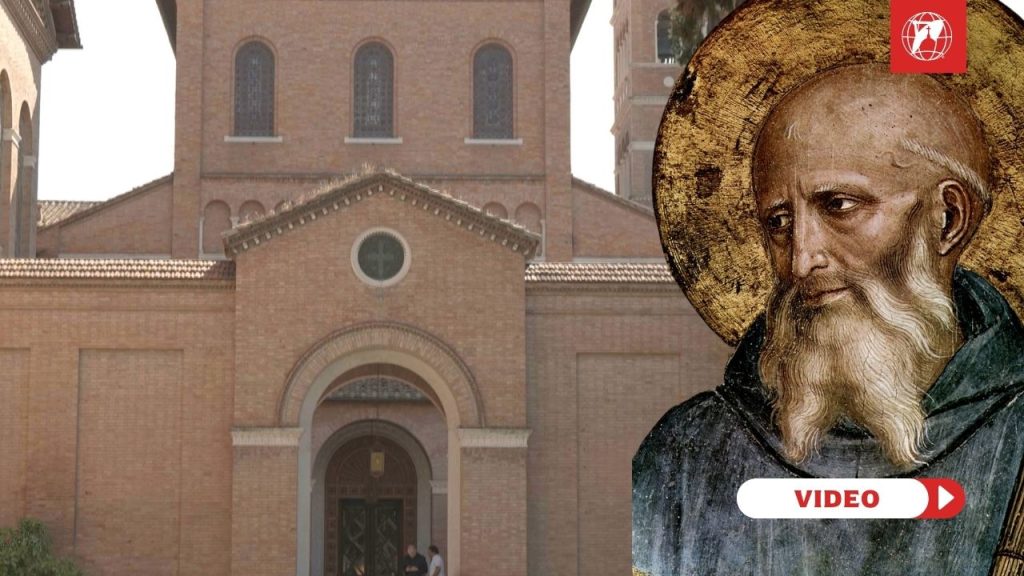
Amid the decline of religious life and the challenges of modern society and the digital age, the Benedictine Order has stood firm for nearly 1,500 years.
Though suppressed time and again, the timeless Benedictine spirituality and legacy continue to resonate with the faithful across generations.
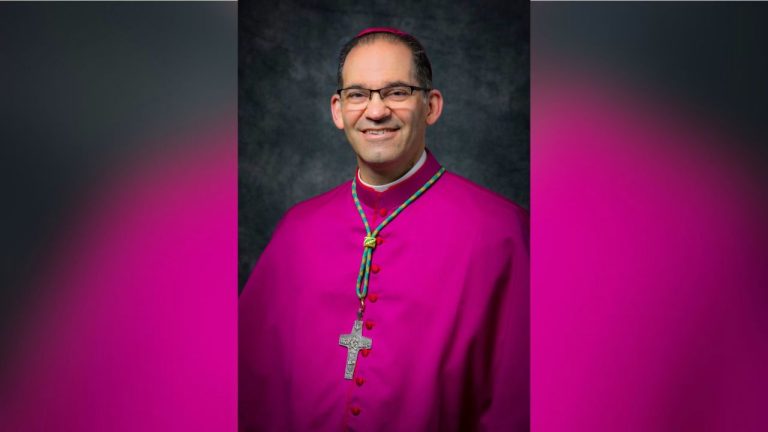
As Abbot Primate of the Benedictine Confederation, Abbot Jeremias Schröder serves as the unifying head of the world’s thousands of Benedictine monks and nuns.
EWTN Vatican journalist Rudolf Gehrig met him in Rome:
In September 2024, you were elected Abbot Primate of the Benedictine Confederation, making you, in a sense, the highest ranking Benedictine monk. What is the role of abbot primate?
“Our Benedictine family is a very diversified and complicated organization. And I’m presiding over it all, trying to somehow keep our Benedictine family united. We are a family of 19 congregations of monks and many more organizations, federations, congregations of women, 6000 men, 12,000 women. My role here is to keep it all together, to keep it united, and to strengthen the sense of family and belonging by maintaining this house here.”
How would you say that Saint Benedict helped shape Western monasticism and also European civilization?
“I would say I will say he did it with the cross, the book and the plow. But that’s not my own invention. That’s how Pope Paul VI described the role of Saint Benedict and his disciples in shaping Europe, in shaping Western civilization. So evangelization – the cross – culture and education – that’s the book – and finally, the plow – a very real hands-on approach to making lives better, to transforming the way we live.”
What would you say is the essence of Benedictine spirituality?
“Our life is very much based on community. We live in a community of monks or nuns and sisters, and it is nourished by the basics of Christian life. Scripture is very important to us. The celebration of the liturgy has a very important role in how we live, how we shape our days. And then it is a life that is very balanced, where all these various elements come together without exaggeration, but really in a harmonious unity that nourishes life and gives life.”
The rule of Saint Benedict was revolutionary in its time, and it seems to have lost none of its relevance today. How come the rule of Saint Benedict has survived 1500 years?
“I think the great success of the rule is attributable to its innate qualities. It is just a very balanced rule, really, if you compare it with similar texts that were written around the time of Benedict, this one has much more depth and at the same time it remains flexible. It allows for adaptation. It does not say it has to be done exactly like this. It gives fundamental principles. And I would say that those principles still are valid. The balance of it all, the wisdom that shines through, and the fact that it has been adapted again and again over 1500 years. The text has never been changed, obviously, but how we interpret it, how we understand it, has been able to develop and adapt to different times and different sensibilities.”
Just out of curiosity, do you have an example of a specific adaptation that you did over the last centuries?
“We stopped corporal punishment. That’s one. Also, the prayer load that’s described… that’s not a good term, “prayer load”… but the amount of daily prayer that the community should have has varied enormously. And nowadays we pray generally slightly less than what the rule actually recommends to incorporate our work schedule as well. So there was real flexibility there. And Benedict already talks about that flexibility. He says, this is what I propose. If the abbot has good reasons for organizing it differently, he may do so.”
If Saint Benedict could speak to the people of Europe and the world today, what message do you think he would want to convey?
“I think a message of peace and this is especially looking at Europe, where we are coming out of a long time of peace after the Second World War, where the understanding of peace was even strongly shaped by some of these Benedictine ideas. And now we have to see how how the peace that we’ve achieved over such a long period of time is not just fading away, but collapsing under aggression and a new belligerence. I think Benedict tries to give us the tools to really build peace and start from the bottom up, start from the roots, how we live together in small units, understand that we are diverse and yet bound together, and try to extrapolate that, translate that also on the level of how our nations live together.”