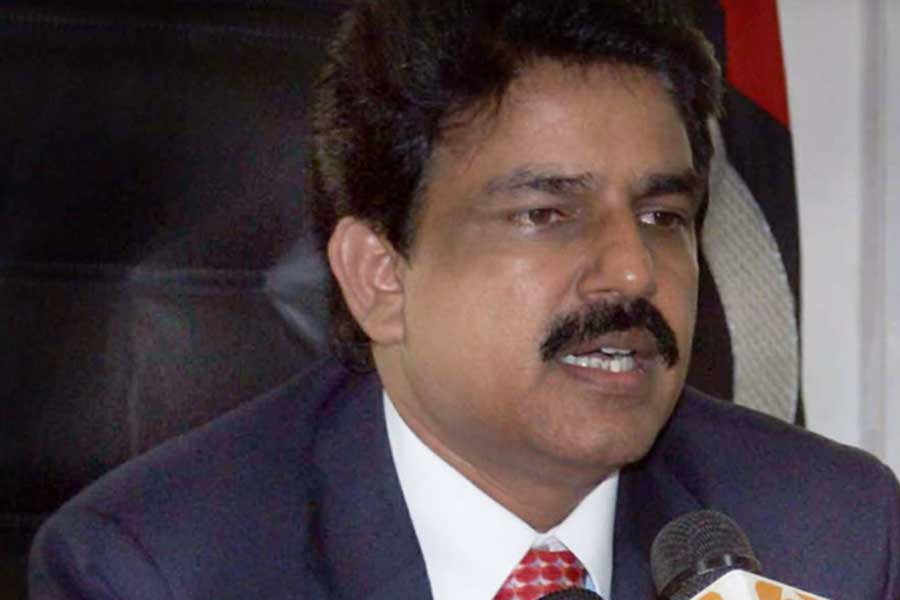
ISLAMABAD, Pakistan — Fifteen years have passed since the bullets of intolerance silenced the voice of Shahbaz Bhatti, yet his witness as a “Martyr for Religious Freedom” continues to resonate with increasing clarity across the global Church. As the faithful in Pakistan and throughout the world mark the 15th anniversary of his assassination on March 2, 2011, the legacy of the man who dared to follow the Cross in the face of certain death has become a beacon of hope for the persecuted and a challenge to the conscience of the international community.
The anniversary, observed with solemn liturgies and interfaith gatherings, coincides with the release of a significant new biography, Blood and Water: The Life and Witness of Shahbaz Bhatti (2026), which sheds new light on the interior life of the first Christian to serve as a Federal Minister in Pakistan.
A Voice for the Voiceless
Clement Shahbaz Bhatti was born on September 9, 1968, in the village of Khushpur, a Catholic stronghold in Pakistan’s Punjab province. From a young age, he was moved by the plight of religious minorities—Christians, Hindus, Sikhs, and Ahmadis—who lived under the shadow of systemic discrimination and the constant threat of the nation’s draconian blasphemy laws.
In 1985, he co-founded the All Pakistan Minorities Alliance (APMA), which grew into the largest movement for minority rights in the country’s history. His approach was uniquely rooted in his Catholic faith but universal in its application of human dignity. He did not merely advocate for Christians; he advocated for the “voiceless” of every creed.
| Key Milestone | Description |
| 1985 | Co-founded the All Pakistan Minorities Alliance (APMA) |
| 2002 | Appointed Chairman of APMA |
| 2008 | Elected to the National Assembly and appointed Federal Minister for Minorities Affairs |
| 2011 | Assassinated in Islamabad by extremists |
| 2016 | Formal opening of the cause for beatification by the Diocese of Islamabad-Rawalpindi |
The Shadow of the Blasphemy Laws
Bhatti’s appointment as Federal Minister for Minorities Affairs in 2008 placed him at the center of a storm. He became the most prominent critic of Pakistan’s blasphemy laws, which are frequently misused to settle personal scores and target religious minorities. His defense of Asia Bibi, a Christian mother of five sentenced to death for blasphemy in 2010, made him a primary target for extremist groups.
The danger was palpable. Just two months before Bhatti’s death, Salman Taseer, the Governor of Punjab and a fellow critic of the blasphemy laws, was assassinated by his own bodyguard. Despite the clear threats, Bhatti refused to be silenced or to leave his country. “I believe in Jesus Christ, who has given his own life for us,” he recorded in a video message to be released in the event of his death. “I know what is the meaning of the Cross, and I am following the Cross”.
The Ultimate Sacrifice
On the morning of March 2, 2011, as Bhatti left his mother’s home in Islamabad to attend a cabinet meeting, his vehicle was ambushed by gunmen. He was struck by more than 30 bullets. Leaflets left at the scene by the Tehrik-i-Taliban Pakistan (TTP) and al-Qaeda claimed responsibility, citing his opposition to the blasphemy laws as the reason for his execution.
His death sent shockwaves through the world. Pope Benedict XVI, who had met Bhatti just weeks earlier, described him as a man who “gave his life for the cause of religious freedom and for the defense of Christians”. In 2016, the Diocese of Islamabad-Rawalpindi formally opened his cause for beatification, and he is now officially recognized by the Church as a “Servant of God”.
A Legacy of Reconciliation
Bhatti’s legacy is not one of division, but of profound reconciliation. He was known for visiting mosques and building bridges with Muslim leaders who shared his vision of a pluralistic Pakistan. He often quoted Martin Luther King Jr., noting that “injustice anywhere is a threat to justice everywhere”.
Today, his personal Bible is enshrined in the Basilica of San Bartolomeo all’Isola in Rome, a sanctuary dedicated to the “New Martyrs” of the 20th and 21st centuries. Pilgrims from around the world visit the site to honor the man who proved that the light of faith can penetrate even the darkest corners of persecution.
As the Church in Pakistan continues to navigate the complexities of religious freedom in 2026, the figure of Shahbaz Bhatti remains a source of strength. His life reminds the faithful that the Gospel is not a private comfort, but a public witness that requires courage, sacrifice, and an unwavering commitment to the dignity of every human person.
Spiritual Resolution
As we commemorate the 15th anniversary of the martyrdom of Servant of God Shahbaz Bhatti, we are called to examine our own witness to the Truth. Let us commit ourselves to:
The Sacrament of Confession: To seek the courage and purity of heart necessary to stand for our faith in a world that often rejects it.
Eucharistic Adoration: To sit before the Lord, who gave His life for us, and ask for the grace to carry our own crosses with love and perseverance.
The Holy Rosary: To ask for the intercession of Mary, Queen of Martyrs, for all those who suffer for the name of Christ today.
The Holy Mass: To receive the Eucharist, the Bread of Life, which sustained Shahbaz Bhatti in his mission and gives us the strength to be “salt and light” in our communities.
Sacred Scripture: To immerse ourselves in the Word of God, as Shahbaz did, allowing it to be the foundation of our actions and the source of our hope.
To remain informed about Catholic life, teachings, and global Church developments, readers may be encouraged to visit www.ewtnvatican.com for trusted Catholic news and resources.