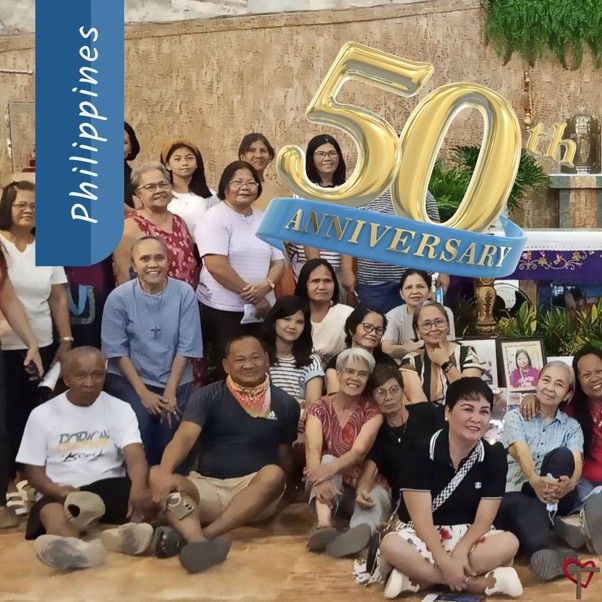
No hospitals bearing their name. No universities, no sprawling institutions, no headline-grabbing programs. For fifty years, a small congregation of religious sisters in the Philippines has measured its mission not in buildings or budgets, but in something far quieter: simply living alongside farmers, factory workers, migrants, and the urban poor as one of them. This month, the Little Sisters of Jesus mark that half-century milestone with a golden jubilee celebration that, fittingly, remains as understated as the ministry itself.
Fifty Years of ‘Celebrating God’s Fidelity’: Inside the Golden Jubilee
The congregation will mark its Golden Jubilee with a Mass presided over by Cardinal Jose Advincula of Manila at San Roque Parish in Mandaluyong City on August 15. Under the theme “Celebrating God’s Fidelity,” the sisters describe the milestone as both an act of thanksgiving for five decades of God’s faithful love and a renewal of their original mission, offering the jubilee itself as a gift of gratitude to the wider Philippine Church.
The congregation’s Philippine mission began in 1976, when the late Bishop Bienvenido Tudtud invited the Little Sisters to the Prelature of Marawi. Though conflict prevented a permanent presence there, the sisters have remained committed to praying for peace and reconciliation in the region. Jubilee celebrations began with thanksgiving gatherings in Masbate in 2025 and continue nationwide, while the August 15 celebration will also feature a preview of Awit ng Nazaret, with its full launch scheduled for September.
Living Among the Poor Rather Than Serving From Above
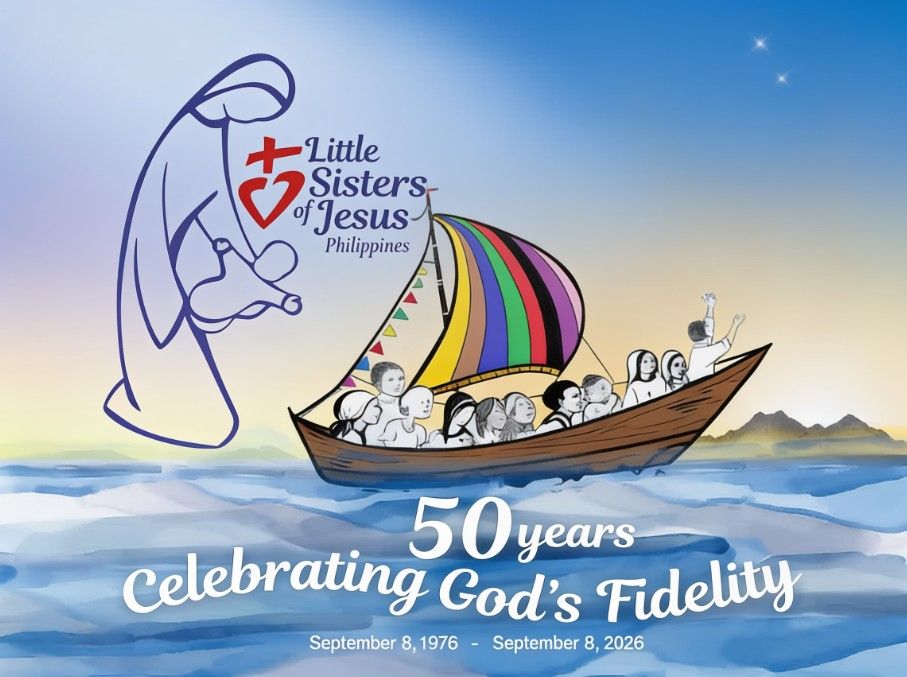
What distinguishes the Little Sisters of Jesus from many religious congregations is not a specific institutional ministry, but a specific way of being present. Rooted in the spirituality of Saint Charles de Foucauld and their foundress, Little Sister Magdeleine of Jesus, the congregation has chosen throughout its history to live directly among ordinary people rather than operate large institutions from a position of separation. In the Philippines, this has meant sisters living with landless farmers, working in factories, serving as household and informal workers, and sharing daily life within urban neighborhoods and migrant communities.
This approach flows directly from a specific theological conviction: that God is encountered most deeply not in grand public works, but in the hidden, ordinary life Jesus himself lived in Nazareth before his public ministry ever began. Little Sister Magdeleine captured this vision plainly in her Spiritual Testament, writing that in bearing witness to Jesus, the sisters would live in the midst of humankind as leaven in the dough, present, mixed in, largely invisible, yet quietly transformative all the same.
Why This Golden Jubilee Is Significant for the Church Today
This milestone carries genuine significance for the Church, and in this case, that significance is quietly but powerfully encouraging. At a moment when religious life is often measured by institutional footprint, schools built, hospitals staffed, programs launched, the Little Sisters of Jesus offer a compelling countercultural witness: fifty years of faithfulness measured not by visible achievement, but by sustained, humble presence among the very communities most easily overlooked. Their continued fidelity to a calling toward Marawi, even after circumstances prevented them from ever fully settling there, illustrates a form of faithfulness not dependent on completed success, sustained instead through decades of prayer for a place they were never able to fully inhabit.
At the same time, an honest reading of this anniversary invites one gentle observation. Ministries built around hidden presence rather than visible institutions are, by their very nature, difficult to publicize, fund, or measure, which can leave congregations like this one more vulnerable to being overlooked, under-resourced, or struggling to attract new vocations precisely because their witness does not produce the kind of visible markers, buildings, enrollment numbers, patient counts, that typically draw public attention and material support. This anniversary offers a valuable opportunity for the wider Church to recognize and support this quieter form of religious life, not despite its hiddenness, but because of it.
Holiness Hidden in Ordinary Life
The Little Sisters’ entire charism rests on a striking theological insight: that the vast majority of Christ’s earthly life, roughly thirty of his thirty-three years, was spent in complete obscurity in Nazareth, working, living, and praying without any of the public miracles or teaching that would later define his ministry. Saint Charles de Foucauld built his entire spirituality around this insight, convinced that this hidden period was not merely preparation for what came later, but was itself already saving and sanctifying simply by being lived faithfully.
This offers a deeply countercultural spiritual message, not only for religious congregations, but for anyone whose daily life feels similarly unremarkable. Holiness, in this understanding, does not require a public platform or visible achievement. It can be lived fully in a factory, a farmer’s field, or a migrant neighborhood, wherever ordinary faithfulness is quietly sustained day after day.
A Spiritual Resolution
Living faithfully in obscurity for fifty years, without the encouragement of visible institutional success, requires deep spiritual roots. Five ordinary practices offer exactly that kind of sustaining foundation for a life spent quietly present among others.
- Confession, which clears away discouragement when hidden faithfulness feels invisible or unrewarded, restoring trust that God sees what others may never notice.
- Adoration, quiet time before Christ that mirrors the same hidden, unremarkable presence the sisters themselves try to live out among the poor.
- The Rosary, prayed steadily, sustained the sisters’ decades-long intercession for peace in Marawi even when they could not physically remain there.
- The Eucharist, received faithfully within ordinary community life, remains the true center holding together a ministry built on presence rather than program.
- Scripture, particularly the hidden years of Jesus in Nazareth, grounds this entire spirituality in Christ’s own example rather than treating hiddenness as a lesser form of holiness.
A Quiet Witness Worth Celebrating
Fifty years after arriving in the Philippines, the Little Sisters of Jesus have built no institutions bearing their name, yet their quiet, faithful presence among farmers, factory workers, and migrant communities offers a witness that may prove more enduring than any building could. Their golden jubilee is a fitting celebration of exactly the kind of faithfulness their spirituality has always valued: steady, hidden, and deeply rooted in God’s fidelity rather than visible success. Coverage of this milestone, including from platforms such as EWTN Asia Pacific News, continues to help stories like this one reach audiences who might otherwise never learn of this quiet, five-decade witness.
If this story moved you, share it with someone who might need a reminder that ordinary, hidden faithfulness matters, and consider keeping the Little Sisters of Jesus and the communities they serve in your prayers.
To remain informed about Catholic life, teachings, and global Church developments, readers may be encouraged to visit www.ewtnvatican.com for trusted Catholic news and resources.