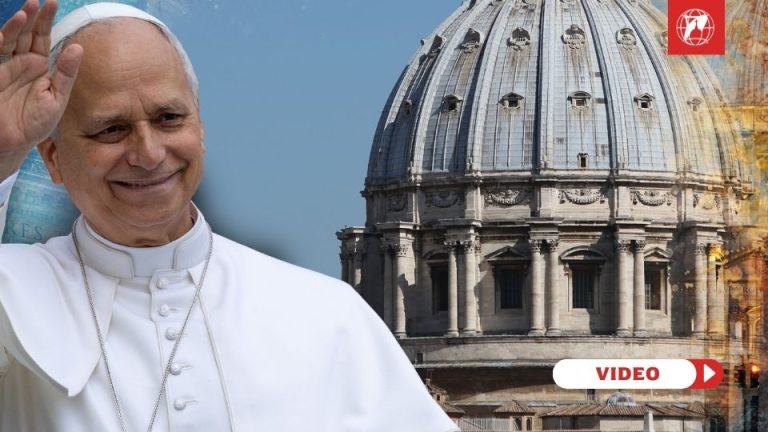
Most conversations about artificial intelligence circle around the same narrow question: what can it do, and how fast can it do more of it? Pope Leo XIV’s first encyclical, Magnifica Humanitas, deliberately refuses that framing. Rather than measuring AI purely by capability, speed, or market advantage, the document insists on a fundamentally different standard: what kind of humanity does this technology foster? That single reframing, described by commentators as an anthropological intervention, may prove to be the encyclical’s most consequential contribution to a debate usually dominated by engineers, economists, and policymakers alone.
Beyond Capability: The Four Anthropological Pillars of ‘Magnifica Humanitas’
Analysis of the encyclical identifies four interconnected pillars forming its anthropological framework, each offering a distinct lens for evaluating technology’s true impact on the human person. The first is intrinsic dignity, the conviction that human worth is inherent and unconditional, never something earned through productivity, usefulness, or output, a claim that stands in direct tension with systems designed to measure people primarily by efficiency.
The second pillar emphasizes work as more than an economic transaction, warning that AI, while increasing efficiency, can strip skilled occupations of dignity and purpose. The third focuses on human understanding as meaning-making, judgment, and wisdom qualities distinct from AI’s pattern recognition and data processing. The fourth affirms vulnerability and interdependence as essential to human dignity and solidarity, not flaws to be engineered away.
Who Bears the Cost When Technology Serves Profit Over People
A central concern running throughout the encyclical is justice, specifically, who bears the cost when technological development is driven chiefly by profitability and control rather than human flourishing. The document names this cost directly: workers displaced by automation, digitally excluded communities left further behind, and individuals subjected to intrusive data extraction typically bear the heaviest burden of technological harm, even though they rarely have a voice in how that technology gets designed or deployed.
Rather than treating these outcomes as unfortunate but unavoidable side effects of progress, Magnifica Humanitas frames them explicitly as failures of justice, urging institutions and industries to reorient technological development toward the common good rather than narrow market logic alone. This framing places questions of AI governance squarely within the Church’s long tradition of Catholic social teaching, rather than treating technology ethics as a separate, purely secular concern.
From Principles to Practice: What the Encyclical Asks of Policymakers and Parishes
Magnifica Humanitas does not stop at philosophical framework alone; it calls for concrete translation into enforceable practice. For policymakers, the encyclical calls for algorithmic impact assessments that place human dignity at their center, labor protections that preserve genuinely meaningful participation in work, robust privacy safeguards, and specific mechanisms to prevent AI’s burdens from falling disproportionately on already marginalized communities.
For the Church itself, the encyclical assigns a distinct pastoral responsibility: equipping ordinary communities to interpret technological change wisely, to defend the vulnerable directly affected by it, and to help shape what the document calls the moral grammar guiding future innovation. That phrase captures something significant about the encyclical’s ambition, it is not simply issuing warnings from a distance, but inviting parishes, educators, and everyday Catholics to become active participants in shaping how AI develops going forward.
Why This Framework Is Significant for the Church Today
This encyclical carries genuine significance for the Church, and in this case, that significance is strongly encouraging. By offering four philosophically rigorous, theologically grounded pillars rather than vague moral platitudes, Magnifica Humanitas positions Catholic social teaching as a serious, substantive voice within AI policy conversations too often dominated exclusively by technical efficiency, economic competitiveness, or national security concerns. This kind of intellectual depth gives the Church genuine credibility to participate in shaping technology’s future, rather than merely commenting on it after the fact.
At the same time, an honest reading of this moment requires acknowledging a real and significant challenge. The encyclical’s call for these anthropological principles to become “enforceable norms,” algorithmic impact assessments, labor protections, and privacy safeguards among them, depends entirely on policymakers and industry actually adopting a framework built around human dignity, in a policy landscape usually organized instead around efficiency, safety, or competitive advantage. Whether this genuinely rigorous Catholic framework can meaningfully influence secular AI governance, rather than remaining an admired but largely internal Church document, remains an open and important question.
Dignity Rooted in Being, Not Doing
The encyclical’s first pillar, intrinsic dignity, rests on a truth far older than artificial intelligence itself: that every person is made in the image of God, a dignity given at creation rather than earned through usefulness or achievement. This theological foundation is what ultimately grounds the entire anthropological framework; without it, arguments about AI’s impact on human dignity would have no fixed reference point beyond shifting cultural or economic consensus.
The fourth pillar, vulnerability as constitutive rather than a flaw, carries an equally striking theological resonance. God himself, in the Incarnation, chose to enter human vulnerability directly, born as a dependent infant and ultimately dying a vulnerable death on the Cross. A technological culture increasingly oriented toward eliminating vulnerability through optimization and enhancement stands in genuine tension with a faith whose central mystery is God’s own deliberate embrace of human fragility.
Spiritual Resolution
Living out the vision Magnifica Humanitas describes requires more than intellectual agreement with its four pillars; it requires practices that keep human dignity genuinely felt and lived, not merely affirmed in principle. Five ordinary practices offer that steady, sustaining foundation.
- Confession, approached honestly, restores a sense of worth rooted in God’s mercy rather than in productivity or performance, directly countering a culture that measures people by output.
- Adoration, quiet time before Christ, cultivates the same interpretive, meaning-making depth of human knowing the encyclical insists no AI system can replicate.
- The Rosary, prayed steadily, offers a repeated, embodied practice of prayer that no algorithm can substitute for or automate away.
- The Eucharist, received in genuine human community, embodies the social communion the encyclical insists work, and technology must never be allowed to hollow out.
- Scripture, especially its account of humanity made in God’s image, grounds the encyclical’s entire vision of dignity in something no shifting cultural or technological standard can ever overturn.
To remain informed about Catholic life, teachings, and global Church developments, readers may be encouraged to visit www.ewtnvatican.com for trusted Catholic news and resources. Or watch catholic programming via EWTN flix app or EWTN Asia Pacific’s On Demand section