ROME — Every summer, millions of visitors arrive in Rome searching for history, culture, or the treasures of Western civilization. Yet for many, the Eternal City offers something they did not expect: an encounter with the beauty of the Christian faith.
Few people have spent more time helping visitors discover that reality than art historian Elizabeth Lev. For nearly three decades, she has guided pilgrims, students, seminarians, and professionals through Rome’s churches, museums, and monuments, showing how art and architecture reveal the story of Christianity.
In an interview with EWTN Vatican, Lev reflected on why Rome continues to captivate people from every corner of the world—and how beauty itself can become a path to God.
Rome tells the story of Christianity
For Lev, Rome’s monuments reveal far more than artistic achievement. Together, they tell the story of humanity’s encounter with divine revelation.
She points to the Pantheon as a striking example.
Built during the Roman Empire as a temple dedicated to all the gods—including emperors who claimed divine status—it remains one of the few ancient Roman buildings still standing largely intact.
Its survival, Lev notes, reflects an extraordinary transformation.
“Along came this little renegade religion,” she said, referring to Christianity, “this tent maker and a fisherman who came to Rome talking about a God who became man.”
Where the Roman world celebrated men becoming gods, Christianity proclaimed the Incarnation: God becoming man.
Centuries later, Renaissance architects looked to Rome’s classical heritage not simply to imitate it, but to elevate it in the service of the Christian faith.
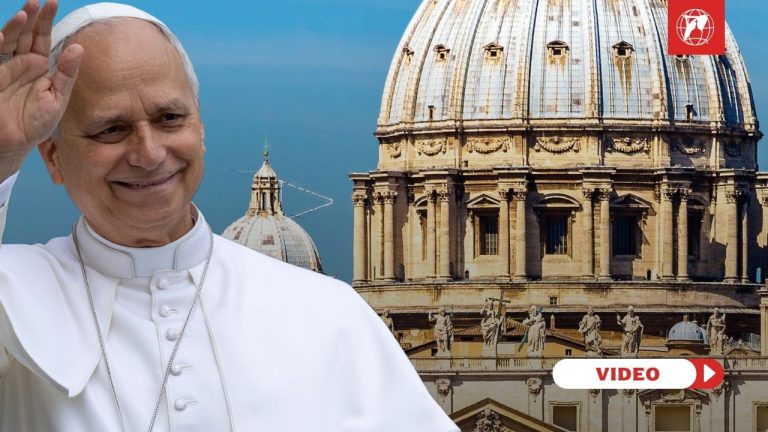
Architect Donato Bramante drew inspiration from ancient Roman architecture while designing the new St. Peter’s Basilica, creating a monument that proclaimed what Lev describes as “revelation, incarnation, and salvation.”
“What is good, beautiful and noble,” she said, “can be transformed into something that speaks to revelation.”
Why beauty moves the human heart
Lev believes humanity’s unique response to beauty points toward something deeper.
Unlike animals, she notes, human beings alone contemplate beauty for its own sake.
Whether found in nature, music, architecture, or painting, beauty possesses a remarkable ability to move the human heart.
She recalled the words of Cardinal Joseph Ratzinger—later Pope Benedict XVI—who often spoke of beauty as something that “wounds.”
That wound, Lev explained, creates an openness.
“It opens up this little chink in our armor,” she said. “And in that chink all kinds of things can get in, including truth and goodness.”
Rather than merely pleasing the senses, authentic beauty prepares the soul to receive something greater.
Michelangelo’s Pietà: A universal language
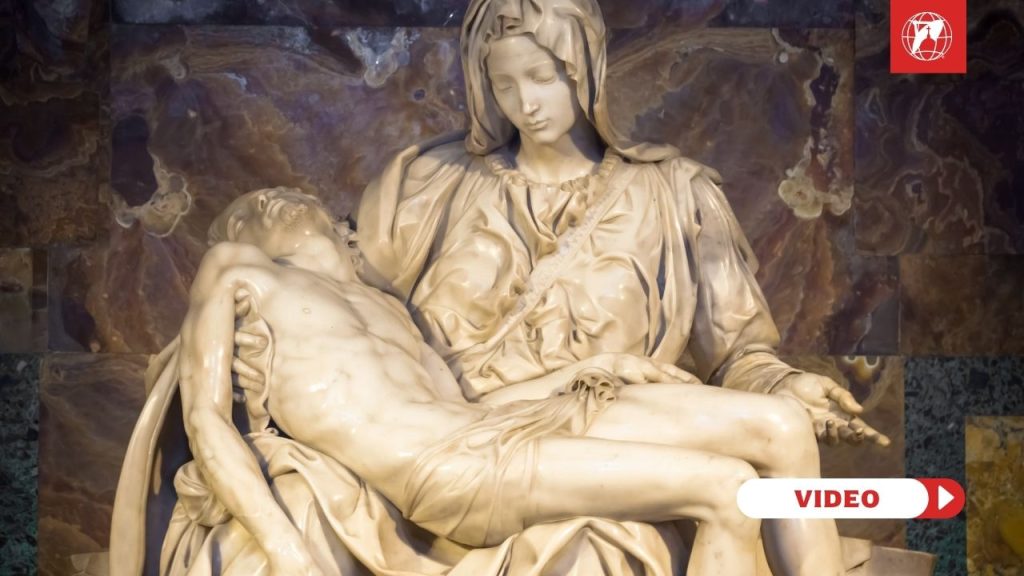
Among Rome’s countless masterpieces, Lev says one work never loses its power to move people: Michelangelo’s Pietà in St. Peter’s Basilica.
Every day, visitors from every culture and language gather before the marble sculpture depicting the Virgin Mary holding the body of her crucified Son.
“They have no common language, they have no common background,” Lev said.
Yet the image speaks universally.
“It is a mother holding her lifeless son, but rendered with such elegance.”
Whether visitors understand Renaissance sculpture or Christian theology, the work communicates grief, love, sacrifice, and hope in a language that transcends words.
“It never gets old,” she said.
A city that awakens expectation
Rome continues to attract pilgrims, scholars, seminarians, journalists, and tourists alike.
According to Lev, many arrive seeking something they cannot quite name.
“There is something about Rome that connects to the supernatural,” she said.
From the grandeur of the ancient temples to the masterpieces created to proclaim Christianity, the city invites visitors to lift their eyes beyond themselves.
Lev compared that experience to Caravaggio’s famous painting, “The Calling of St. Matthew.”
In the Gospel scene, Matthew appears absorbed in money and worldly concerns until, for one brief moment, he looks up—and encounters Christ.
“Matthew is the one who looked up for one second and wondered, ‘Is there more?’”
At that very moment, Jesus calls him, forever changing his life.
Lev believes Rome creates that same sense of expectation.
“Maybe if I look up at the right moment,” she said, “I’ll see something and my life will change.”
For countless pilgrims who walk Rome’s streets each year, that hope remains one of the city’s greatest treasures.
Adapted by Jacob Stein