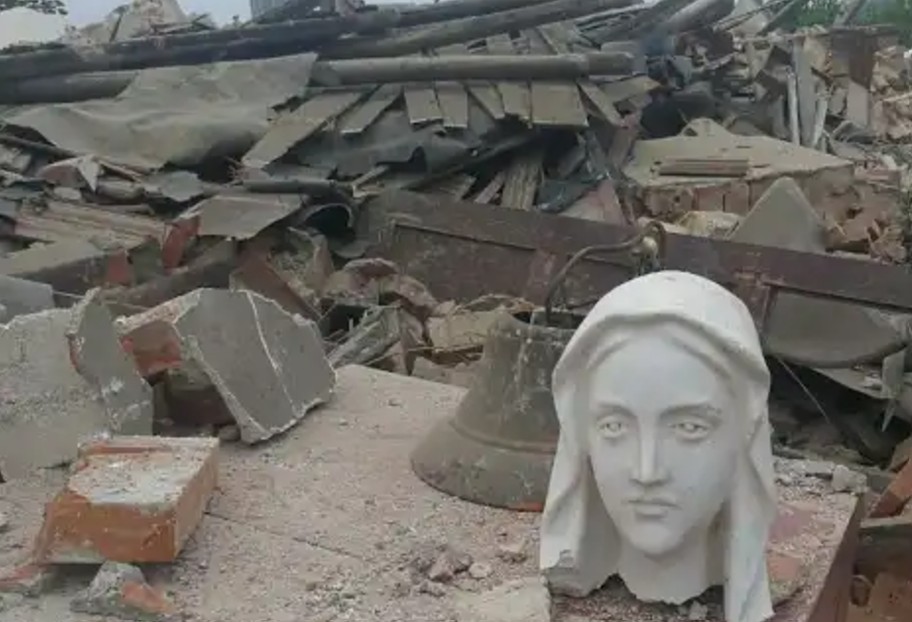
Across several provinces in China, the sound of cranes and jackhammers has replaced the sound of hymns. Videos circulating online in recent months show something that should stop every believer in their tracks: Church Demolitions in China. Some standing for generations, reduced to rubble within hours. For Catholics, Protestants, and Christians of every background watching from Manila to Manado, the footage raises an urgent question why is this happening, and what does it mean for the future of the Church in Asia?
This is not an isolated case. It is part of a much larger, ongoing pattern that has intensified in recent years, and it deserves our attention, our understanding, and above all, our prayers.
A Church in Wenzhou Falls Silent
The most recent and widely discussed case centers on Yazhong Church in Wenzhou, Zhejiang Province—a city so historically rich in Christian heritage that it has long been nicknamed “China’s Jerusalem.” According to China Aid News, local authorities reportedly planned the operation against the church for several months before carrying it out. In the days leading up to the demolition, provincial authorities deployed large numbers of special police and riot-control officers to the area, conducting coordinated inspections at a dozen local church gathering sites.
During the crackdown, dozens of believers were reportedly dispersed and briefly detained, and as pressure escalated, more than twenty church members including church leaders were said to face long-term criminal detention. Witnesses say authorities imposed a strict information blackout before the demolition crews arrived, with anyone attempting to record video being intercepted or detained on the spot.
This mirrors an earlier, equally troubling case involving Nangang Church in Wenzhou’s Ruian County, where reports describe armed and masked demolition teams arriving at night, tearing down an eight-acre church property after negotiations overcompensation broke down.
How Did We Get Here?
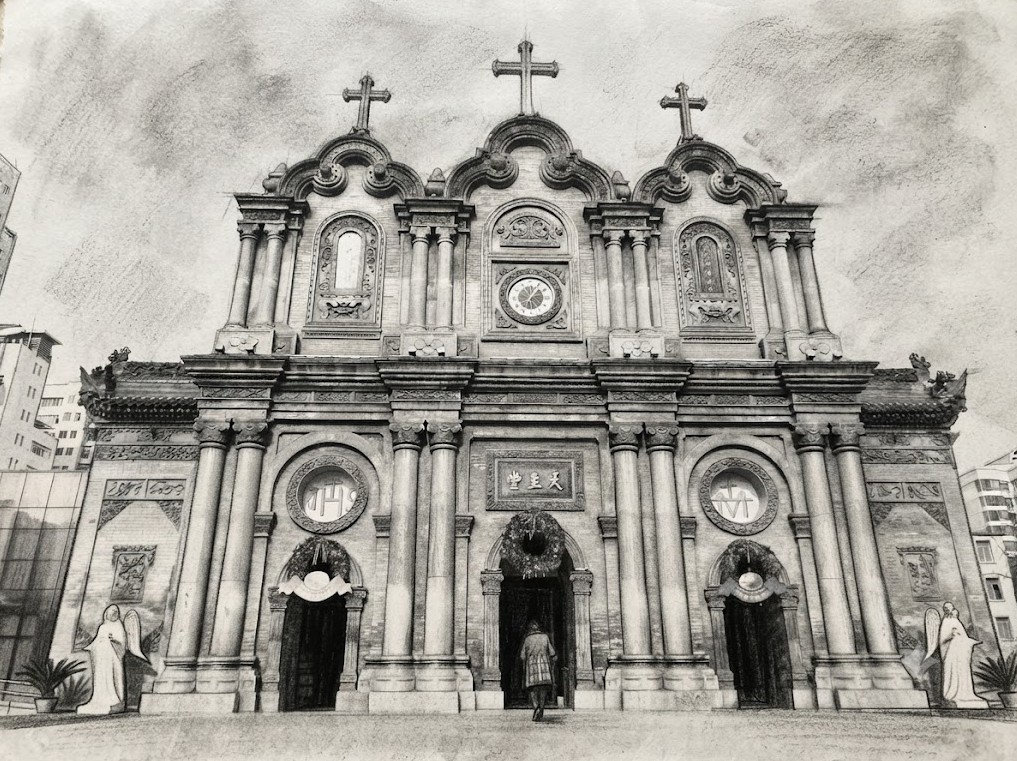
To understand why a single demolished church makes international headlines, it helps to look back at how this campaign began. Around 2013, provincial authorities in Zhejiang launched what was officially described as a campaign against illegal structures violating land and urban planning rules. On paper, it had nothing to do with religion. In practice, churches became its most visible targets.
Within just a couple of years, hundreds of churches and church-run buildings across the province were partially or fully demolished, or had their crosses forcibly removed. In nearly every documented case, the cross came down first, even when the rest of the structure was left standing for a time. Christians in the region increasingly came to believe that the campaign was not truly about zoning violations, but about visibly diminishing the presence of the Church in public life.
The scale of what unfolded is striking. Rights monitors estimate that well over a thousand churches have been affected by this campaign since it began, spanning both Catholic and Protestant communities, registered and unregistered congregations, and buildings ranging from newly built halls to century-old parishes. One of the churches swept into this campaign, Xinde Church in Xiangshan County, had stood for roughly 140 years before authorities moved against it.
What began as a provincial initiative in Zhejiang has since echoed in other regions. Henan, Shandong, Jiangsu, Anhui, and Shaanxi have all seen similar demolitions in the years since, often justified through shifting official explanations: infrastructure projects, flood-control works, missing permits, or simple proximity to government buildings. Yet a consistent thread runs through nearly every case—when a church stands on a piece of land, that land somehow always seems to become urgently needed for something else.
A Pattern, Not an Accident
What makes these events significant is that they are not random. Religious freedom watchdogs have documented well over a thousand church-related demolitions and cross removals since a campaign begun in Zhejiang province years ago, initially framed as a crackdown on illegal structures. Over time, the pattern has widened to touch registered and unregistered churches alike, Catholic and Protestant, in provinces from Henan to Shandong to Jiangsu.
Officials frequently cite technical reasons for these actions zoning changes, missing permits, infrastructure projects. Yet observers note a consistent pattern: the buildings removed are overwhelmingly houses of worship, even when neighboring structures on the same land are left untouched. Analysts and advocacy groups increasingly describe this as part of a broader “Sinicization” policy, an effort to bring religious practice under tighter state control and align it with the government’s vision of national identity.
Why does this matter beyond China’s borders?
- It signals a shrinking space for religious freedom in one of the world’s most populous nations.
- It affects millions of believers, both in state-sanctioned Three-Self churches and unregistered house churches.
- It tests the resilience of faith communities operating under surveillance, detention, and demolition threats.
- It calls the global Church to solidarity, reminding believers elsewhere not to take religious liberty for granted.
The Human Cost Behind the Headlines
Behind every demolished building are real families and real faith communities. Reports describe elderly congregants fainting at the sight of their church being razed, believers camping near the ruins in tents, and church records and religious items buried under debris. For many, the loss of a physical building is not simply a property matter but a spiritual wound. A place where children were baptized, where couples were married, where communities gathered in times of joy and grief.
One advocacy leader remarked that the destruction of a sacred worship space cannot destroy the faith of those who worshipped there, and that such losses may instead awaken the wider global church to the ongoing struggle between believers and state power in China.
This is the deeper story that statistics alone cannot capture: a community’s willingness to keep gathering, keep praying, and keep believing even without a roof over their heads.
In several documented cases, congregations have responded not with confrontation but with quiet, stubborn devotion. Believers have pitched tents beside the rubble of their former churches, continuing to hold prayer meetings on the very ground where their building once stood. Others have gathered in members’ homes, in fields, or in makeshift spaces, determined not to let the loss of a structure become the loss of their community. Pastors who have been detained or placed under close surveillance are often remembered by their congregations not for the sermons they gave, but for the calm resolve they modeled in the face of pressure.
It’s worth remembering, too, that these are not distant abstractions. Wenzhou alone is home to hundreds of thousands of Christians, a community so significant that the city earned its nickname as “China’s Jerusalem” for its deep-rooted faith and once-thriving church life. When a landmark church in a city like this is torn down, it is not simply one building lost it is a visible marker of faith, history, and community identity being erased from the public landscape.
Why the Global Church Should Be Paying Attention
It would be easy for readers outside China to see this as a distant issue, unrelated to daily life in the Philippines or elsewhere in the Asia-Pacific region. But there are compelling reasons why this news deserves our close attention.
First, religious freedom is not guaranteed anywhere by default it is preserved through vigilance, awareness, and, for believers, through prayer and advocacy. What happens in one country can shape attitudes and policies elsewhere, particularly as governments observe how the international community responds, or fails to respond, to religious repression.
Second, the Catholic Church maintains an ongoing and delicate relationship with China, including a provisional agreement with the Vatican on the appointment of bishops. Continued demolitions of Catholic shrines and churches, even after such agreements, raise serious questions about how much protection formal diplomatic arrangements offer to worshippers on the ground.
Third, and perhaps most importantly, the global Body of Christ is one family. When believers suffer in one part of the world, the rest of the Church is called to stand with them through prayer, through raising awareness, and through refusing to look away.
Spiritual Resolution
For Christians reading this news, the temptation might be to feel discouraged, even angry. But church history has always shown us something remarkable: the Church has never depended on buildings to survive. From the catacombs of ancient Rome to house gatherings during centuries of persecution, believers have carried the faith forward not through architecture, but through the living stones of the community itself hearts committed to Christ.
Scripture reminds us in 1 Peter 2:5 that believers themselves are built into a spiritual house, offering worship that no demolition crew can touch. What is happening in China is heartbreaking, but it is also a powerful witness to the truth that faith is not confined to bricks and mortar. It lives in the courage of a grandmother refusing to leave her church grounds, in the quiet prayers of a detained pastor, in the resolve of young Christians who continue gathering in homes, forests, and open fields when no other space remains.
This moment calls the global Church Catholic and Protestant alike to renewed prayer for our brothers and sisters in China. It invites us to remember that religious freedom is a gift not to be taken for granted, and that solidarity through prayer, awareness, and advocacy can carry real weight, even across vast distances.
What Can Be Done
- Pray intentionally for persecuted Christians in China, including detained pastors and displaced congregations.
- Stay informed through credible outlets such as China Aid, Bitter Winter, and Catholic and Christian news agencies that track religious freedom developments.
- Support organizations that provide legal advocacy, Bible distribution, and humanitarian relief to affected communities.
- Raise awareness by sharing verified reports responsibly, without spreading unconfirmed claims.
- Engage your local parish or church community in solidarity initiatives, such as dedicated prayer services for the persecuted Church.
Rubble Cannot Bury the Church
The demolition of churches in China is a sobering reminder that religious freedom remains fragile in many parts of the world. Yet within this difficult news lies a profound spiritual truth: the Church is not a building it is a people. As believers continue to gather, pray, and hold firmly to their faith despite immense pressure, they offer a witness of hope to Christians everywhere.
We invite you to keep this situation in your prayers and share them here as well in EWTN Asia Pacific, to share this article to raise awareness. How does this news challenge or strengthen your own faith? Let us know and let us stand together in solidarity with the persecuted Church.