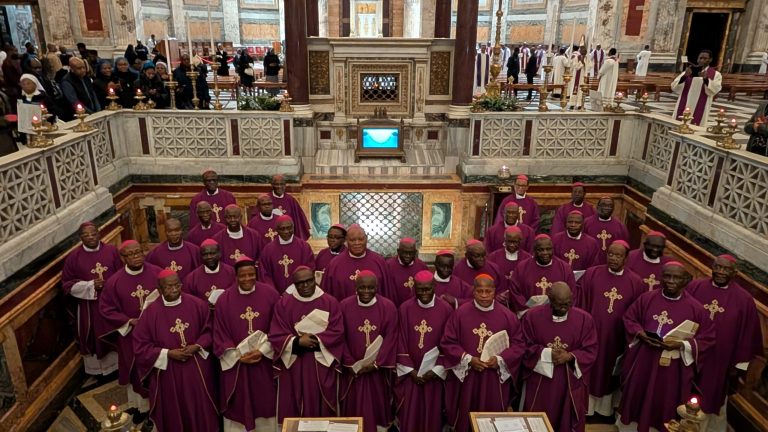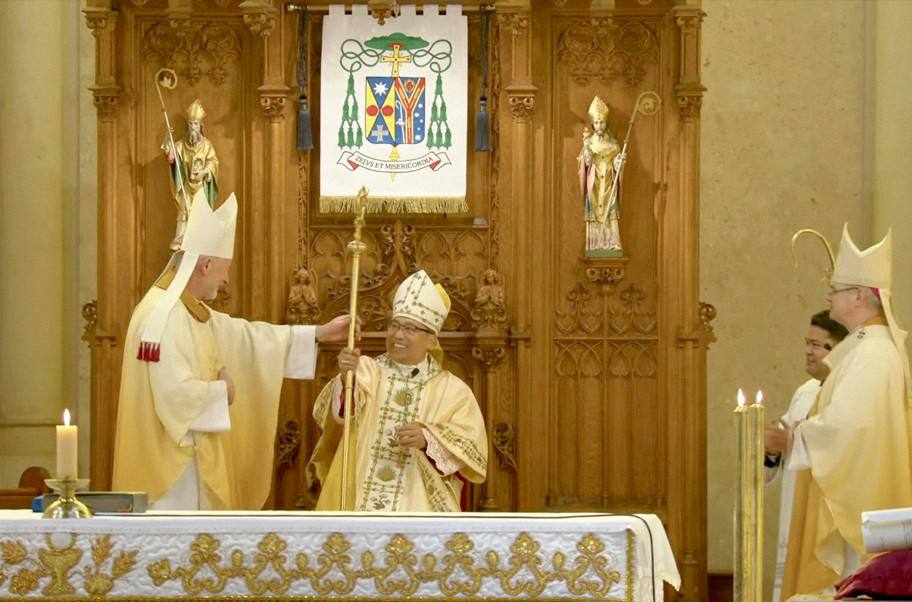
A Catholic diocese founded in 1874 welcomed its newest shepherd this week, and his first words to the community were as honest as they were hopeful. On July 30, Bishop Rene Ramirez was installed as the ninth Bishop of Sandhurst at Sacred Heart Cathedral in Bendigo, Victoria, becoming the latest Filipino-born cleric to take on senior leadership within the global Church, at a moment when the diocese he now leads is openly grappling with shrinking congregations and weakening ties to its younger generation.
Meet Bishop Rene Ramirez: From Nueva Ecija to Ninth Bishop of Sandhurst
Ramirez was born on March 28, 1969, in Gapan, Nueva Ecija, and entered the Rogationist congregation in 1985. He studied philosophy at Adamson University in Manila before his ordination to the priesthood on June 26, 1998. His formation continued well beyond seminary, earning a master’s degree in educational management at De La Salle University in Dasmarinas City and pursuing graduate studies in spirituality and social communications at the Pontifical Gregorian University in Rome. Before moving into parish ministry abroad, he held administrative and formation roles within his religious order in the Philippines, including several years directing its social communications office and later leading its Rogate Center.
Ramirez arrived in Australia as one of the Rogationists’ pioneering missionaries, becoming pastor of Holy Family Parish in Melbourne’s western suburbs in 2015. In 2023, he moved to the Diocese of Sandhurst to lead parishes in Shepparton South and Nagambie, a posting that preceded a rapid rise: Pope Francis named him an auxiliary bishop of Melbourne in November 2024, and he was consecrated a bishop on February 1, 2025, at St. Patrick’s Cathedral in Melbourne. Pope Leo XIV appointed him the ninth Bishop of Sandhurst on April 11, succeeding Archbishop Shane Anthony Mackinlay, who transferred to the Archdiocese of Brisbane the previous year.
A Call for Courageous Renewal Inside a Changing Diocese
In his first homily as bishop, Ramirez set evangelization as his central priority, describing it as the heart of the Church’s mission and the pathway for people to rediscover and encounter Jesus Christ. He said he wants Sandhurst’s parishes to become more invitational, placing renewed emphasis on supporting families, forming young disciples, and reaching Catholics who have drifted away from regular practice. That kind of mission, he told the congregation, requires leadership that is “grounded in prayer, generous in service, courageous in decision making, and accountable to the people.”
Ramirez did not downplay the diocese’s challenges. He acknowledged shrinking communities and weaker connections with younger generations while honoring those who built the diocese since 1874. As new pastoral approaches are tried, he asked for patience and forgiveness for the mistakes he may make. He described his installation not as the start of one man’s leadership, but of a shared journey requiring the prayers, honesty, and participation of the entire diocesan community.
Why This Installation Is Significant for the Church Today
This appointment carries genuine significance for the Church, and much of it points in an encouraging direction. Ramirez’s installation reflects a broader and increasingly visible global pattern: Filipino-born priests and bishops taking on senior leadership roles in Western dioceses facing demographic decline, a kind of reverse missionary movement in which a country long associated with receiving missionaries now actively sends its own clergy to sustain and renew the Church elsewhere. For a global Church increasingly interconnected across cultures, that pattern offers a hopeful, tangible sign of shared mission rather than one-directional dependency.
At the same time, an honest reading of this moment requires acknowledging what prompted it in the first place. Sandhurst’s shrinking congregations and weakening engagement with younger Catholics are not unique to this one diocese; they reflect a broader trend facing many dioceses across Australia, Europe, and North America. Ramirez’s candor about this reality, rather than glossing over it with celebratory language alone, models a form of leadership grounded in honesty, a quality increasingly recognized across the Church as essential for authentic renewal rather than denial.
A Shepherd Who Entrusts Himself to His Flock
One phrase from Ramirez’s homily carries particular spiritual weight: his description of entrusting himself to the diocese as its bishop, arriving with hopes and dreams but remaining genuinely ready to listen and learn. That framing echoes the Church’s own ancient understanding of a bishop’s relationship to his diocese as something closer to a covenant than an appointment, a mutual bond of trust rather than a one-way exercise of authority.
This posture mirrors Christ’s own model of leadership, one who described himself not as a distant ruler but as a shepherd willing to know his flock personally and be known by them in return. A bishop who opens his tenure by asking in advance for patience and forgiveness, rather than projecting certainty he does not yet have, models precisely the kind of humility that authentic spiritual leadership has always required.
A Spiritual Resolution
Bishop Ramirez named evangelization as his central priority, but genuine renewal in any diocese rarely comes from strategy alone. It grows from five ordinary practices lived consistently, the same practices any parish hoping to become more invitational will need to root itself in.
- Confession, offered generously and without judgment, is what makes it possible to genuinely welcome Catholics who have drifted from the Church back toward home.
- Adoration, quiet time spent before Christ, forms the kind of prayerful leadership Ramirez himself named as foundational to his ministry.
- The Rosary, prayed faithfully within families and parishes, remains one of the simplest ways to form young disciples in a household rather than only in a classroom.
- The Eucharist, celebrated with reverence and made genuinely inviting to newcomers, is the heart of the encounter with Christ that evangelization is ultimately meant to lead people toward.
- Scripture, proclaimed and lived, is what gives any call to courageous renewal its real substance, rather than leaving it as an inspiring phrase alone.
To remain informed about Catholic life, teachings, and global Church developments, readers may be encouraged to visit www.ewtnvatican.com for trusted Catholic news and resources.