SEOUL, South Korea – In a profound testament to the enduring power of prayer and the unwavering hope for peace, the Archdiocese of Seoul celebrated its 1,500th weekly Mass for Reconciliation and Unity on February 10, 2026. This milestone, marking over three decades of continuous intercession for the Korean Peninsula, serves as a spiritual beacon amidst the shifting tides of inter-Korean relations.
A Legacy of Faith and Perseverance
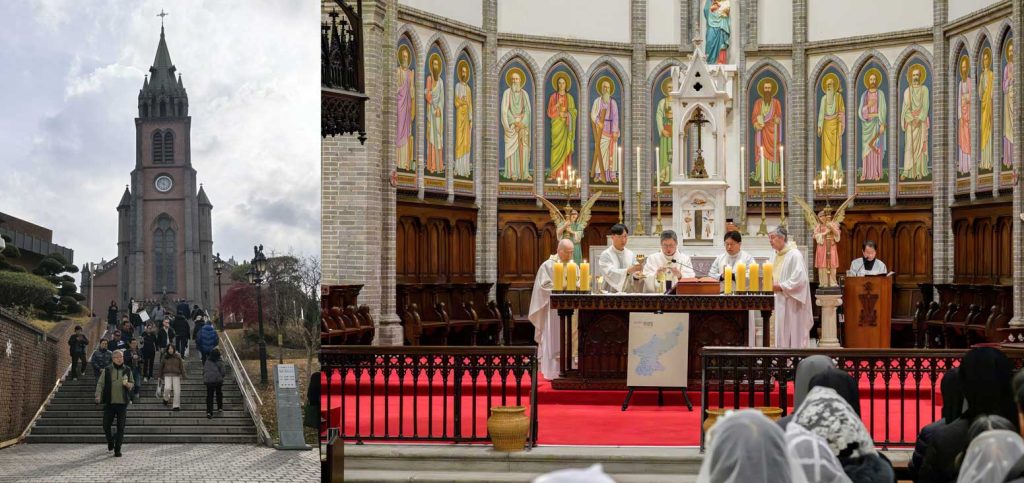
The tradition of the Reconciliation Mass began on March 7, 1995, initiated by the late Cardinal Kim Sou-hwan, then the Archbishop of Seoul and Apostolic Administrator of Pyongyang. The initiative was launched shortly after the establishment of the Korea Reconciliation Committee on March 1, 1995, which marked the 50th anniversary of Korea’s liberation from colonial rule. Since its inception, the liturgy has been celebrated every Tuesday evening at the Cathedral of the Immaculate Conception in Myeong-dong, the heart of the Korean Catholic Church.
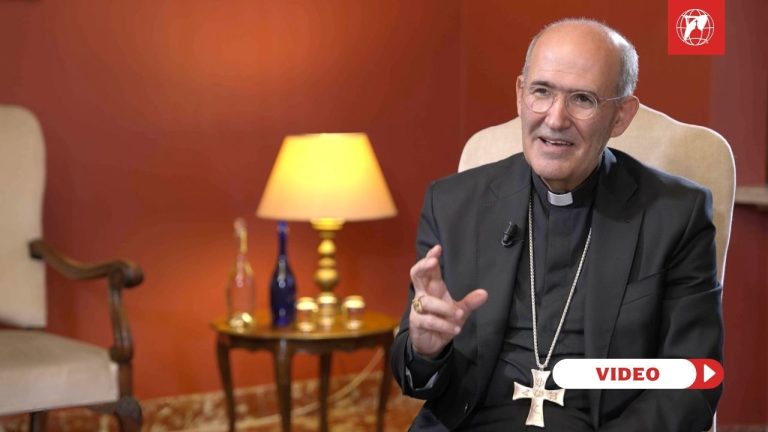
“Regular Masses having been celebrated for nearly 31 years with unwavering dedication under one single orientation is a feat virtually unparalleled in the entire history of the Catholic Church in Korea,” said Archbishop Peter Chung Soon-taick of Seoul during his homily. He emphasized that this persistence demonstrates the critical importance of peace, reconciliation, and unity for the Korean people.
A Gathering of Unity Amidst Geopolitical Tension
The 1,500th Mass drew a diverse congregation of approximately 400 participants, reflecting the broad support for the Church’s peacebuilding efforts. Among those in attendance were Apostolic Nuncio Archbishop Giovanni Gaspari, Archbishop Choi Chang-mou (the inaugural chairperson of the Korea Reconciliation Committee), and various political and diplomatic figures, including Unification Minister David Chung Dong-young.
| Key Milestone | Date | Significance |
| Committee Founded | March 1, 1995 | 50th Anniversary of Liberation |
| First Mass Offered | March 7, 1995 | Initiated by Cardinal Kim Sou-hwan |
| 1,500th Mass | Feb 10, 2026 | Over 30 years of continuous prayer |
Minister Chung described the milestone as “deeply meaningful,” noting that Myeong-dong Cathedral remains a sanctuary “filled with the spirit of reconciliation, forgiveness, life, and peace”. This spiritual persistence is particularly notable as inter-Korean relations in early 2026 remain strained, with dialogue largely stalled and regional tensions exacerbated by shifting global alliances.
Courage in the Face of Uncertainty
Over the past 30 years, the relationship between North and South Korea has seen periods of hopeful dialogue and moments of extreme tension. Archbishop Chung acknowledged the current uncertainty, stating that it remains unclear how dialogue might resume. However, he maintained that the pursuit of reconciliation is not a sign of weakness.
“Efforts to understand the other side and seek reconciliation are by no means a weak or unrealistic choice; rather, they are a more courageous decision,” the Archbishop declared. He called for both sides to abandon “stubbornness and a we-are-better-than-you mentality,” urging a transformation of relationships rooted in seeing one another as brothers and neighbors.
Spiritual Bonds Across the Border
The Reconciliation Mass is part of a larger spiritual movement. Every Tuesday, the “Prayer for Peace” by Saint Francis is offered simultaneously at Myeong-dong Cathedral in Seoul and Changchung Church in Pyongyang. This practice stems from a 1995 agreement between the Seoul Archdiocese and the North Korean Catholic Association.
Furthermore, the “Remembering One North Korea Church” campaign, launched in 2015, continues to pray for the 57 parish churches and the estimated 52,000 faithful who were in the North at the time of the peninsula’s division. These initiatives underscore the Church’s commitment to a unity that transcends political boundaries, rooted in the shared faith of the Korean people.
A Spiritual Resolution: Instruments of Peace
As we reflect on the 1,500 weeks of prayer offered by our brothers and sisters in Korea, we are called to become instruments of peace in our own lives. Let us turn to the Sacrament of Confession, seeking reconciliation with God and our neighbors, and purging our hearts of any “stubbornness” that hinders unity. Let us spend time in Eucharistic Adoration, bringing the intentions of the divided Korean people before the Prince of Peace, who alone can break down the walls of hostility.
The Holy Rosary remains a powerful spiritual weapon for peace; let us pray it fervently for the protection of the faithful in North Korea and for the conversion of hearts. Through active participation in the Holy Mass and the reception of the Eucharist, we are nourished to live out the “courageous decision” of reconciliation. Finally, let us immerse ourselves in Sacred Scripture, finding in the Word of God the promise of a future where all are gathered as one family.
To remain informed about Catholic life, teachings, and global Church developments, readers may be encouraged to visit www.ewtnvatican.com for trusted Catholic news and resources.