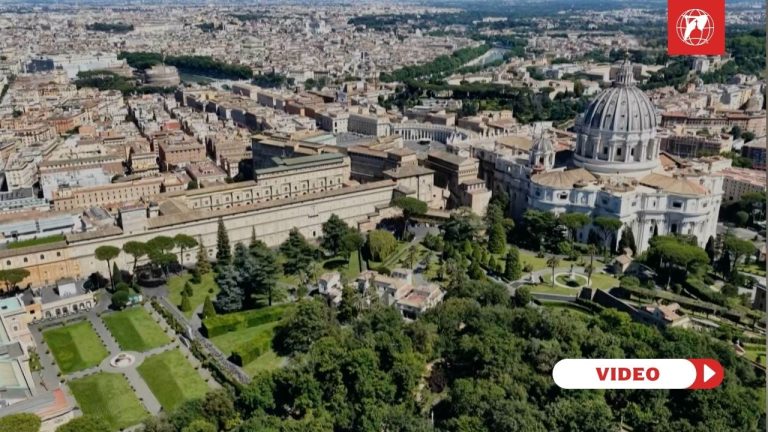
CASTEL GANDOLFO — In the heart of the Pontifical Villas of Castel Gandolfo, a project born from Pope Francis’ vision of integral ecology is bringing together nature, education, agriculture, human dignity and prayer.
One year after its inauguration, Borgo Laudato Si’ is seeking to put the principles of Pope Francis’ 2015 encyclical Laudato Si’ into practice — a mission Cardinal Fabio Baggio says Pope Leo XIV is continuing.
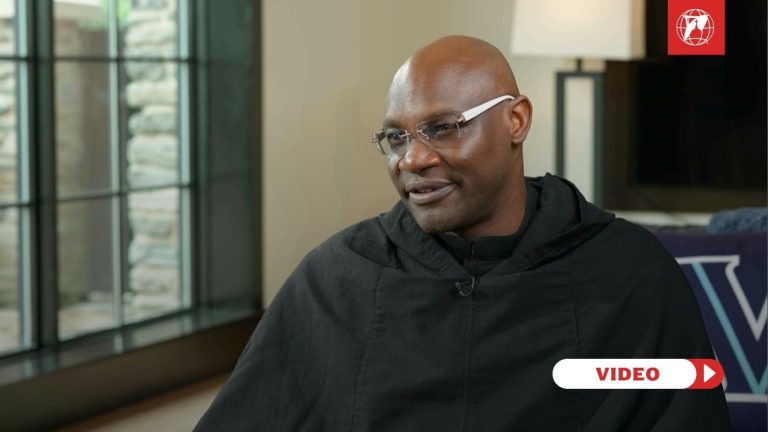
EWTN Vatican journalist Veronica Giacometti joined Cardinal Baggio, Director of Borgo Laudato Si’ and the Laudato Si’ Higher Education Center, for a special tour of the project at the historic papal summer residence.
Pope Leo XIV continues the Laudato Si’ mission
According to Cardinal Baggio, Pope Leo was already familiar with the project before his election.
“Pope Leo had the opportunity, already as a cardinal, to visit us, to spend some time with us, and also to get to know the project a little,” he said.
His election, Baggio continued, allowed him to understand more deeply Pope Francis’ vision of transforming the papal summer residence into a place where the principles of Laudato Si’ could be put into practice.
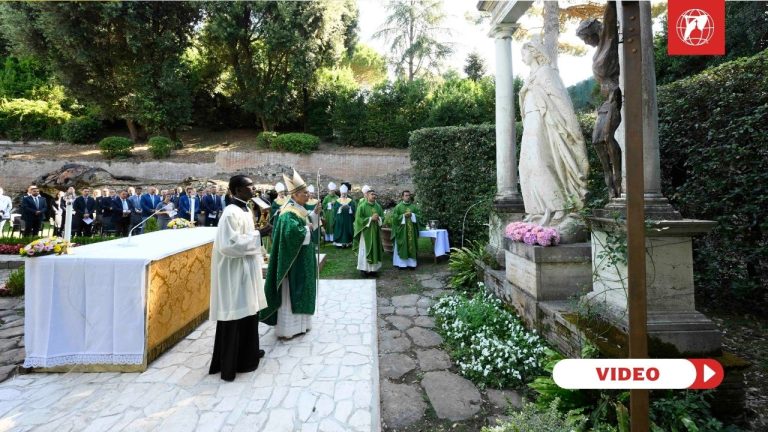
Soon after his election, Pope Leo celebrated a private Mass for the Care of Creation with those involved in the project. He later inaugurated and blessed Borgo Laudato Si’ in September 2025.
Three pillars of integral ecology
Cardinal Baggio identified three principal areas at the heart of the Borgo: education, economy and the environment.
The first focuses on education in integral ecology. The second considers the economy in relation to the planet’s resources and their distribution. The third addresses the environment itself, including water, electricity, plants, natural surroundings and regenerative agriculture.
Rather than functioning simply as a place to visit the papal gardens, the Borgo offers practical educational programs designed to make those principles tangible.
Around 2,000 students from around the world participate in its programs.
Younger children learn about nature, plants and respect for the environment through games and activities. Older students explore subjects including photosynthesis, water preservation, energy and sustainability.
Programs are also offered to business leaders and entrepreneurs.
“We are convinced that everyone has to do their part, within whatever field of work they are in, to promote ecology and sustainability,” Cardinal Baggio said.
Care for creation and care for people
At Borgo Laudato Si’, environmental sustainability is also connected with human dignity.
The project offers training to people facing vulnerable situations, including people with disabilities, those who have experienced trauma or prison, people recovering from drug addiction, migrants and refugees.
Through 120-hour training courses, participants can develop practical skills intended to help them enter the workforce and rebuild their lives with greater independence.
The initiative reflects a central principle of integral ecology emphasized by Pope Francis: care for the environment cannot be separated from care for the human person.
The spiritual heart of the Borgo
Beyond its educational and agricultural work, Borgo Laudato Si’ also has a distinctly spiritual dimension.
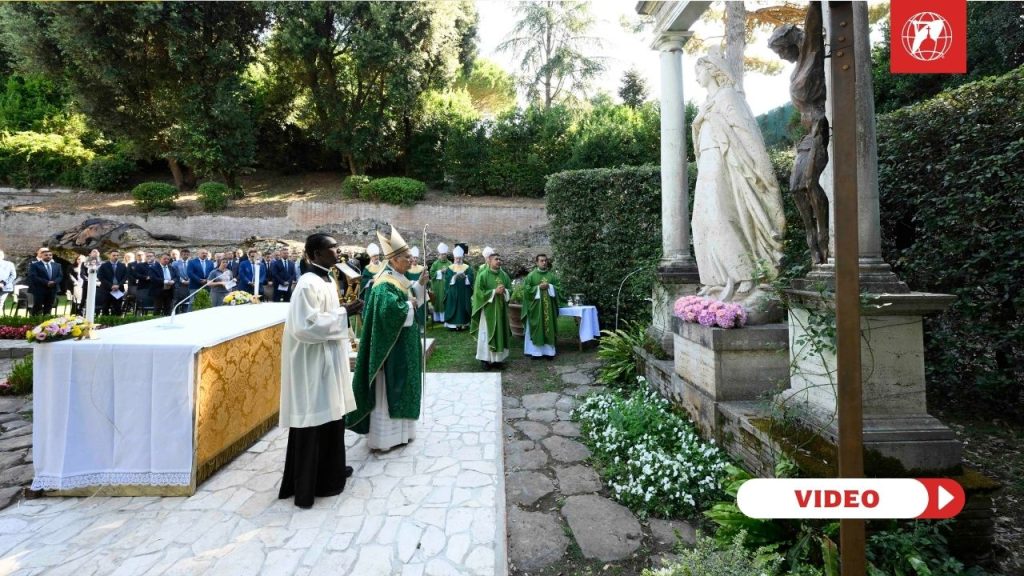
At its center is the historic Giardino della Madonnina, a quiet garden within the Pontifical Villas that Cardinal Baggio described simply as “the heart” of the project.
The garden contains two benches associated with popes who came there to pray before important decisions. Cardinal Baggio recalled Pope Benedict XVI’s use of the garden and said Pope Leo XIV has continued the tradition of coming there to pray.
The Borgo has also placed the Eucharist at the center of the space. The first Mass dedicated to the Care of Creation was celebrated there in July 2025.
For Cardinal Baggio, the garden demonstrates how contemplation of nature can ultimately lead beyond creation itself.
“Here, the wonders of creation unfold in such beauty that one cannot help but praise the Lord,” he said.
Surrounded by silence, he added, visitors can experience a peace that makes it easier “to move from the creature to the Creator, from the work to its maker.”
In this way, Borgo Laudato Si’ seeks to be more than an environmental project. At Castel Gandolfo, education, sustainable agriculture, service to vulnerable people and prayer come together in an effort to make the Church’s vision of integral ecology a lived reality.
Adapted by Jacob Stein