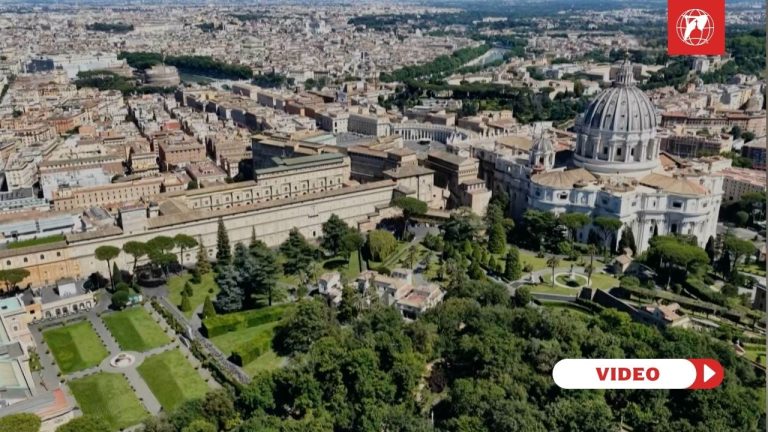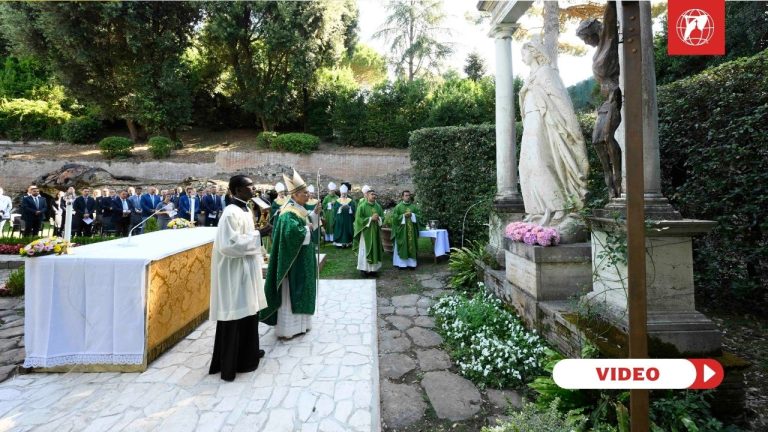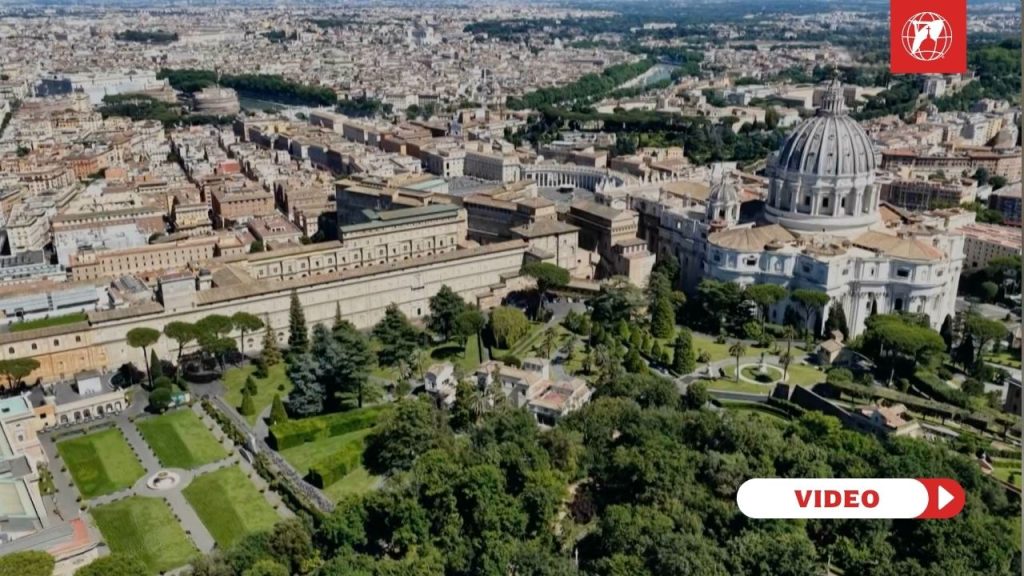
Half of Vatican City is green, and behind its walls, a team of gardeners and forestry experts is working to preserve a centuries-old landscape while making its cultivation increasingly sustainable.
The Vatican Gardens trace their origins to the 13th century, when Pope Nicholas III transferred the papal residence from the Lateran to the Vatican. What began as a large walled area of lawns, woods, vineyards and orchards — supplying herbs, fruit and vegetables for the papal household — developed over the centuries into an extraordinary collection of gardens and botanical species.
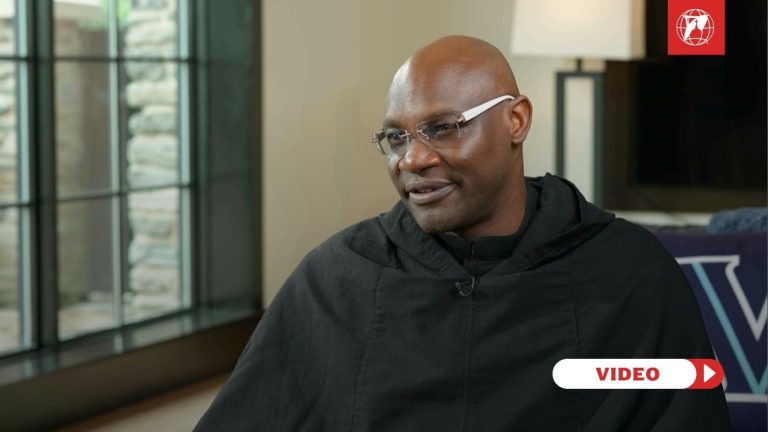
“There are countless different species, both trees and flowering plants,” Stefano Giampaolo, forestry expert at the Governorate of Vatican City State, told EWTN Vatican.
Over time, donations and the acquisition of unusual specimens have transformed the grounds into what Giampaolo describes as “a true botanical garden.”
Among its newest additions is the Abies nebrodensis, or Sicilian fir, donated in 2025 by the Botanical Garden of Palermo.
“We are particularly proud of our most recent acquisition,” Giampaolo said. “It is a very special species. We are delighted to have it here in the Gardens as well.”
Not one garden, but many
Around 35 people work to care for the Vatican Gardens and their wider operations, from gardeners and greenhouse staff to warehouse workers and those responsible for preparing floral arrangements for the Apostolic Palace and St. Peter’s Basilica.
And despite their name, the Vatican Gardens are not a single, uniform landscape.
“Perhaps what surprises visitors is that they expect to see one garden,” Giampaolo explained. “But as the name suggests, these are the Vatican Gardens, an ensemble of different gardens.”
Their relatively small area contains a remarkable variety of landscapes, plants and historic spaces developed across centuries of papal history.
Among the more secluded corners is a small vegetable garden near the Mater Ecclesiae Monastery. Founded around 1990 by Pope St. John Paul II, the monastery was established for cloistered religious communities dedicated in a particular way to prayer for the Pope.
The nearby vegetable garden once supplied produce entirely for the papal kitchen. Today, its harvest also goes to the monastery and to charities that distribute food to people in need.
From seed to harvest
The garden contains around 15 citrus trees alongside seasonal vegetables. Its four terraces provide just under 400 square meters of cultivable land.
They are tended by expert gardener Gilberto Bianchi, who has worked under three pontificates.
“Everything we grow is completely natural,” Bianchi explained. “Whatever we plant is grown according to what nature requires at that particular time.”
The process begins with seeds rather than laboratory-grown plants, with the Vatican gardeners overseeing the entire cycle from planting to harvest.
“We do everything ourselves, from the seed all the way to the fruit,” Bianchi said.
In 2026, the vegetable garden reached another milestone: it is now cultivated entirely organically.
The change builds upon years of increasingly sustainable practices in the Vatican Gardens and reflects the principles outlined by Pope Francis in his 2015 encyclical Laudato si’, which called for greater care for creation and an integral approach to environmental responsibility.
Caring for the soil — and conserving water
For the gardeners, organic cultivation involves more than simply eliminating chemical products.
“The goal is to completely eliminate the use of chemicals, so to speak, to observe nature and restore the soil to the way nature originally created it,” Bianchi said.
The team now uses organic substances while adapting its methods to the particular characteristics of the soil and climate.
Water conservation is also central to the approach. Coconut fiber is added to the well-drained soil to help retain moisture, while drip irrigation delivers water directly to plants and reduces waste.
The transition, however, has been gradual.
“It is something that did not happen overnight,” Giampaolo said, explaining that the move toward organic cultivation began under his predecessor and has developed over several years.
Through careful observation of the seasons and weather, knowledge passed down through years of experience, and new sustainable techniques, the Vatican’s gardeners are seeking to make the management of the Gardens increasingly compatible with the natural environment.
For Giampaolo, the work represents a practical response to Laudato si’: caring for creation not simply as an idea, but as a task carried out every day within the walls of the world’s smallest state.