image from © Missio / Markus Andorf
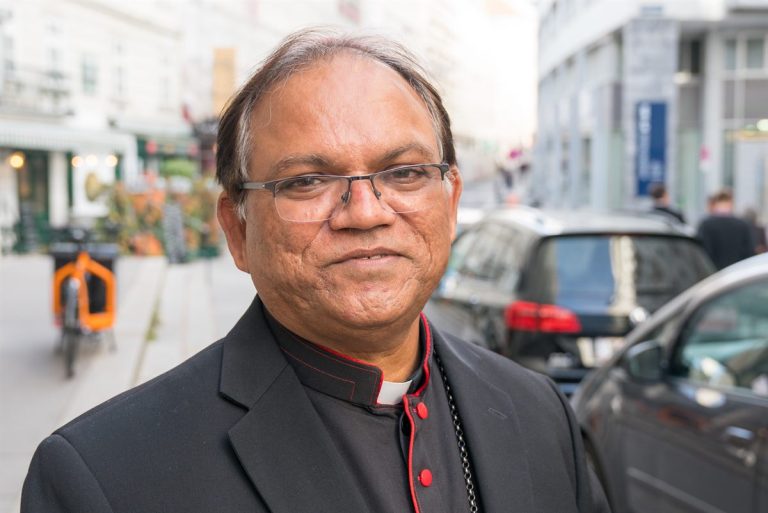
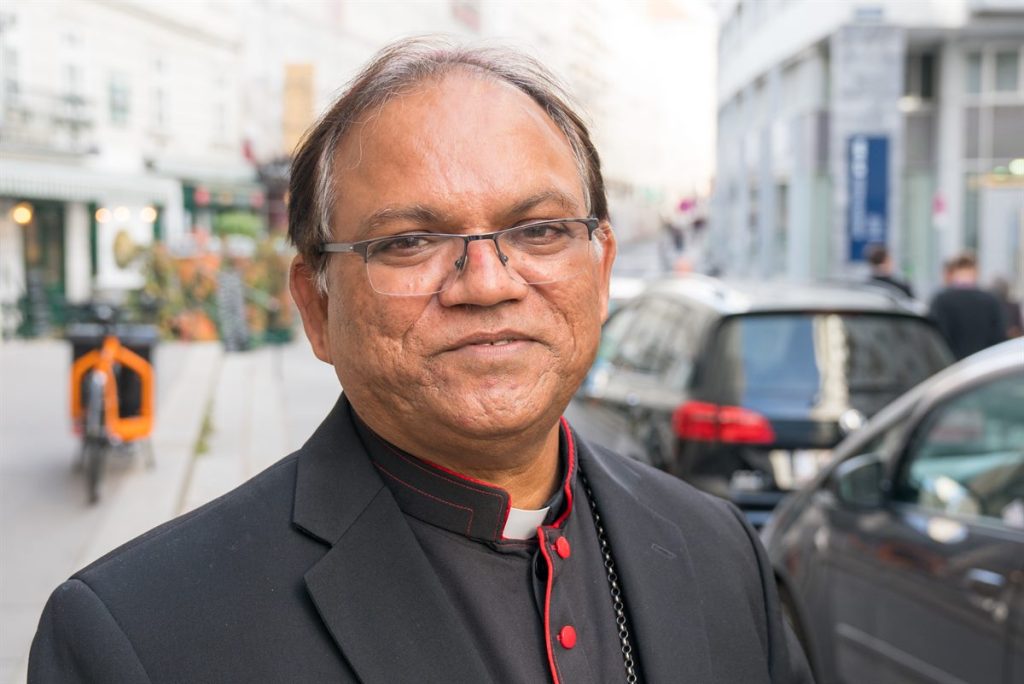
Have you ever wondered who shepherds the Catholic Church in Pakistan’s interior Sindh, where Christians form a tiny minority in a nation of 240 million people? The answer is Bishop Samson Shukardin, a Franciscan friar who has given his life to the land where he was born. His story matters because the Catholic Church in Pakistan faces real hardship, from poverty to discrimination, and faithful leadership makes all the difference.
In this article, you will discover five inspiring facts about Bishop Samson Shukardin and his bold mission. You will learn how a son of Sindh became a bishop, how he champions interfaith youth formation, and why his work in places like Kotri offers hope far beyond one schoolyard. Each fact ends with a practical takeaway you can apply to your own life of faith.
Who Is Bishop Samson Shukardin? A Son of Sindh
Bishop Samson Shukardin was born on January 29, 1961, in Pakistan. He grew up in a country where Christians make up just 1.37 percent of the population, about 3.3 million people according to the 2023 census. Sindh province, his home, holds roughly 547,000 Christians, the second-largest Christian community in the nation.
He did not come from privilege. Like many Pakistani Christians, Bishop Samson Shukardin knew what it meant to belong to a small and often overlooked community. Yet he chose to stay, to study, and to serve. That choice shapes everything about his mission today.
As a young man, Bishop Samson Shukardin joined the Order of Friars Minor, the Franciscans. He was ordained a priest on December 10, 1993. For years he served as Vicar General of the Diocese of Hyderabad and as parish priest of St. Elizabeth Parish in Latifabad, Hyderabad. Then, on December 16, 2014, Pope Francis appointed him bishop of his home diocese. He was ordained bishop on January 31, 2015.
Fact 1: Bishop Samson Shukardin Is a Franciscan at Heart
The first key fact about Bishop Samson Shukardin is his Franciscan identity. The Franciscan spirit prizes humility, simplicity, and friendship across boundaries. St. Francis of Assisi himself crossed battle lines to meet a sultan, and his followers have carried that instinct for dialogue ever since.
Bishop Samson Shukardin lives this tradition in modern Pakistan. His approach to interfaith youth formation flows directly from his Franciscan roots. He meets people where they are. He listens before he speaks. He treats every person, Christian or Muslim, as a brother or sister.
Actionable takeaway: You do not need a title to practice Franciscan friendship. Start one conversation this week with someone of another faith. Ask a sincere question, then listen well. Small acts of respect prepare the soil for peace.
Fact 2: A Scholar of His Own Soil
The second fact is his education. Bishop Samson Shukardin graduated in Arts from Sindh University, Jamshoro, in 1992. He then studied theology at the National Catholic Institute of Theology in Karachi. He is a scholar formed by the very soil he now serves.
This matters for the Catholic Church in Pakistan. A bishop who studied alongside his fellow citizens understands their language, their culture, and their hopes. He can speak to Muslim neighbors not as a stranger but as a fellow son of Sindh.
His example also sends a message to young people: education is a path to service. When Bishop Samson Shukardin urges students to pursue higher studies, he speaks from experience. He walked that road himself, from a local classroom to the episcopate.
Actionable takeaway: Support one student’s education this year, through prayer, encouragement, or a scholarship gift. Formation begins in the classroom.
Fact 3: Chosen by Pope Francis
The third fact is his appointment. Pope Francis named Bishop Samson Shukardin to lead the Diocese of Hyderabad on December 16, 2014. Choosing a local Franciscan, rather than an outsider, affirmed the maturity of the local Church.
The Diocese of Hyderabad is no small assignment. Erected in 1958, it covers a vast stretch of Sindh and serves some 50,000 Catholics across fifteen parishes. Eight of those parishes serve tribal communities, making it the biggest tribal apostolate in Pakistan. Its mother church is St. Francis Xavier Cathedral in Hyderabad.
Leading this flock demands patience and courage. Bishop Samson Shukardin has now guided the diocese for more than a decade, through both celebration and trial, remaining close to his people in their villages and parishes.
The appointment also carried a wider meaning for the Catholic Church in Pakistan. When a local son takes responsibility for a local church, the faith takes deeper root. Bishop Samson Shukardin knows the roads of Sindh, the rhythms of its harvests, and the names of its tribal elders. That knowledge cannot be imported. It must be lived, and he has truly lived it for six decades.
Fact 4: Steward of Catholic Schools in Pakistan and Hospitals
The fourth fact is the scale of his diocese’s service. The Catholic Board of Education in Hyderabad oversees 17 primary schools, four elementary schools, and nine high schools. The diocese also runs six hostels and boarding schools, many for tribal children from interior Sindh. These Catholic schools in Pakistan educate students of every faith, forming generations in knowledge and character.
The witness extends to healthcare. St. Elizabeth’s Hospital in Hyderabad, a 75-bed facility founded in 1958, serves Hyderabad and nearby Kotri. It treats patients regardless of caste or creed, including tribal peoples who travel from distant districts.
Then there is the Joty Educational and Cultural Centre, established in 1993 to promote interreligious dialogue and social harmony. Under Bishop Samson Shukardin, these institutions form a network of quiet service that benefits the whole nation, not only Catholics.
Actionable takeaway: Learn the name of one Catholic institution serving your own region, and pray for its staff by name this week.
Fact 5: A Bishop Who Celebrates With Children of Every Faith
The fifth fact brings us to Kotri. On August 14, 2026, Bishop Samson Shukardin celebrated Pakistan’s 79th Independence Day with about 50 students from different faith backgrounds at Dr. Gerhard and Helga School in Kotri, Sindh. The students sang the national anthem, performed cultural dances, and presented patriotic tableaus.
The bishop did more than attend. Bishop Samson Shukardin encouraged the students to pursue higher education and professional careers in healthcare, law, the armed forces, politics, and education. He honored the teachers. He recognized the contribution of Christian schools and hospitals to Pakistan since Partition. Then he led a cake-cutting ceremony, a simple sign of shared joy.
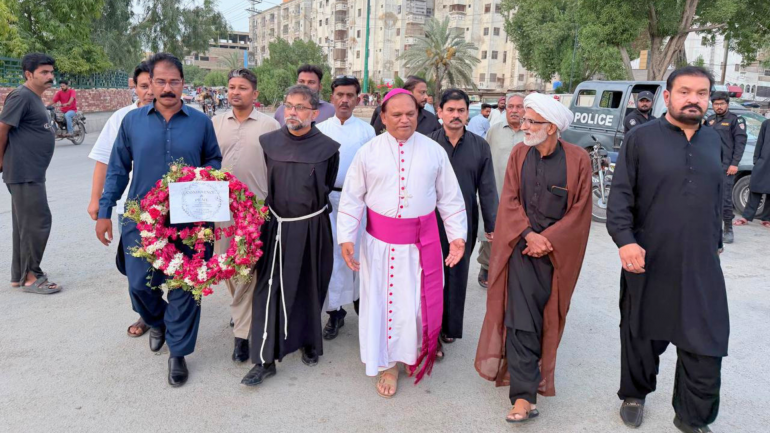
This is interfaith youth formation in action. In a country where Christians sometimes face suspicion, Bishop Samson Shukardin sat with Muslim and Christian children and told them, by his presence, that they belong. That image carries power far beyond Kotri.
Notice what the celebration taught without a single lecture. The anthem taught belonging. The dances taught joy. The tableaus taught history. The cake taught friendship. Bishop Samson Shukardin understood that formation works through experience before it works through words. Children remember who sat with them long after they forget what was said.
How You Can Support Bishop Samson Shukardin’s Mission
You may live far from Sindh, but you can still share this mission. Here are four practical steps.
First, pray for Bishop Samson Shukardin and the Diocese of Hyderabad by name. Prayer sustains leaders you may never meet. Second, learn more about the Catholic Church in Pakistan through trusted sources such as www.ewtnvatican.com. Third, support Catholic schools in Pakistan and similar missions through reputable Catholic charities. Fourth, practice interfaith friendship in your own neighborhood, following the Kotri model of respect and shared celebration.
Conclusion: A Mission Worth Imitating
Bishop Samson Shukardin shows what courageous, gentle leadership looks like. A Franciscan friar. A scholar of Sindh. A bishop chosen by Pope Francis. A steward of Catholic schools in Pakistan and hospitals. A friend to children of every faith. These five facts reveal one mission: the mission of the Catholic Church in Pakistan, and it is a mission of hope.
His example invites a personal response. This week, go to Confession and let God heal whatever divides your heart from others. Spend time in Eucharistic Adoration, asking Christ to teach you His own humility. Pray the Rosary for the Diocese of Hyderabad and for Pakistan’s youth. Hear Mass and receive the Eucharist, the true source of unity across every boundary. And read the Bible, especially the Gospels, where Jesus crosses every barrier to meet people in love.
The bishop in Kotri simply imitates that Lord. So can we.