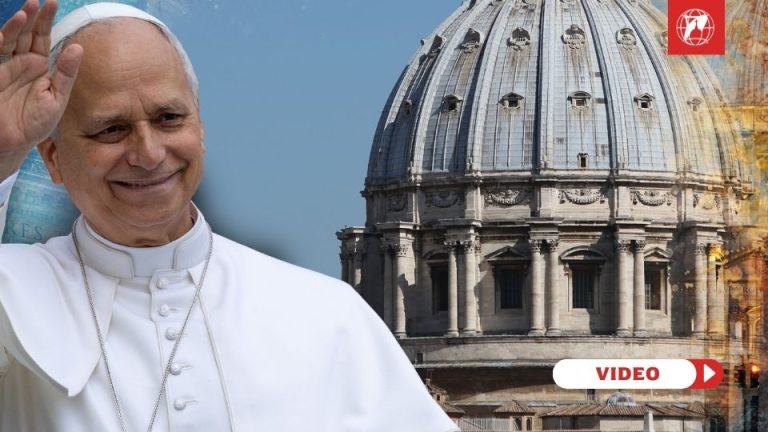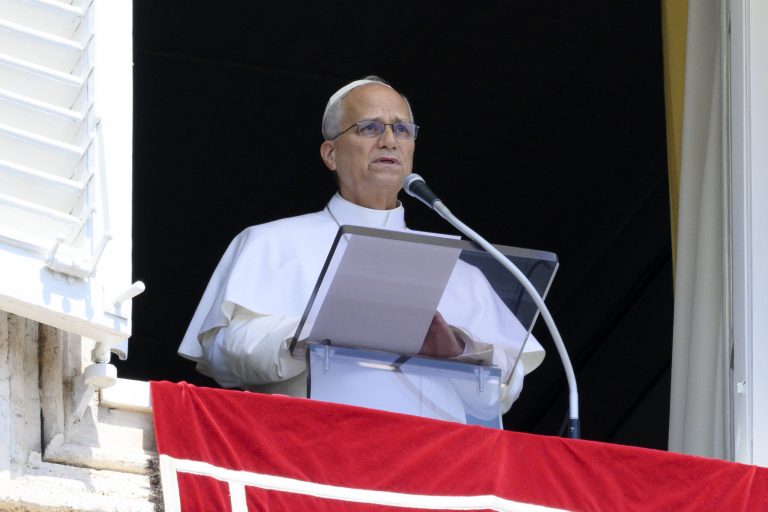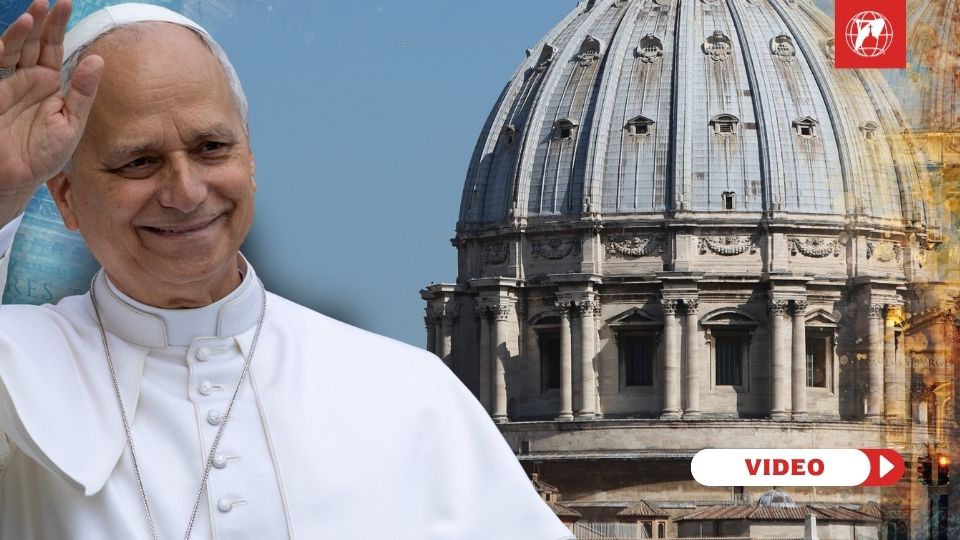
When Pope Leo XIV appeared on the central balcony of St. Peter’s Basilica on May 8, 2025, much of the world was meeting Robert Francis Prevost for the first time.
He was the first U.S.-born pope and the first Augustinian elected to the Chair of Peter. To the crowds filling St. Peter’s Square, the man dressed in white seemed like an unexpected choice—a new face suddenly placed at the center of the Catholic Church.
But Rome was anything but new to Robert Prevost.
More than four decades before his election, a young Augustinian had arrived in the Eternal City to study, pray and prepare for a life he expected would eventually take him far from Rome. Over the years, however, he would repeatedly return: as a student, priest, Prior General of the Order of St. Augustine, bishop, Vatican official and cardinal.
Finally, he returned as pope.
The story of Pope Leo XIV is therefore also a Roman story, written in university classrooms, Augustinian convents, quiet chapels and friendships stretching across decades.
A Young Augustinian Arrives in Rome
Robert Prevost first came to Rome in 1981. He was just 27 years old.
Sent by the Augustinians of the Province of Our Mother of Good Counsel in Chicago, he pursued studies in canon law at the Pontifical University of St. Thomas Aquinas, better known as the Angelicum.
The university was then home to an influential canon law faculty. Prevost entered this intellectual world at an important moment for the Church, as work surrounding the revision of the Code of Canon Law was reaching its final stages.
Yet his years at the Angelicum were about more than acquiring technical knowledge of ecclesiastical law.
His formation encouraged him to understand how authority operates within the Church and how canon law relates to the dignity of the human person, the common good and the Church’s mission.
Prevost eventually completed his doctoral studies, graduating in 1987. The typescript of his dissertation remains preserved in the Angelicum library.
Its subject was the office and authority of the local prior in the Order of St. Augustine.
Decades later, after Prevost had become pope, a phrase from the dissertation’s introduction took on remarkable significance: “authority as service.”
The young Augustinian could hardly have known how much authority would eventually be entrusted to him. His thoughts were directed toward missionary life in Peru, not toward the highest offices of the Church.
Yet the principle explored during those Roman years would follow him through his life—as an Augustinian superior, bishop, cardinal and eventually pope.
The Augustinian Home That Formed Robert Prevost
Academic formation was only one dimension of Prevost’s life in Rome.
Equally important was the Augustinian community that became his home.
Community lies at the heart of Augustinian spirituality: living with one heart and one soul directed toward God. Prayer, meals, material possessions, struggles and joys are shared among brothers.
For Prevost, this was not simply an ideal studied in the writings of St. Augustine. It was a daily reality.
The Augustinian international community in Rome brought together friars from across the world. There, Prevost formed relationships that would endure for decades.
Older friars who knew him as a young man would later become living witnesses to a period of his life largely unknown to the wider world.
They remembered him not first as a future bishop or cardinal, but simply as Robert—or “Bob”—one of their brothers.
It was also in Rome that one of the decisive moments of his vocation took place.
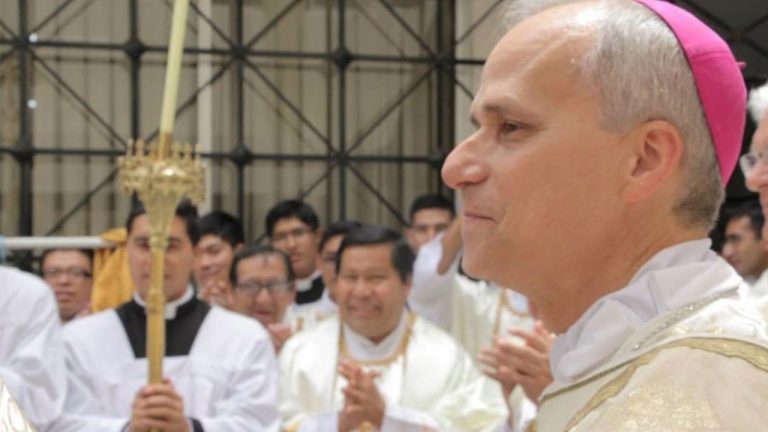
On June 19, 1982, Robert Francis Prevost was ordained to the priesthood in the Chapel of St. Monica near the Vatican.
For the Augustinian community, it was a joyful but simple celebration. The friars did not necessarily have relatives nearby, and members of the community helped prepare the festivities and meals.
The chapel would remain deeply connected to Prevost’s life for decades.
From Rome to Peru—and Back Again
The first major chapter of Prevost’s Roman life ended in 1987.
He returned to the United States and then continued his ministry in Peru, the country that would become another spiritual home and where he would eventually serve as a bishop.
But Rome was waiting.
Fourteen years later, Prevost returned to the Eternal City as Prior General of the Order of St. Augustine. He served two consecutive terms, from 2001 until 2013.
The student had become the leader of the worldwide Augustinian family.
Yet those who lived alongside him remembered a striking continuity between the young friar they had known and the superior general he had become.
One Augustinian recalled a seemingly insignificant moment during a meal. Prevost, despite holding the highest leadership position in the order, stood up and began collecting plates from the table—including the plate of a younger friar.
It was a small gesture, but one that expressed something essential about his understanding of authority.
Service was not merely a theme from an old doctoral dissertation.
It was something to be practiced.
The Chapel Where the Future Pope Prayed
When Prevost returned to Rome again years later for service at the Vatican, he no longer lived permanently in his old Augustinian community.
But he did not leave it behind.
Even while carrying significant responsibilities, he continued returning to pray with his brothers, celebrate Mass and share meals.
The Chapel of St. Monica remained especially important.
Those who lived with him remembered entering the chapel in the morning and finding Prevost already there in prayer.
It was the same chapel where he had been ordained a priest decades earlier—a place where, throughout the different stages of his life, he entrusted his responsibilities to God and sought strength for what lay ahead.
The connection became even stronger after Pope Francis made Prevost a cardinal in 2023.
The Chapel of St. Monica became associated with his cardinalatial title, binding another chapter of his ecclesial service to the Augustinian place that had accompanied him since his youth.
Less than two years later, everything changed.
Cardinal Prevost at the Heart of the Vatican
In January 2023, Pope Francis appointed Prevost to lead the Dicastery for Bishops, bringing him back to Rome after years of episcopal ministry in Peru.
It was not necessarily an easy transition.
The transcript’s witnesses describe the profound humanity Prevost encountered among the Peruvian people and the attachment he developed to the country. Leaving Peru meant leaving a place and people he loved.
In Rome, however, he was given one of the most consequential responsibilities in the universal Church.
As prefect of the Dicastery for Bishops, Prevost participated closely in the process surrounding the appointment of bishops around the world.
Those who worked with him noticed his ability to listen.
In meetings, the prefect traditionally speaks after others have had the opportunity to offer their perspectives. Prevost appeared particularly suited to this method. Colleagues remembered him as attentive and diligent, willing to create room for others before giving his own judgment.
The same characteristic was visible during major ecclesial gatherings under Pope Francis.
He was not described as someone searching for the spotlight.
He listened.
And then, in 2025, the cardinal who had spent much of his life serving quietly was placed before the eyes of the world.
The Augustinian Becomes Pope Leo XIV
On May 8, 2025, Robert Francis Prevost was elected pope.
The black Augustinian habit gave way to the white cassock of the Bishop of Rome.
But the Augustinian identity remained.
Even the pectoral cross worn by Pope Leo XIV on the balcony of St. Peter’s carried a connection to his religious family. The cross had been presented to him by the Augustinian Order and contained relics associated with St. Augustine, St. Monica and St. Thomas of Villanova.
It was a physical reminder of the spiritual tradition that had accompanied him from his earliest years of formation to the papacy.
Only days after his election, Pope Leo returned to the Chapel of St. Monica and celebrated Mass with his Augustinian brothers.
The new pope had come home.
Pope Leo XIV and Our Lady of Good Counsel
Another thread running through Prevost’s life is his devotion to the Virgin Mary.
Just two days after his election, on May 10, Pope Leo XIV traveled outside Vatican City to Genazzano, a medieval town near Rome and home to the ancient Shrine of Our Lady of Good Counsel.
The sanctuary has a centuries-old relationship with the Augustinians and preserves the revered image of the Madonna of Good Counsel.
For Prevost, the shrine was already familiar.
According to the Augustinians interviewed in the documentary, he had visited at important moments throughout his vocation. When significant responsibilities were entrusted to him, he returned to pray before the Madonna.
Now there was one more responsibility to entrust to her.
The papacy.
His arrival after the conclave drew crowds of faithful, but behind the public significance of the visit was something much more personal: an Augustinian returning to a place of prayer that had accompanied him long before anyone imagined he would become pope.
A Pope Who Was Roman Before His Election
Popes do not need to be born in Rome to become deeply connected to the city.
For two thousand years, the successors of St. Peter have inherited a relationship with the Eternal City that is more than geographical. As Bishops of Rome, they become part of its Christian memory and its living spiritual tradition.
Pope Leo XIV entered that inheritance with an unusual advantage.
Rome had already formed him.
Here he studied canon law. Here he was ordained a priest. Here he learned and lived the Augustinian experience of community. Here he served as Prior General. Here he prayed in the Chapel of St. Monica. Here he worked beside St. Peter’s Square at the Dicastery for Bishops.
And here, on May 8, 2025, he stepped onto the balcony of St. Peter’s Basilica as Pope Leo XIV.
For millions watching around the world, it was the beginning of his story.
For Robert Prevost, it was also a return home.
Adapted by Jacob Stein