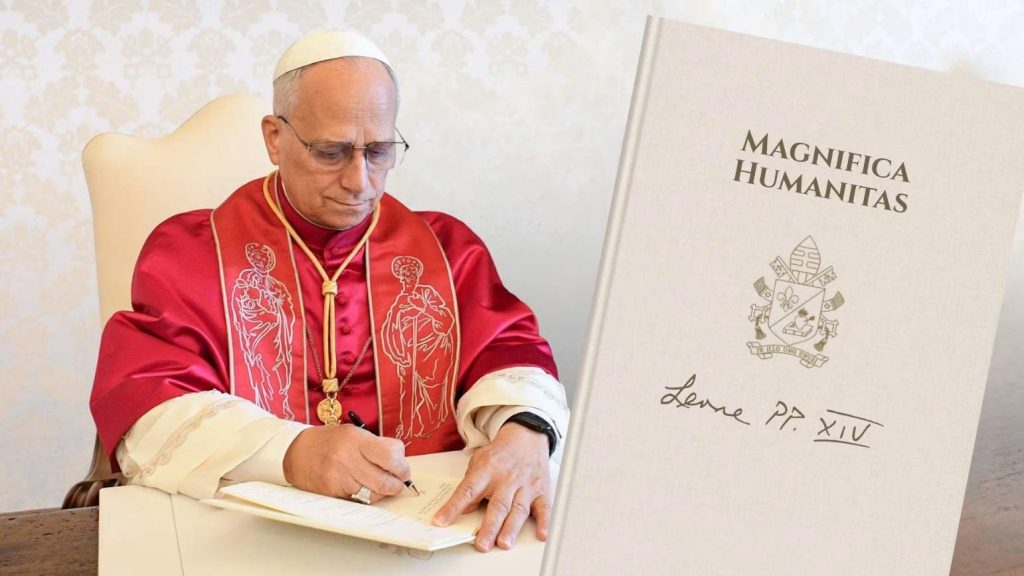
For many young Pakistanis, artificial intelligence isn’t an abstract debate happening in faraway tech capitals; it’s a daily reality shaping how they study, apply for jobs, and imagine their futures in a rapidly changing economy. Amid that uncertainty, an unexpected source of clarity has emerged from Rome. Pope Leo XIV’s first encyclical, Magnifica Humanitas, insists on a simple but powerful principle: technology must always serve humanity, never the other way around. For a generation navigating AI’s promises and anxieties in real time, that message is resonating far beyond Catholic circles, offering a moral compass in a conversation that can otherwise feel dominated by corporations and algorithms.
What Is ‘Magnifica Humanitas’? Pope Leo XIV’s Landmark Teaching on AI
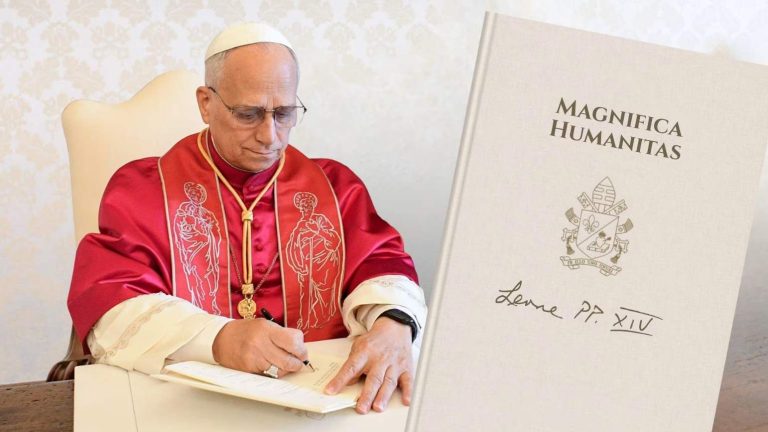
Released on May 25, 2026, and signed ten days earlier on the 135th anniversary of Pope Leo XIII’s Rerum Novarum, Magnifica Humanitas (“Magnificent Humanity”) is widely seen as the natural successor to that landmark 1891 encyclical, which addressed the upheavals of the Industrial Revolution. Where Rerum Novarum confronted the exploitation of workers by new industrial powers, Magnifica Humanitas confronts a new industrial revolution altogether, one driven by artificial intelligence, automation, and the concentration of digital power in the hands of a few large technology companies.
The encyclical opens with a striking image: humanity today faces a choice between constructing a new Tower of Babel or building a city were God and humanity dwell together. Rather than treating AI as either an enemy of humanity or a neutral tool, Pope Leo XIV insists that technology is never neutral, because it inevitably reflects the values, incentives, and priorities of whoever designs, funds, and governs it. His central appeal is for what he calls “disarming” AI, not rejecting it, but preventing it from dominating human life, concentrating power, or being shaped solely by military and economic interests.
Why ‘Technology Must Serve Humans’ Resonates With Pakistan’s Younger Generation
This message lands with force in a country like Pakistan, where a large, young population is growing up alongside rapid digital transformation while also facing real economic uncertainty, competitive job markets, and an evolving education system increasingly shaped by AI tools. For young people navigating these pressures firsthand, the encyclical’s core claim, that technology exists to serve human dignity and the common good rather than to reshape people into mere data points or productivity metrics, offers something many secular conversations about AI rarely provide: a clear moral anchor.
Pope Leo XIV’s specific concern for the dignity of work speaks directly to anxieties shared by young Pakistanis entering a labor market where automation increasingly touches everything from customer service to skilled technical roles. Rather than treating job displacement as an unavoidable cost of progress, the encyclical insists that economic systems and technologies must be judged by whether they serve human flourishing, a framework that gives young workers and students a principled way to evaluate AI’s role in their own lives, rather than simply adapting to it passively.
Why This Encyclical’s Reception in Pakistan Is Significant for the Church
This response carries genuine significance for the Church, and in Pakistan’s context, that significance is largely encouraging. As a religious minority in a Muslim majority nation, Pakistan’s Christian community often has limited public platforms to shape national conversations. Yet Magnifica Humanitas addresses a concern shared across religious lines, the fear that unchecked technology could erode human dignity and widen inequality, giving Pakistani Christians an unusually credible, unifying voice to contribute to a broader societal conversation rather than one confined to internal Church matters.
At the same time, an honest reading of this moment calls for some measured caution. A papal encyclical written from Rome, however carefully reasoned, still needs deliberate local translation into homilies, catechesis, and everyday pastoral conversation before its principles genuinely reach young people in Karachi, Lahore, or rural Punjab. Without that intentional local engagement, even a widely praised document risks remaining an admired teaching rather than a lived framework shaping how young Pakistani Catholics actually think about technology, work, and their own dignity day to day.
Human Dignity as the Unshakable Foundation
At the heart of Magnifica Humanitas lies a truth far older than artificial intelligence itself: every person is made in the image of God, a dignity that no technology, algorithm, or economic system can diminish or replace. This is precisely why the encyclical warns against visions of an “enhanced” or optimized human being, cautioning that once people are treated as things to be improved upon rather than persons to be respected, it becomes easier to view some lives as less valuable than others.
For young people absorbing near-constant messages that their worth is tied to productivity, test scores, or how efficiently they can compete with automated systems, this teaching offers something quietly countercultural: a reminder that human dignity was never earned through output or optimization in the first place. It was given, freely and completely, from the very beginning.
A Spiritual Resolution
The deeper spiritual resolution this encyclical offer is not a call to fear AI or reject the opportunities it brings, but an invitation to face technological change from a place of settled identity rather than anxious comparison. Scripture consistently reminds believers that their worth flows from being known and loved by God, not from their usefulness to any system, economic or technological. That truth does not erase the real uncertainties young people face about jobs, education, or the future; it reframes how they carry those uncertainties, with confidence rooted in something more permanent than any algorithm.
For young Pakistani Catholics navigating a genuinely uncertain technological era, this resolution becomes deeply practical: approaching new tools with curiosity rather than panic, insisting on their own dignity and the dignity of others even within efficiency-driven systems, and trusting that a future shaped responsibly by human hands and guided by faith remains possible, even amid rapid change.
A Global Teaching with Local Resonance
For many young Pakistanis, AI is already shaping how they study, work, and plan for the future. Pope Leo XIV’s first encyclical, Magnifica Humanitas, offers a timely reminder that technology must always serve humanity, not dominate it. Its message, amplified by outlets like EWTN Asia Pacific News, provides a faith-rooted perspective amid growing uncertainty and rapid technological change.
What Is ‘Magnifica Humanitas’? Pope Leo XIV’s Landmark Teaching on AI
Released on May 25, 2026, and signed ten days earlier on the 135th anniversary of Pope Leo XIII’s Rerum Novarum, Magnifica Humanitas (“Magnificent Humanity”) is widely seen as the natural successor to that landmark 1891 encyclical, which addressed the upheavals of the Industrial Revolution. Where Rerum Novarum confronted the exploitation of workers by new industrial powers, Magnifica Humanitas confronts a new industrial revolution altogether, one driven by artificial intelligence, automation, and the concentration of digital power in the hands of a few large technology companies.
The encyclical opens with a striking image: humanity today faces a choice between constructing a new Tower of Babel or building a city were God and humanity dwell together. Rather than treating AI as either an enemy of humanity or a neutral tool, Pope Leo XIV insists that technology is never neutral, because it inevitably reflects the values, incentives, and priorities of whoever designs, funds, and governs it. His central appeal is for what he calls “disarming” AI, not rejecting it, but preventing it from dominating human life, concentrating power, or being shaped solely by military and economic interests.
Why ‘Technology Must Serve Humans’ Resonates With Pakistan’s Younger Generation
This message lands with force in a country like Pakistan, where a large, young population is growing up alongside rapid digital transformation while also facing real economic uncertainty, competitive job markets, and an evolving education system increasingly shaped by AI tools. For young people navigating these pressures firsthand, the encyclical’s core claim, that technology exists to serve human dignity and the common good rather than to reshape people into mere data points or productivity metrics, offers something many secular conversations about AI rarely provide: a clear moral anchor.
Pope Leo XIV’s specific concern for the dignity of work speaks directly to anxieties shared by young Pakistanis entering a labor market where automation increasingly touches everything from customer service to skilled technical roles. Rather than treating job displacement as an unavoidable cost of progress, the encyclical insists that economic systems and technologies must be judged by whether they serve human flourishing, a framework that gives young workers and students a principled way to evaluate AI’s role in their own lives, rather than simply adapting to it passively.
Why This Encyclical’s Reception in Pakistan Is Significant for the Church
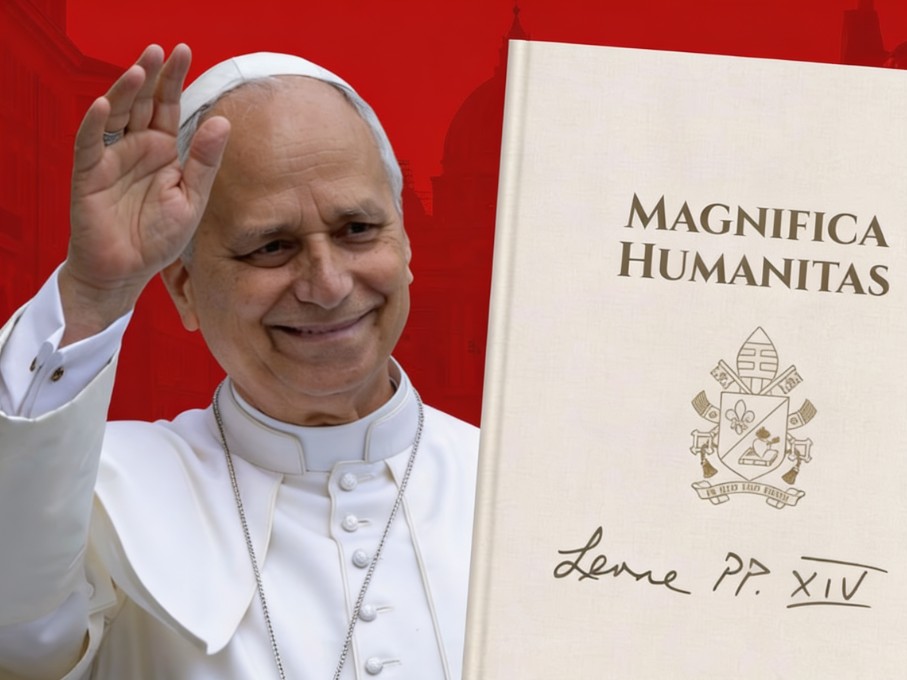
This response carries genuine significance for the Church, and in Pakistan’s context, that significance is largely encouraging. As a religious minority in a Muslim-majority nation, Pakistan’s Christian community often has limited public platforms to shape national conversations. Yet Magnifica Humanitas addresses a concern shared across religious lines, the fear that unchecked technology could erode human dignity and widen inequality, giving Pakistani Christians an unusually credible, unifying voice to contribute to a broader societal conversation rather than one confined to internal Church matters.
At the same time, an honest reading of this moment calls for some measured caution. A papal encyclical written from Rome, however carefully reasoned, still needs deliberate local translation into homilies, catechesis, and everyday pastoral conversation before its principles genuinely reach young people in Karachi, Lahore, or rural Punjab. Without that intentional local engagement, even a widely praised document risks remaining an admired teaching rather than a lived framework shaping how young Pakistani Catholics actually think about technology, work, and their own dignity day to day.
Human Dignity as the Unshakable Foundation
At the heart of Magnifica Humanitas lies a truth far older than artificial intelligence itself: every person is made in the image of God, a dignity that no technology, algorithm, or economic system can diminish or replace. This is precisely why the encyclical warns against visions of an “enhanced” or optimized human being, cautioning that once people are treated as things to be improved upon rather than persons to be respected, it becomes easier to view some lives as less valuable than others.
For young people absorbing near-constant messages that their worth is tied to productivity, test scores, or how efficiently they can compete with automated systems, this teaching offers something quietly countercultural: a reminder that human dignity was never earned through output or optimization in the first place. It was given, freely and completely, from the very beginning.
A Spiritual Resolution
The deeper spiritual resolution this encyclical offer is not a call to fear AI or reject the opportunities it brings, but an invitation to face technological change from a place of settled identity rather than anxious comparison. Scripture consistently reminds believers that their worth flows from being known and loved by God, not from their usefulness to any system, economic or technological. That truth does not erase the real uncertainties young people face about jobs, education, or the future; it reframes how they carry those uncertainties, with confidence rooted in something more permanent than any algorithm.
For young Pakistani Catholics navigating a genuinely uncertain technological era, this resolution becomes deeply practical: approaching new tools with curiosity rather than panic, insisting on their own dignity and the dignity of others even within efficiency-driven systems, and trusting that a future shaped responsibly by human hands and guided by faith remains possible, even amid rapid change.
A Global Teaching with Local Resonance
Magnifica Humanitas was written for the whole Church, but its insistence that technology must always serve humanity, never dominate or diminish it, is proving especially meaningful for young Pakistanis navigating AI’s real and immediate impact on their daily lives. Coverage of this reception, including awareness efforts from platforms like EWTN Asia Pacific News, is helping bring this global teaching to audiences who might otherwise never encounter it, offering a steady, faith-rooted perspective in a conversation too often driven by fear or hype alone.
To remain informed about Catholic life, teachings, and global Church developments, readers may be encouraged to visit www.ewtnvatican.com for trusted Catholic news and resources.