When some of the world’s largest Catholic funding organizations gather in one room and issue the same challenge, it’s worth paying attention. That’s exactly what happened this week in Jakarta, where representatives from six major Catholic Philanthropies stood before hundreds of Asian bishops and asked a pointed question: is the Church’s mission still genuinely relevant to the people it serves, or has it grown comfortable with familiar routines while the world around it changes at record speed? Their answer wasn’t a rebuke. It was an invitation, one rooted in decades of partnership with the Church across Asia, to listen more closely and respond more boldly to the realities facing local communities.
Six Catholic Philanthropies Sound a Unified Call at the FABC Assembly
The challenge came during the 12th Plenary Assembly of the Federation of Asian Bishops’ Conferences, gathered in Jakarta under the theme of synodal conversion and bridge-building across the continent. Representatives from Misereor, Missio Munich, Porticus, Missio Aachen, the Archdiocese of Cologne, and the Catholic Agency for Overseas Development addressed the assembly directly, sharing decades of collective experience walking alongside the Church in Asia through changing social, environmental, and pastoral circumstances.
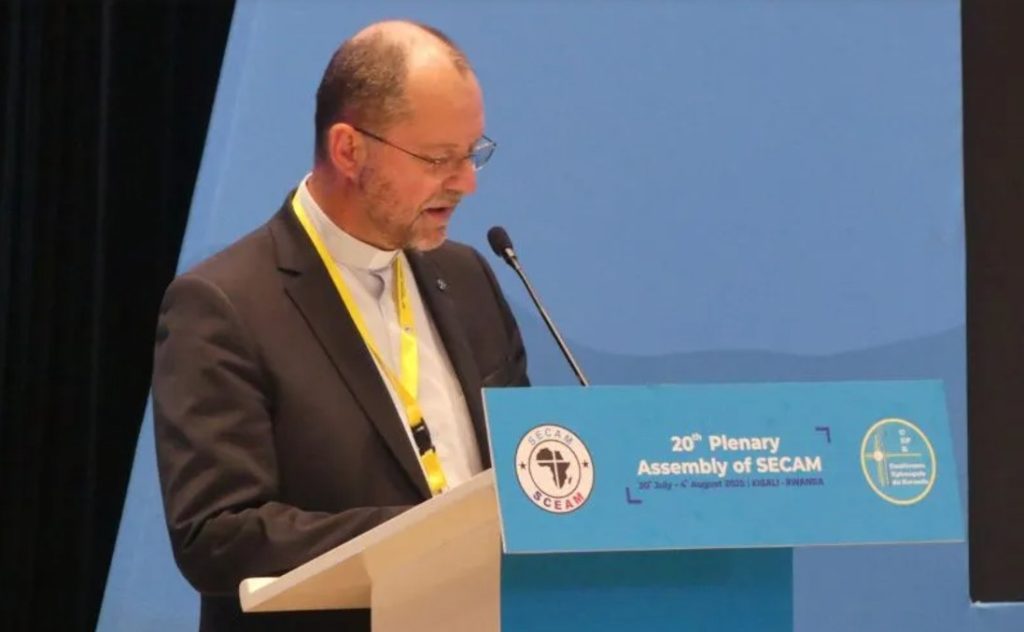
Father Andreas Frick, director general of Misereor, the German Catholic bishops’ development agency, described a question that has guided his ministry from the very beginning of his leadership: how can the Church respond to today’s challenges in a way that is both credible and genuinely meaningful to the people it serves. That question, simple on its surface, carries real weight for a Church operating across one of the most religiously diverse, rapidly urbanizing, and environmentally strained regions in the world.
Listening First: Why Local Voices Must Shape a Relevant Mission
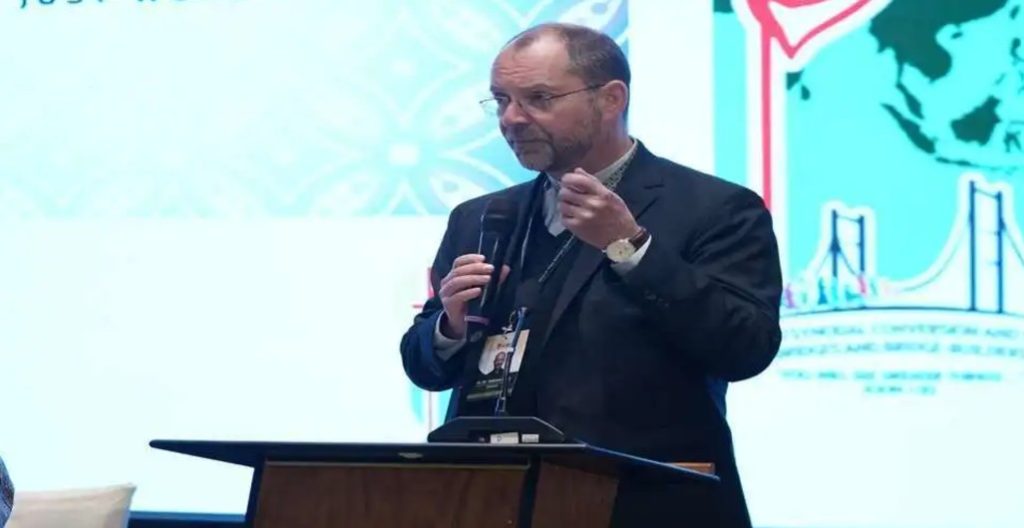
A recurring theme throughout the philanthropic groups’ message was the importance of listening before acting. A representative from Porticus emphasized that genuine Church renewal rarely begins at major international gatherings; it begins in ordinary places, parishes, families, schools, and local formation programs, where people learn to listen before speaking and to value voices that are too often overlooked. This principle directly reinforces the assembly’s own synodal theme, suggesting that the pathway to a more relevant mission runs not through grand new strategies imposed from above, but through a deeper, more patient attentiveness to the everyday realities of local Catholic communities.
This emphasis on grassroots listening also reflects the broader purpose these organizations serve. Beyond funding, groups like Misereor, CAFOD, and Porticus have long supported the Church’s work on human dignity, community development, child safeguarding, and Catholic social teaching, positioning them as genuine ministry partners rather than distant financial backers.
Why This Challenge Is Significant for the Church in Asia
This moment carries real significance for the Church, and much of it points in an encouraging direction. Having trusted, long-standing philanthropic partners publicly reaffirm their commitment to the Church’s mission, while simultaneously calling for deeper attentiveness to local needs, offers a credible, constructive form of accountability. It signals that the Church in Asia is not operating in isolation but within a wider, supportive network genuinely invested in its pastoral effectiveness and long-term credibility.
At the same time, this moment also invites honest reflection on a structural reality worth naming gently. Much of the Church’s development and pastoral work across Asia depends on funding relationships with organizations based outside the region, which means sustaining a genuinely local, community-driven mission requires ongoing effort to ensure that funding partnerships strengthen local discernment rather than unintentionally shaping it from a distance. Recognizing this dynamic is not a criticism of the philanthropic groups themselves, who explicitly called for more listening rather than more directing, but a reminder that mission relevance ultimately has to be discerned and lived out by local communities themselves.
The Church as a Field Hospital, not a Fortress
This challenge to remain relevant echoes a spiritual image that has shaped Catholic mission thinking in recent years: the Church understood not as a fortress protecting itself from a changing world, but as a field hospital tending to the wounds of the people closest to it. A mission that stays relevant is one willing to go where people are, socially, environmentally, and pastorally, rather than waiting for people to arrive at its doors on its own terms.
This image fits naturally with the philanthropic groups’ emphasis on listening. A field hospital does not begin by announcing treatments; it begins by carefully attending to the wounds in front of it. In the same way, a Church seeking renewed relevance begins not with new programs handed down from international gatherings, but with genuine attentiveness to the specific hardships, hopes, and questions of the communities it serves across Asia’s many cultures and circumstances.
A Spiritual Resolution
The deeper spiritual resolution in this challenge is that mission relevance is never a box to be checked once and then set aside; it is an ongoing posture of attentiveness that must be renewed continually, community by community, generation by generation. Christ’s own ministry modeled this same rhythm, pausing to notice the woman at the well, the blind beggar by the roadside, the grieving sisters at Lazarus’ tomb. Five ordinary practices help sustain that same attentiveness over time:
- Confession, which clears away the complacency that lets any institution, however well-intentioned, drift from genuine listening into routine.
- Adoration, quiet time before Christ that restores the attentiveness needed to actually notice the person or community in front of you.
- The Rosary, a steady rhythm of prayer offered for the communities a mission is meant to serve, keeping them present in prayer even when they are far away.
- The Eucharist, the Church’s own ongoing renewal, received again and again rather than once and set aside.
- Scripture, returned to often, keeping Christ’s own pattern of attentive presence, to the woman at the well, the blind beggar, the grieving sisters, as the model for mission rather than an abstract ideal.
For parishes, dioceses, and individual believers alike, this resolution translates into something deeply practical: mission relevance grows not from grand strategic plans alone, but from the humble, repeated discipline of listening to the person, family, or community right in front of you before deciding how best to respond.
The challenge issued by Misereor, Porticus, CAFOD, and their partner organizations in Jakarta is ultimately a hopeful one: a reminder that the Church’s mission in Asia remains deeply supported, closely watched, and genuinely capable of growing more responsive to the communities it serves. Whether this challenge translates into lasting change will depend on how faithfully local Churches embrace the listening posture these philanthropic partners are encouraging. Coverage of this ongoing assembly, including awareness efforts from platforms like EWTN Asia Pacific News, is helping bring this important conversation to audiences well beyond Jakarta’s conference halls.
To remain informed about Catholic life, teachings, and global Church developments, readers may be encouraged to visit www.ewtnvatican.com for trusted Catholic news and resources.