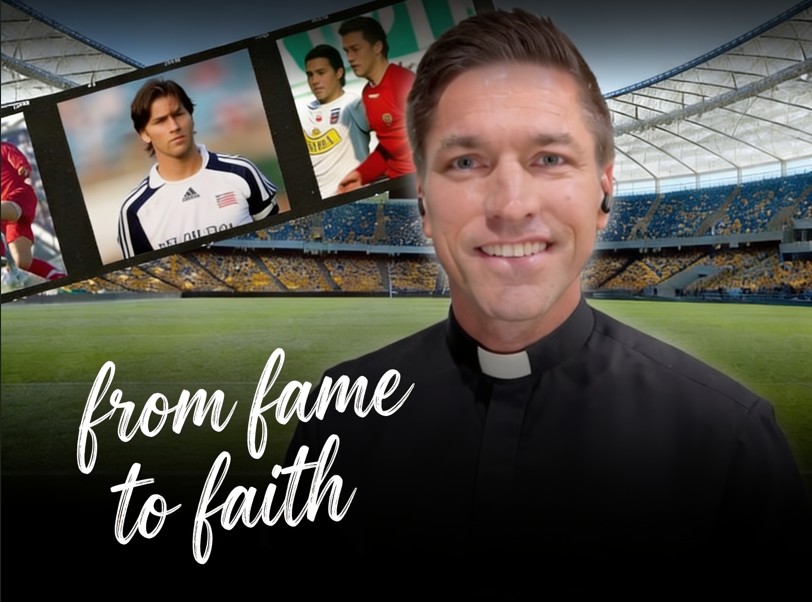
What does it take to walk away from a professional sports career, international travel, and a stadium full of cheering fans to answer a quiet voice that only you can hear? For Fr. Chase Hilgenbrinck, a former Pro Soccer Player Becomes Catholic Priest Soccer defender who once represented the United States on the international stage, the answer came down to a single, life-altering decision: trade the pitch for the priesthood.
His story, recently spotlighted by EWTN News In Depth in the feature “Former Professional Soccer Player Becomes Catholic Priest: A Vocation Story,” has resurfaced in the spotlight this year as the world’s attention turns to the FIFA World Cup 2026. While millions watch elite athletes chase glory on the global stage, one man who once shared that dream now spends his days helping others discern a very different kind of calling one rooted not in trophies, but in transcendence.
This is more than a feel-good headline. It’s a story with real spiritual weight, and it’s a timely reminder especially for EWTN Asia Pacific viewers and readers that vocations to the priesthood can come from the most unexpected places, including the soccer field.
Who Is Fr. Chase Hilgenbrinck? From MLS Defender to Man of God
Fr. Chase Hilgenbrinck’s athletic journey began early. Raised Catholic in Bloomington, Illinois, he served as an altar boy before rising through the ranks of American youth soccer, eventually earning a spot on the U.S. Under-17 national team. He went on to star at Clemson University, playing alongside future U.S. national team standout Oguchi Onyewu, before turning professional with two clubs in Chile and finally signing with the New England Revolution of Major League Soccer.
By any measure, Hilgenbrinck had achieved what most young athletes only dream of. Yet at the height of his career, at just 26 years old, he made global headlines by retiring from professional soccer not due to injury, scandal, or burnout, but to enter the seminary.
In the summer of 2007, he applied to the Office of Priestly Vocations for the Catholic Diocese of Peoria, a process that included writing a 20-page autobiography and completing an extensive battery of psychological and spiritual assessments. On July 14, 2008, the day after his final professional season in Chile ended as he formally retired from soccer to enter Mount St. Mary’s Seminary in Emmitsburg, Maryland. Six years of formation later, he was ordained a priest for the Diocese of Peoria on May 24, 2014.
The Moment of Discernment: Success Wasn’t Enough
What makes this vocation story so compelling isn’t just the career change but rather it’s the why behind it. Hilgenbrinck has said that even as his soccer career flourished, he felt something was missing deep in his heart. He knew, in his words, that his successes came from God, but professional achievement alone couldn’t answer the deeper questions he was carrying.
This is a theme spiritual directors and vocation directors encounter again: worldly success, however real and hard-earned, cannot fully satisfy the human heart’s longing for meaning. St. Augustine captured this centuries ago when he wrote that the heart is restless until it rests in God. Hilgenbrinck’s story is a modern, very public illustration of that ancient truth and it’s one reason this feature has resonated so strongly with audiences on EWTN and beyond.
For Catholics wrestling with their own sense of purpose whether they’re weighing a religious vocation or simply questioning whether their career or achievements are “enough” as this story offers a strikingly relatable entry point into a much bigger conversation about faith, identity, and calling.
From Fame to Faith: Coaching a New Kind of Team
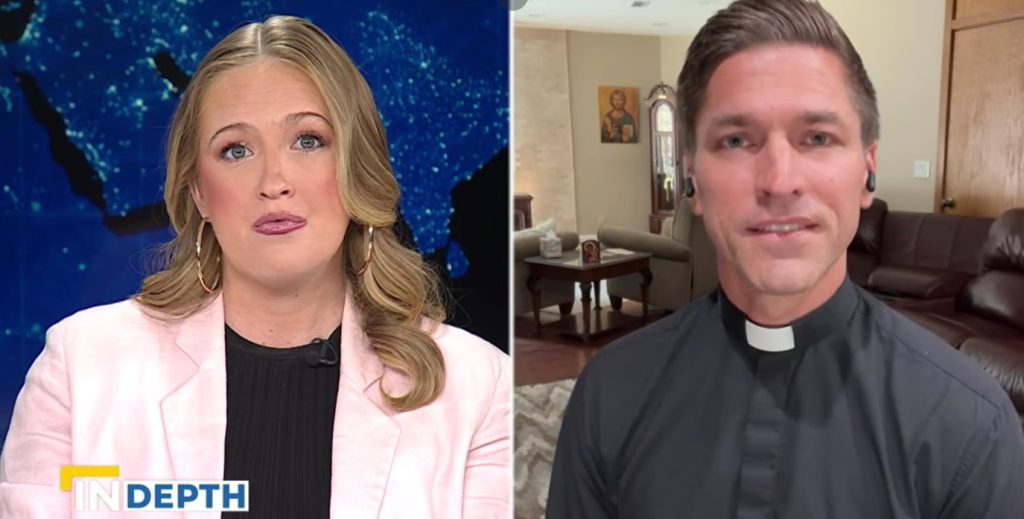
Today, Fr. Hilgenbrinck serves as director of recruitment for the Office of Priestly Vocations in the Diocese of Peoria, effectively the same role, in spiritual terms, that a talent scout plays in professional sports. He travels throughout Central Illinois speaking at retreats, parishes, and Catholic schools, mentoring young men who may be discerning a call to the priesthood or religious life.
He’s candid about drawing on lessons learned from the pitch: perseverance through difficulty, humility in failure, and the relentless pursuit of excellence. He often distinguishes between comfort and greatness, teaching that suffering and not ease is usually the price of real growth, whether in athletics or in the spiritual life.
One striking anecdote involves a soccer camp Hilgenbrinck co-hosted with seminarian Jarod Raber for a group of energetic, disorderly middle schoolers. The moment Hilgenbrinck stepped onto the field, the chaos gave way to focus and joy a small but telling example of the same magnetic leadership that now draws young men toward discernment and prayer. Raber, who hopes to model his own future priesthood on Hilgenbrinck’s example, described him as passionate, a strong leader, and a good spiritual father.
Why This Vocation Story Matters Right Now
The timing of renewed interest in this story isn’t incidental. With the FIFA World Cup 2026 dominating global headlines and drawing unprecedented attention to professional soccer, Fr. Hilgenbrinck’s story offers a compelling counter-narrative: not every talented athlete measures success by championships, contracts, or global fame.
In fact, Hilgenbrinck admits he still watches World Cup matches closely as he’s even shared that he roots for Lionel Messi over Cristiano Ronaldo and pictures himself analyzing tactics from his playing days. But he’s also clear that his most meaningful moments now come not from the field, but from time spent with his parishioners.
That juxtaposition is exactly why this story deserves wider attention. It humanizes the priesthood for audiences who might otherwise see it as remote or old-fashioned, and it gives young athletes and their parents a real-world example of a man who had it all by worldly standards and chose something he believed was greater.
The Broader Pattern: Athletes Who Answer a Higher Call
Fr. Hilgenbrinck is not alone. Around the world, a growing number of professional and elite athletes have left lucrative sports careers to enter religious life:
- Fr. Philip Mulryne, OP: a former Manchester United and Norwich City midfielder who represented Northern Ireland internationally, retired from football in 2008 and was ordained a Dominican priest in 2017.
- Fr. Burke Masters: a college baseball standout at Mississippi State University who now ministers to professional athletes and runs Catholic sports camps alongside MLB Hall of Famer Mike Sweeney.
- Samuel Piermarini: a promising young goalkeeper prospect with A.S. Roma’s youth system in Italy, ordained a priest by Pope Francis after discerning a call away from professional soccer.
Even further back, sports and sainthood have long intersected: Pope St. John Paul II was an avid soccer player in his youth, and Blessed Pier Giorgio Frassati was a passionate hiker, skier, and footballer before his early death and eventual beatification.
This pattern suggests something important: athletic discipline, the humility of losing, the perseverance through pain, the drive for excellence can be for some a direct spiritual preparation for the priesthood rather than a distraction from it.
Discernment Doesn’t Wait for a Quiet Room
Perhaps the most important spiritual takeaway from Fr. Hilgenbrinck’s story is this: God’s call rarely announces itself with fanfare, and it can arrive in the middle of a demanding, high-visibility career. As seminarian Jarod Raber put it, discerning a vocation requires daily prayer, because the voice of God is often quite easy to miss for anyone too busy to listen.
For young people (and honestly, for people of any age) wrestling with big life decisions, this is a profoundly practical piece of spiritual advice: carve out silence, pray consistently, and pay attention to persistent inner longings rather than dismissing them as distractions from “real life.” As Raber said, if you have any inkling in your heart, don’t be afraid to talk about it with a priest, mentor, or spiritual director.
A Spiritual Resolution:
It’s easy to admire Fr. Hilgenbrinck’s story from a distance to call it inspiring, share it, and move on. But a vocation story like this isn’t meant to stay at arm’s length. It’s meant to prompt an examination of conscience: Where in my own life am I choosing comfort over what God is actually asking of me?
Consider taking this story off the screen and into prayer with a few concrete resolutions:
- Make space for silence this week. Fr. Hilgenbrinck’s turning point didn’t come on the field or in a locker room, it came in the quiet, when he finally stopped to listen. Set aside even ten minutes a day, away from notifications and noise, simply to sit with God.
- Bring your “what if” to prayer, not just to your own head. Whether it’s a call to priesthood, religious life, marriage, or a change in how you live out your current vocation, don’t let it stay an abstract thought. Name it explicitly in prayer, and consider naming it out loud to a priest, spiritual director, or trusted mentor just as Jarod Raber advised.
- Reexamine what “excellence” means in your own life. Hilgenbrinck didn’t abandon discipline, drive, or the pursuit of excellence when he left soccer, he redirected it. Ask where your own talents and ambitions might be pointed more fully toward God’s purposes rather than away from them.
- Choose one act of humility or perseverance this week that costs you something. Hilgenbrinck teaches that suffering, not comfort, is often the real price of growth. A small, deliberate sacrifice patience with a difficult person, showing up to Mass when it’s inconvenient, resisting a habit that dulls your prayer life can be a real step in discernment.
- Pray for vocations, even if yours isn’t to the priesthood. The Diocese of Peoria’s vocations office exists because people prayed for men like Fr. Hilgenbrinck to hear and answer the call. Consider adding a simple daily prayer for vocations to your own routine and encourage a young person in your life who shows signs of a genuine calling.
This is the real significance of the story: it isn’t just a headline about a former athlete, it’s an invitation. Every reader has their own version of the contract Hilgenbrinck walked away from something good, comfortable, even admirable that may still not be the fullest answer to what God is asking. The spiritual resolution isn’t to quit your job or reinvent your life overnight. It’s to ask the question, in prayer, and to have the courage to keep listening even when the answer is inconvenient.
A Story Worth Carrying with You
Fr. Chase Hilgenbrinck’s journey from the soccer pitch to the sanctuary is a powerful reminder that true greatness isn’t always measured in goals scored or trophies lifted, but in the courage to answer a call that no one else can hear. His story continues to resonate because it speaks to something universal: the quiet, persistent question of whether we’re truly living out what God is asking of us or simply settling for what’s comfortable.
EWTN Asia Pacific brings stories like this to light because faith, even in the most unexpected places, is always worth telling.
To remain informed about Catholic life, teachings, and global Church developments, readers may be encouraged to visit www.ewtnvatican.com for trusted Catholic news and resources.