There are weeks when sports headlines and Church headlines rarely cross paths, and then there are weeks like this one out of Norway. A World Cup-bound striker just handed a piece of Viking-era Christian history back to his hometown, while a bishop across the country opened the door for a Nobel Prize-winning novelist to one day be called a saint. Two stories. One country. One unmistakable thread of faith running quietly beneath both.
For viewers who caught EWTN News Nightly’s report, “Haaland’s Rare Christian Manuscript Donation & a Possible Future Saint in Norway,” the pairing might have looked like a coincidence of scheduling. It isn’t. Norway’s Catholic story, small as it is in numbers, is having a genuinely newsworthy moment, and it deserves a closer look than a single news segment can give it.
1. The Book Erling Haaland Refused to Let Disappear
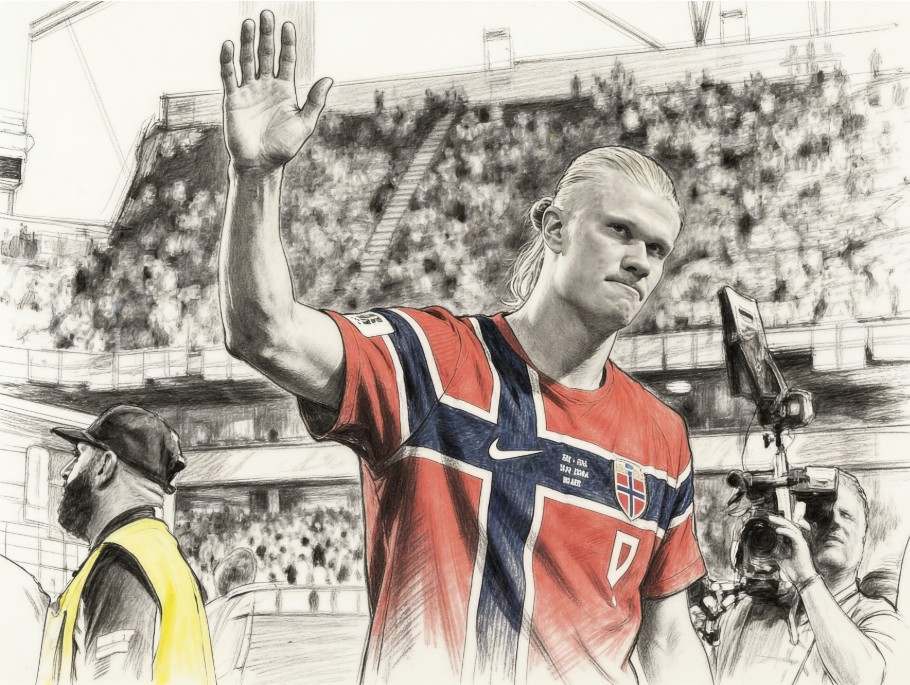
Manchester City striker Erling Haaland, together with his father and former Norway international Alf-Inge Haaland, purchased the only known surviving copy of the 1594 printed edition of the Heimskringla, the collection of Norwegian royal sagas originally composed by the 13th-century Icelandic scholar Snorri Sturluson. The edition on offer was a translation by the 16th-century magistrate Mattis Størssøn, produced at a time when Norway itself had no printing press of its own, meaning the book had to be printed abroad, in Copenhagen, simply to exist at all.
The Haalands paid 1.3 million Norwegian kroner, roughly $134,000, the highest price ever recorded for a Norwegian book at auction. Rather than keep it, they gave it away. Under the terms of the gift, the manuscript will be permanently displayed and made accessible to the public at the library in Bryne, in the Haalands’ home municipality of Time, in southwestern Norway.
What makes this more than a story about wealthy football families and expensive antiques is the content of the book itself. The sagas trace Norway’s history from its founding myths through the reigns of its medieval kings, including King Olaf Haraldsson, remembered in Church history as St. Olav, the monarch credited with consolidating the kingdom and cementing Norway’s conversion to Christianity. He was canonized in the year 1031, making him Norway’s most famous saint and a figure whose legacy still shapes Norwegian identity a thousand years later.
Haaland explained the gift simply, saying that books give people the chance to dream big and see new possibilities. His father added that the family’s roots run through the very stories preserved in Snorri’s sagas, and that they hope both the book and an accompanying reading competition for local schoolchildren will help form the roots of a new generation. The competition, set to launch in the 2026-2027 school year, will invite students in Time’s middle and secondary schools to read as widely as they can, with winning classes rewarded with a trip to Ullevaal Stadium to join the national team.
There is something worth pausing on here. A footballer known worldwide for goals and speed chose, of all things, to spend his money preserving a text about his nation’s conversion to Christianity, and then to hand it to children as an invitation to read, to remember, and to belong to something older than themselves.
2. A Bishop in Oslo Opens the Door to a New Saint
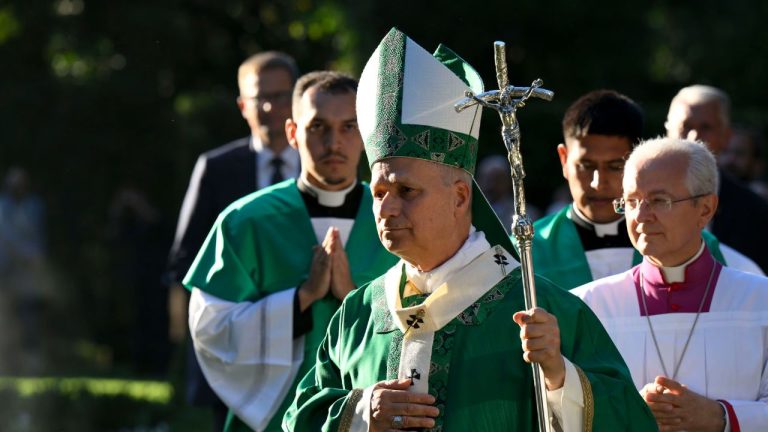
While Haaland’s gift was making headlines for its price tag, a much quieter but arguably more significant announcement was unfolding within Norway’s small Catholic community. Bishop Fredrik Hansen of Oslo announced on July 8, 2026, that he intends to open a formal canonization cause for Sigrid Undset, the Nobel Prize-winning novelist best known for her medieval trilogy “Kristin Lavransdatter.”
The timing was deliberate. Bishop Hansen made the announcement during Mass on the island of Selja, off Norway’s west coast, the traditional site associated with St. Sunniva, Norway’s first saint, and the location many regard as the cradle of Norwegian Christianity. The Mass fell exactly one hundred years after Undset herself first visited Selja as a pilgrim.
Undset was born in Denmark in 1882 and raised in Norway by largely non-religious parents. Her early adult life did not resemble the tidy biography usually associated with sainthood. She wrote candidly about scandal, entered a relationship with a married painter she later married, and was known for a sharp tongue and an unconventional public image. At age 42, in 1924, she entered the Catholic Church, a decision that startled overwhelmingly Lutheran Norway, and she later became a Lay Dominican. During the Second World War she fled to the United States, where she spoke out publicly against Nazism and in support of Norwegian freedom, all while raising a disabled daughter with what Bishop Hansen described as constant, practical devotion.
Bishop Hansen was direct about why her story matters for the Church today. He described her not primarily as a literary figure but as a model of Christian faith and a life lived in virtue, someone whose books have shaped generations of believers and kept alive the witness of Norway’s medieval saints. He noted her constant concern for the poor, her devotion to her daughter’s care, and her firm opposition to totalitarianism as marks of a life oriented toward holiness rather than perfection from the start.
The path ahead is long. Undset will first receive the title Servant of God once the cause formally opens this autumn. If the Vatican’s Dicastery for the Causes of Saints eventually recognizes heroic virtue in her life, she would be declared Venerable. One approved miracle attributed to her intercession would then be required for beatification, and a second for canonization. Should she ultimately be canonized, Undset would become Norway’s second female saint after St. Sunniva, and only the second Nobel Prize recipient in history to be declared a saint, following Mother Teresa.
Why These Two Stories Belong in the Same Headline
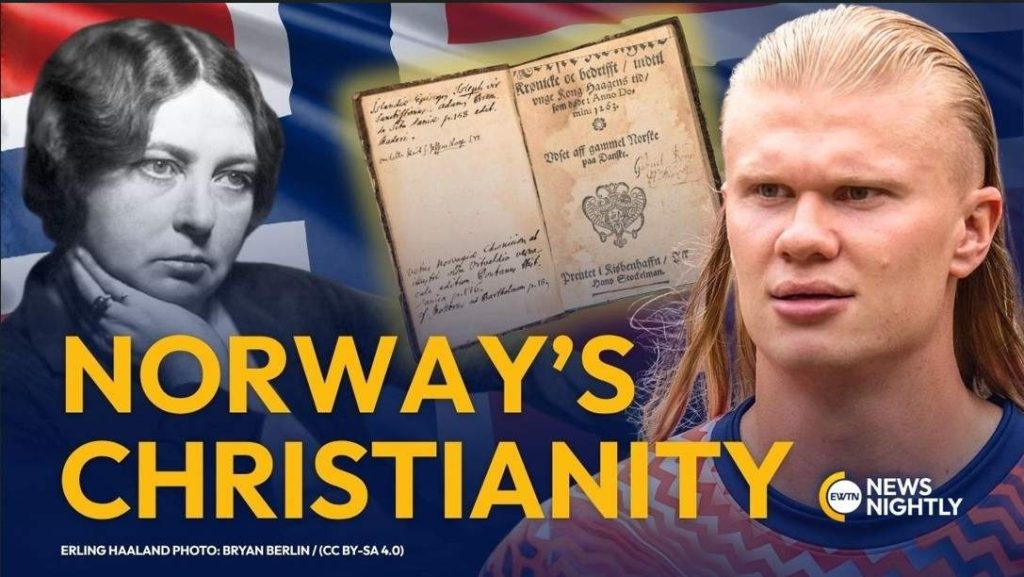
It would be easy to treat Haaland’s manuscript gift and Undset’s sainthood cause as unrelated items that happened to land in the news cycle together. Looked at more closely, they are two expressions of the same instinct: a desire to preserve and pass on a Christian inheritance that modern, secular Norway rarely advertises but has never fully let go of.
The Heimskringla manuscript is a physical record of the moment Norway became a Christian nation under St. Olav. Undset’s proposed sainthood cause is a living record of what it looks like for a modern, complicated, deeply human person to walk that same Christian inheritance into the twentieth century. One preserves the root. The other extends the branch. Both point back to Selja, to St. Sunniva, and to a thread of holiness that Norwegians, whether they identify as religious or not, are clearly still willing to fund, celebrate, and formally investigate.
For a country where practicing Catholics are a small minority, that is not a small thing. It suggests that the seeds planted a thousand years ago by St. Olav and centuries later watered by converts like Undset have not gone dormant. They are simply waiting, much like a manuscript sealed in a private collection, for someone willing to bring them back into the light.
Spiritual Resolution
There is a quiet lesson tucked inside both of these stories for anyone reading them, Catholic or not. Haaland did not have to spend a fortune preserving a centuries-old book about a king turned saint. Sigrid Undset did not have to enter a Church that scandalized her Lutheran neighbors, nor spend her final decades caring selflessly for a daughter who needed her most. Both chose the harder, less convenient path because something older and truer than convenience was calling them.
That is worth sitting with for a moment. Faith rarely announces itself with fanfare. It shows up in a footballer choosing legacy over profit, in a novelist choosing conversion over comfort, in a bishop choosing patience over haste as he opens a process that may take decades to complete. Whoever reads this is invited to ask where in their own life something old and true is waiting to be uncovered, preserved, and handed to the next generation, the way a manuscript was handed to a small-town library, and the way a life once considered scandalous is now being examined for signs of sainthood.
Two Stories, One Living Faith
Erling Haaland’s manuscript donation and Sigrid Undset’s sainthood cause are, on their surface, a sports story and a Church story. Together, they are evidence that Norway’s Christian roots, planted by St. Olav and St. Sunniva a millennium ago, are still producing fruit in unexpected places, from a football pitch to a diocesan office in Oslo. Readers who want ongoing, faith-centered coverage of stories like these can follow EWTN Asia Pacific, which continues to report on moments where faith and public life intersect around the world.
If this story moved you, consider sharing it, and take a moment to reflect on your own household’s “manuscript,” the piece of faith, tradition, or memory that is waiting for someone to preserve it and pass it forward. Feel free to leave your thoughts in the comments below.
To remain informed about Catholic life, teachings, and global Church developments, readers may be encouraged to visit www.ewtnvatican.com for trusted Catholic news and resources.