Holy Water in countless horror films, plays a familiar role: a vial pulled from a priest’s pocket, splashed dramatically across a possessed victim, sizzling and steaming on contact like some kind of spiritual acid. It’s a compelling image, and it has shaped how millions of people, Catholic and non-Catholic alike, understand this centuries-old practice. But the real theological meaning of holy water has almost nothing in common with its cinematic reputation. Understanding what holy water represents reveals something far richer than special effects ever could: a quiet, ordinary reminder of one of the most significant moments in a Christian’s life.
What the Holy Water Actually Is
Holy water begins as nothing more than ordinary water, blessed by a priest or deacon who prays over it, invoking the Holy Spirit to set it apart for sacred use. That single detail already separates it from its Hollywood portrayal. It is not manufactured with mystical ingredients, nor does the Church teach that it works automatically, independent of a person’s own faith and disposition. Instead, Catholic theology classifies holy water as a sacramental, a category distinct from the seven sacraments themselves, meaning it is an outward sign that disposes a person to receive grace rather than a substance that guarantees a supernatural effect regardless of belief.
This distinction matters enormously. Sacraments, like Baptism or the Eucharist, are understood to convey grace directly through Christ’s own institution. Sacramentals, including holy water, work differently: they prepare the heart, focus the mind, and accompany prayer, rather than functioning as a self-contained spiritual weapon that operates independently of the person using it.
The Real Meaning: Holy Water as a Living Reminder of Baptism
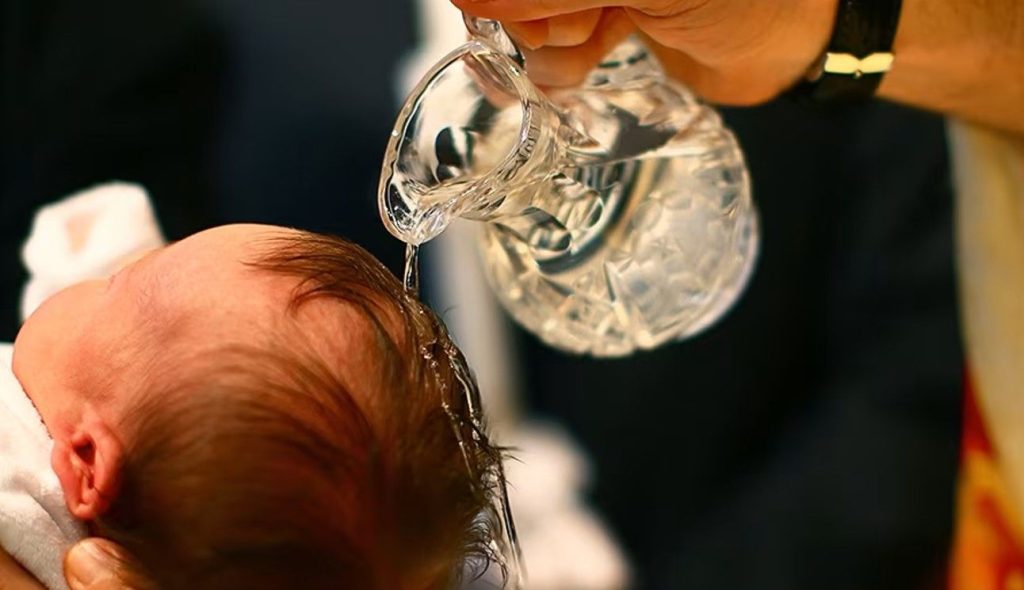
If holy water isn’t a magical repellent, what is its actual purpose? According to the Catechism of the Catholic Church, sacramentals exist to sanctify various circumstances of daily life, and holy water exists primarily to recall Baptism, the moment a Christian was first washed clean of sin and welcomed into the family of God. This is why fonts of holy water sit at church entrances: the gesture of dipping one’s fingers and making the sign of the cross upon entering is a small, repeated renewal of baptismal identity, not a protective ritual against unseen threats.
Water has long symbolized purification and new life in Scripture, from creation, Noah’s flood, and Israel’s crossings of the Red Sea and Jordan to Christ’s baptism. The Old Testament also foreshadows holy water through the Book of Numbers, where water mixed with tabernacle dust was used in a priestly ritual. Today, holy water blesses people, homes, and objects, while reminding the faithful of the purification and conversion that began at Baptism.
Why Correcting This Myth Is Significant for the Church Today
This distinction carries real significance for the Church, and in this case, the significance is genuinely encouraging. Decades of horror films have given holy water an outsized, almost supernatural celebrity status in popular culture, but that fame has come at a cost: many people, including some Catholics themselves, have absorbed a distorted, magical picture of what it represents. Correcting that misunderstanding offers the Church a valuable, low-pressure opportunity for catechesis, using a widely recognized cultural reference point to explain something Catholics practice regularly but may not fully understand themselves.
At the same time, an honest reading of this moment requires acknowledging a real catechetical gap. If popular imagination has drifted this far from the Church’s actual teaching, that gap likely extends to other sacramentals and devotional practices as well, suggesting an ongoing need for parishes to explain not just what Catholics do, but why they do it, so that practices rooted in baptismal grace do not quietly slide into superstition or misunderstood ritual.
An Identity Renewed, not a Threat Repelled
Perhaps the most meaningful reframing this topic offers are this: the small gesture of blessing oneself with holy water was never primarily about warding off external danger. It is an act of remembering who a person already is. Every time a Catholic dip their fingers into a font and traces the sign of the cross, they are not performing a defensive ritual against unseen forces; they are quietly recommitting to an identity received at Baptism, as a beloved child of God, freed from sin, and welcomed into a covenant family.
That reframing transforms an ordinary, easily overlooked gesture into something genuinely profound. It is less a spiritual shield and more a spiritual mirror, prompting a believer to remember, however briefly, the moment their life in Christ began.
A Spiritual Resolution
Holy water points toward Baptism, but the fullness of baptismal grace is sustained and deepened through five ordinary practices that keep that identity alive well beyond a single touch at the church door.
- Confession, which restores the purity first received at Baptism whenever sin has clouded it, keeps that original grace genuinely active rather than merely symbolic.
- Adoration, quiet time before Christ, deepens the relationship holy water is meant to recall, moving a believer from a quick gesture into sustained, attentive prayer.
- The Rosary, prayed regularly, keeps baptismal identity present throughout ordinary days, not just in the moment of entering a church.
- The Eucharist, received often, is the ongoing nourishment of the very life that Baptism first initiated.
- Scripture, read and prayed with regularly, keeps the rich biblical history behind holy water, from creation to the Jordan River, alive as living memory rather than forgotten background trivia.
A Small Gesture with a Much Bigger Meaning
Holy water was never meant to be a special-effects prop for defeating evil on command. Its real power lies in something quieter and more enduring: a consistent, physical reminder of the moment a Christian first received new life in Christ. Understanding that distinction doesn’t make the practice less meaningful than its Hollywood portrayal; it makes it far more so. Coverage of topics like this one, including from platforms such as EWTN Asia Pacific News, continues to help correct popular misconceptions and bring the Church’s actual teaching to audiences who may only know these practices through film and pop culture.
If this reflection changed how you think about a font you’ve walked past countless times, share it with someone who might enjoy learning the real story behind a practice they thought they already understood.
To remain informed about Catholic life, teachings, and global Church developments, readers may be encouraged to visit www.ewtnvatican.com for trusted Catholic news and resources.