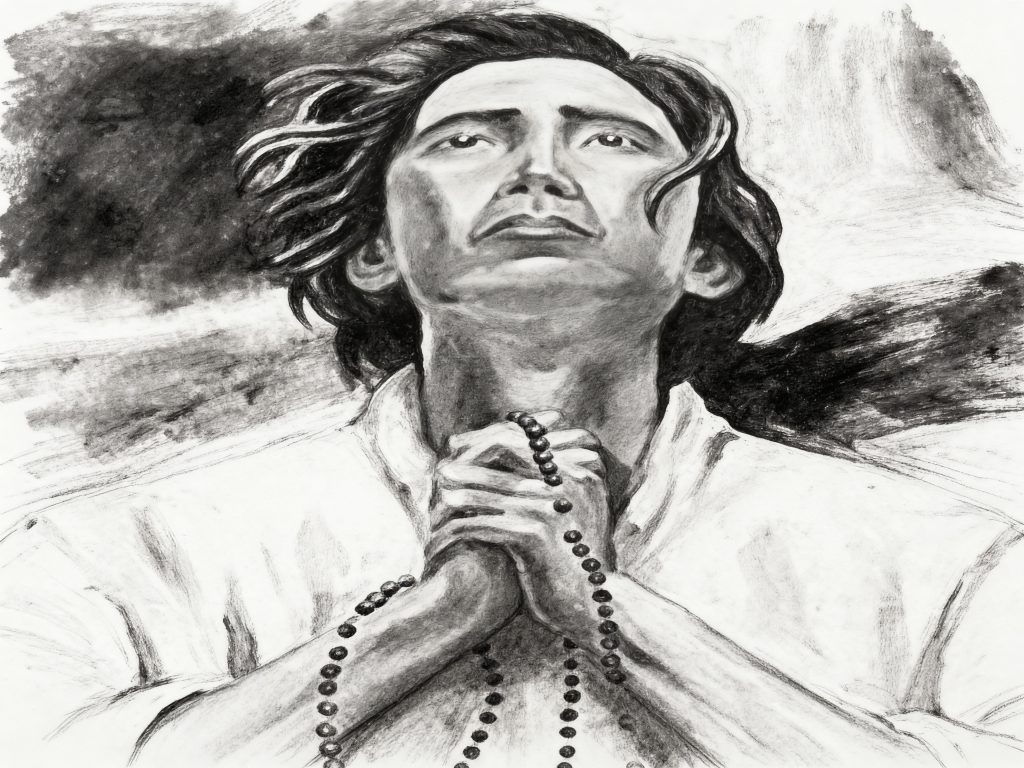
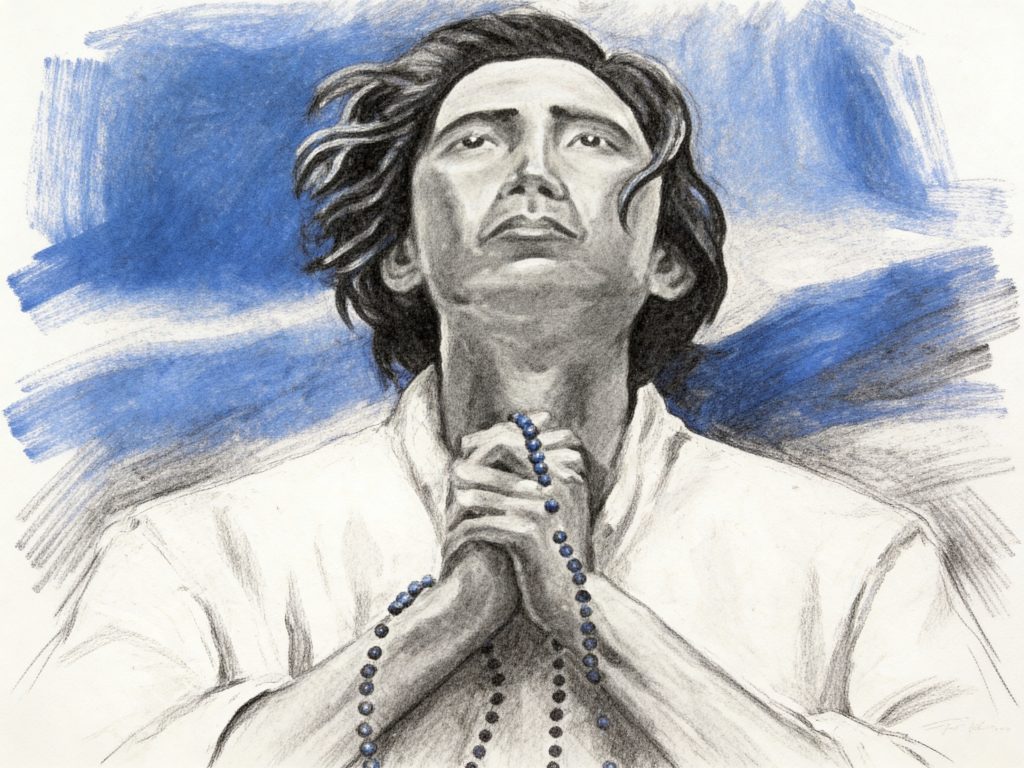
In the heart of 17th-century Manila, an ordinary Filipino man — a devoted husband, father, and church calligrapher — made a decision that would echo through the centuries. Falsely accused of murder and forced to flee his homeland, St. Lorenzo Ruiz found himself on a ship bound for Japan, a country where Christians were being tortured and killed for their faith. Rather than renounce his belief in God, he chose death becoming the first Filipino saint and one of the most powerful witnesses to Christian faith in all of Asia.
This article tells the complete story of Philippines St. Lorenzo Ruiz: from his humble beginnings in Binondo to his martyrdom in Nagasaki, his canonization by Pope John Paul II, his feast day on September 28, his role as patron of overseas Filipino workers, and a powerful prayer to St. Lorenzo Ruiz that millions of Filipinos recite to this day.
Who Is St. Lorenzo Ruiz?
St. Lorenzo Ruiz (c. 1594–1637), also known as San Lorenzo Ruiz, was a Filipino Catholic layman, a member of the Third Order of Saint Dominic, and the first Filipino saint to be canonized by the Roman Catholic Church. Born in Binondo, Manila, to a Chinese father and a Filipino Tagalog mother, he was an ordinary family man until circumstances led him to Japan, where he was martyred during the Tokugawa Shogunate’s brutal persecution of Christians.
He is venerated as the patron saint first raised from the Philippine soil — a protomartyr whose courage under torture has made him a symbol of faith, resilience, and Filipino identity around the world.
Early Life of the First Filipino Saint in Binondo, Manila
The story of the Filipino saint Lorenzo Ruiz begins in Binondo, Manila — then the heart of the Chinese Filipino community. Born around 1594, Lorenzo was the son of a Chinese father and a Filipino Tagalog mother, both devout Catholics. His multicultural upbringing gave him the gift of three languages: Chinese from his father, Tagalog from his mother, and Spanish from the Dominican friars who educated him.
Chinese Filipino Heritage
Lorenzo’s mixed heritage placed him in a unique social position. As a Chinese Filipino (known as a Sangley in the colonial period), he navigated the intersection of Filipino and Chinese cultures within the context of Spanish colonialism. His background would later make him a powerful symbol for Filipino identity — a mestizo saint who belonged fully to both worlds.
Education by Dominican Friars
Lorenzo received his education at the Dominican school in Binondo, where he served as an altar boy and sacristan at the Binondo Church. He proved to be a gifted student, mastering the art of calligraphy and earning the title of Escribano (scrivener) — a professional document writer whose penmanship was prized in colonial Manila. He later worked as a clerk for the Binondo Church, transcribing documents and handling official church records.
From Manila to Nagasaki — The Journey of a Lorenzo Ruiz Nagasaki Martyr
False Accusation & Flight from Manila (1636)
In 1636, while serving as a church clerk, Lorenzo was falsely accused of killing a Spaniard. The historical record offers no definitive details, with Dominican sources simply noting that he “was sought by the authorities on account of a homicide to which he was present or which was attributed to him.” Fearing execution for a crime he did not commit, Lorenzo sought asylum.
Providence — or desperation — led him to seek refuge aboard a ship with three Dominican priests: Father Antonio Gonzalez, Father Guillermo Courtet, and Father Miguel de Aozaraza, along with a Japanese priest named Vicente Shiwozuka de la Cruz, and a lay leper, Lazaro of Kyoto. On June 10, 1636, the group departed Manila. It was only after the ship set sail that Lorenzo learned they were heading to Japan — a country where Christianity had been violently outlawed.
Arrival in Japan and Arrest
The Tokugawa Shogunate had banned Christianity throughout Japan in 1614, fearing that the faith was an instrument of European colonial conquest. By the time Lorenzo and his companions arrived, tens of thousands of Catholics had been killed, and the persecution was at its most intense. Lorenzo and his group were quickly discovered, arrested, and thrown into prison. After two years of imprisonment, they were transported to Nagasaki — the epicenter of Japan’s anti-Christian campaign — to face trial by torture.
The Martyrdom of Lorenzo Ruiz in Nagasaki, 1637
The Lorenzo Ruiz Nagasaki martyr story reaches its climax at Nishizaka Hill, Nagasaki, in September 1637. Lorenzo and his companions were subjected to multiple forms of extreme torture designed to break their faith and force apostasy.
The Tsurushi: Torture by the Pit
The most harrowing method used against Lorenzo was the tsurushi — a technique in which the victim was bound tightly, with small cuts made on the head to allow blood to slowly drain and then hung upside down over a pit filled with excrement. One hand was always left free so the prisoner could signal their desire to renounce Christianity and be released. The torture was designed to prolong suffering for days.
Throughout this ordeal, witnesses testified that Lorenzo continued to pray aloud and encouraged his fellow prisoners to hold fast to their faith. Even as his body failed, his spirit did not waver.
His Final Declaration — A Faith Worth a Thousand Lives
St. Lorenzo Ruiz’s Final Words:
“I am a Christian, and I shall die for God. And for Him I would give many thousands of lives if I had them. To die for God — such is my will.”
When the Japanese magistrates demanded that Lorenzo renounce his faith and be spared, he asked through the interpreter: “If I apostatize, will you spare my life?” The silence that followed was his answer. Pausing only to pray, Lorenzo declared his undying faith in Christ. He died on September 29, 1637, at approximately 43 years of age.
Beatification & Canonization — How Lorenzo Ruiz Became the First Filipino Saint
The cause for Lorenzo’s sainthood was championed for decades. The pivotal historical evidence was an eyewitness account of his martyrdom by two Japanese ex-Jesuit priests, rediscovered by Spanish historian Fidel Villarroel in the Jesuit archives in Rome.
- February 18, 1981: Pope John Paul II beatified Lorenzo Ruiz alongside his 15 companion martyrs during a historic papal visit to Manila. It was the first beatification ceremony ever held outside the Vatican.
- October 1983: The miracle supporting his canonization was recognized: Cecilia Alegria Policarpio, a two-year-old girl from Calinog, Iloilo, was miraculously cured of congenital brain atrophy (hydrocephalus) after her family and supporters prayed for Lorenzo’s intercession.
- October 18, 1987: Pope John Paul II canonized Lorenzo Ruiz at the Vatican among the 16 Martyrs of Japan, officially making him the first Filipino saint in the history of the Roman Catholic Church.
His canonization was a watershed moment for the Philippines a nation that is over 80% Catholic confirming that the faith planted by missionaries centuries ago had produced its own martyrs and saints.
Feast Day of St. Lorenzo Ruiz: September 28
The feast day of Lorenzo Ruizis celebrated annually by the Roman Catholic Church and Filipino communities around the world. On this day, Masses are offered in churches across the Philippines, in Filipino parishes in the United States, Canada, Europe, the Middle East, and everywhere Filipinos have settled.
In Binondo, Manila, Lorenzo’s birthplace, the Minor Basilica and National Shrine of Saint Lorenzo Ruiz (formerly Our Lady of the Most Holy Rosary Parish) serve as the center of his devotion. Processions, novenas, and special Masses mark the celebration. The feast day is also a moment for Filipino OFWs around the globe to gather and draw strength from their patron’s example of courage far from home.
Patron Saint of the Philippines and Overseas Filipino Workers
St. Lorenzo Ruiz is recognized as a patron saint of many groups, but his role as patron of overseas Filipino workers (OFWs) resonates especially deeply in the modern era. The Philippines sends over two million workers overseas each year to support their families — a sacrifice that mirrors Lorenzo’s own separation from his wife and children when he was forced to flee Manila in 1636.
As a Filipino saint who died in a foreign land, away from family and homeland, St. Lorenzo Ruiz embodies the OFW experience: separation, sacrifice, cultural displacement, and unwavering love. His complete list of patronages includes:
- The Philippines and the Filipino people
- Overseas Filipino Workers (OFWs) and migrant workers
- Filipino youth and altar servers
- Immigrants and separated families
- The Archdiocese of Manila
- Those facing false accusations
- The poor and marginalized
The Philippines St. Lorenzo Ruiz connection is also institutional: he is named as a patron in the Archdiocese of Manila and his shrine in Binondo is a national pilgrimage site. Internationally, his mosaic is enshrined in the Trinity Dome of the Basilica of the National Shrine of the Immaculate Conception in Washington, D.C.
Prayer to St. Lorenzo Ruiz
The prayer to St. Lorenzo Ruiz is one of the most searched devotional texts among Filipino Catholics globally. This is the officially recognized prayer used by the Church and Filipino communities:
O most merciful and almighty God,
You bestowed as a gift to Lorenzo Ruiz
the strength to withstand the overpowering forces of death
for the sake of his faith in You.
Through his prayers,
help us to follow his example
by overcoming all life’s trials
and eventually increasing our hope and love for You.
Grant us the grace to live our faith with courage,
to stand firm in the face of adversity,
and to offer our lives in service to You
and to our brothers and sisters.
St. Lorenzo Ruiz,
first Filipino saint and glorious martyr,
pray for the Philippines, for our people,
and especially for all Filipinos
working and living far from home.
May we, wherever we may be,
give witness to Our Lord Jesus Christ
through our words, our work, our cheerfulness,
and our fidelity to our Catholic faith.
Amen.
Frequently Asked Questions (FAQ)
Who is the first Filipino saint?
A: The first Filipino saint is St. Lorenzo Ruiz (San Lorenzo Ruiz), canonized by Pope John Paul II on October 18, 1987, at the Vatican.
When is the feast day of Lorenzo Ruiz?
A: The feast day of Lorenzo Ruiz is September 28. This date is observed by the Catholic Church worldwide and celebrated with special Masses and processions in the Philippines and Filipino communities globally.
Why is St. Lorenzo Ruiz the patron of overseas Filipino workers?
A: St. Lorenzo Ruiz is the patron of overseas Filipino workers (OFWs) because he himself died in a foreign land (Japan), separated from his family, enduring persecution far from his homeland — a profound reflection of the OFW experience of sacrifice and separation.
Where did Lorenzo Ruiz die?
A: Lorenzo Ruiz died in Nagasaki, Japan on September 29, 1637, after enduring the tsurushi torture at Nishizaka Hill. He is recognized as the Lorenzo Ruiz Nagasaki martyr for this reason.
Is there a prayer to St. Lorenzo Ruiz?
A: Yes. A widely used prayer to St. Lorenzo Ruiz asks for his intercession for courage, perseverance, and fidelity to the faith. The full prayer is featured in this article above and is commonly recited on his feast day, September 28.
What miracle led to the canonization of St. Lorenzo Ruiz?
A: In October 1983, a two-year-old girl named Cecilia Alegria Policarpio from Calinog, Iloilo was miraculously cured of congenital brain atrophy (hydrocephalus) after her family prayed through the intercession of Lorenzo Ruiz. This miracle was recognized by the Vatican and paved the way for his canonization in 1987.
A true saint of the Philippines
St. Lorenzo Ruiz — the first Filipino saint — lived an ordinary life and died an extraordinary death. His feast day on September 28 unites Filipinos across the globe. Whether you are an OFW, a student, or simply a Filipino proud of your faith, his example endures: “Had I a thousand lives, all these to Him shall I offer.”
St. Lorenzo Ruiz, pray for us.