Image from EWTN news
Faith on the World’s Biggest Stage
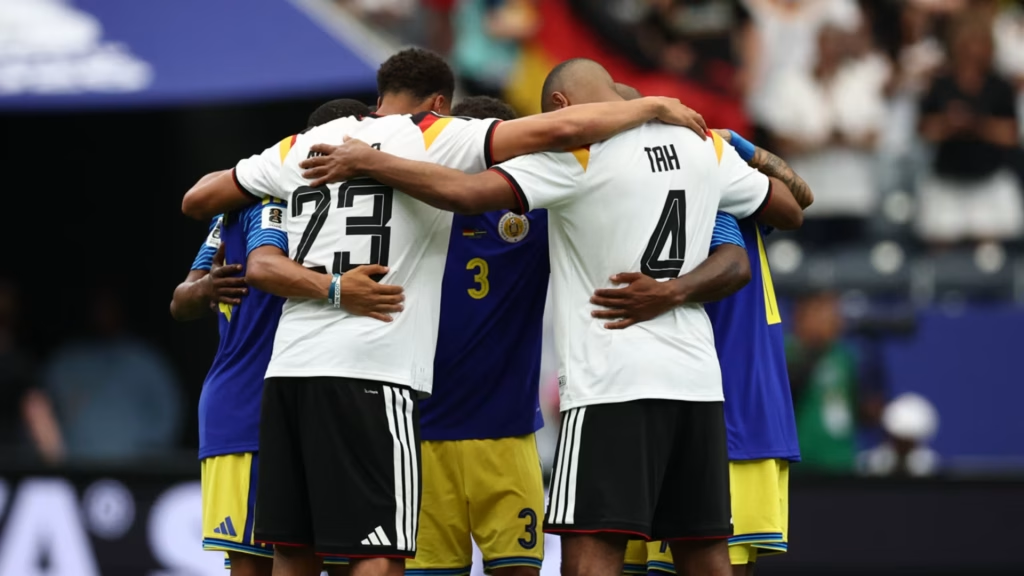
When millions of viewers tuned in to watch the 2026 FIFA World Cup matches in Houston, Texas, they witnessed something extraordinary beyond the technical skill and athletic prowess of elite soccer players. Before stepping onto the pitch, Catholic athletes performed one of Christianity’s most sacred gestures—Sign of the Cross World Cup—transforming a moment of athletic preparation into a profound display of spiritual conviction.
The Sign of the Cross at the World Cup represents far more than a simple religious gesture. It is a public declaration of faith, a moment of spiritual alignment, and a challenge to secular assumptions about where religion belongs in professional sports. For Catholic players competing in Houston and other host cities, this ancient Christian practice has become a signature expression of their identity and their commitment to honoring God through their athletic performance.
But what does this gesture truly mean? Why are Catholic players at the World Cup choosing to display their faith so openly? And what can this moment teach us about the integration of spirituality and excellence in our own lives? These questions deserve careful consideration as we examine the powerful faith displays occurring at the World Cup in Houston.
Understanding the Sign of the Cross: A Catholic Foundation
The Sign of the Cross is one of the most fundamental practices in Catholic spirituality, with roots extending back centuries into Christian tradition. This sacred gesture involves touching one’s forehead, chest, and left and right shoulders while invoking the Holy Trinity—the Father, the Son, and the Holy Spirit.
For Catholics, the Sign of the Cross represents far more than a ritualistic motion. It is a physical embodiment of faith and an invocation of God’s protection and blessing. When a Catholic makes the Sign of the Cross, they are marking themselves with the symbol of salvation and aligning their body, mind, and spirit with their faith.
The gesture carries profound theological significance. By touching the forehead, chest, and shoulders while invoking the Trinity, Catholics acknowledge the mind, heart, and strength of Christ and their complete dependence on divine grace.
At the World Cup in Houston, when Catholic players perform the Sign of the Cross before matches, they are engaging in this centuries-old practice in front of billions of viewers worldwide. This act transforms a private devotional practice into a public witness to faith, demonstrating that Catholicism is not something to be hidden but something to be proudly proclaimed.
Catholic Players Displaying Faith at Houston’s World Cup Venues
Romelu Lukaku: The Belgian Striker’s Consistent Witness
Belgian striker Romelu Lukaku has made the Sign of the Cross a signature part of his pre-match ritual and post-goal celebrations throughout the 2026 World Cup. Before stepping onto the field in Houston, Lukaku performs this gesture with deliberate reverence, signaling to teammates, opponents, and viewers that his Catholic faith is integral to his approach to the game.
Lukaku’s commitment to displaying his Catholic faith publicly has not always been easy. In 2018, after controversy linked him to voodoo practices, his agent clarified that Lukaku “is very Catholic.” This demonstrates his determination to ensure his authentic faith is properly understood.
At the Houston World Cup venues, Lukaku’s consistent performance of the Sign of the Cross before matches and after scoring serves as a powerful reminder that Catholic faith is not something to be hidden or compartmentalized. Instead, it is something to be openly expressed and lived out in public.
Luka Modrić: The Croatian Captain’s Spiritual Leadership
Croatian captain Luka Modrić represents another powerful example of a Catholic player displaying his faith at the World Cup. While Modrić’s most visible devotional practice involves kissing the images of the Sacred Heart of Jesus and the Virgin Mary that he keeps inside his shin guards, his spiritual preparation extends to the Sign of the Cross and other pre-match rituals.
Before stepping onto the field in Houston, Modrić performs the Sign of the Cross as part of his mental and spiritual preparation. This gesture sets a tone for the entire Croatian team, communicating that spiritual alignment is a foundation for athletic excellence.
Modrić’s leadership in displaying his Catholic faith has influenced his teammates profoundly. The Croatian national team has become known as one of the most openly Catholic teams at the World Cup, with multiple players openly discussing the role their faith plays in their lives and their athletic performance.
Christian Pulisic: The American Winger’s Cross Necklace
American winger Christian Pulisic wears a cross necklace given to him by his mother, a gift that carries deep personal and spiritual significance. This visible symbol of Christian faith, worn during matches at the World Cup in Houston, represents a constant reminder of his Catholic upbringing and his commitment to his faith. Pulisic’s leadership of “Bible Time,” a Bible study group among U.S. team members, demonstrates that his faith extends beyond personal devotion to encompass spiritual leadership.
Erling Haaland: The Striker’s Rosary Devotion
Norwegian striker Erling Haaland has become known for wearing a rosary during World Cup matches, a powerful visible display of his Catholic faith. The rosary, one of the most sacred Catholic devotions, represents Haaland’s deep commitment to the Virgin Mary and his reliance on her intercession. By wearing the rosary openly during matches at the World Cup in Houston, Haaland demonstrates that his faith is not something to be concealed but something to be proudly displayed.
Haaland’s choice to wear the rosary during matches sends a powerful message to viewers around the world. The rosary is a tangible connection to centuries of Catholic tradition and represents a commitment to daily prayer and spiritual discipline. When Haaland steps onto the field wearing this sacred devotional item, he is making a public statement that his Catholic faith is central to his identity as an athlete.
The Spiritual Significance of Pre-Match Rituals
Creating Mental and Spiritual Alignment
For Catholic players at the World Cup in Houston, pre-match rituals involving the Sign of the Cross serve a crucial psychological and spiritual function. These rituals create a moment of mental clarity and spiritual alignment before the intensity of competition begins.
The Sign of the Cross, performed in the moments before stepping onto the field, allows players to transition from the secular world of professional sports into a space where their faith is acknowledged and honored. This moment of spiritual preparation can reduce anxiety, increase focus, and create a sense of divine protection and blessing.
Honoring God Through Athletic Performance
When Catholic players perform the Sign of the Cross before matches in Houston, they are making a profound statement about the purpose of their athletic performance. They are declaring that their participation in the World Cup is not ultimately about personal glory or national pride but about honoring God and using their talents in service of something greater than themselves.
This understanding transforms the nature of athletic competition fundamentally. Rather than viewing success as a personal achievement to be celebrated, Catholic players who display their faith through pre-match rituals understand success as a gift from God and an opportunity to glorify Him through their performance.
Building Team Unity and Shared Values
Pre-match rituals involving the Sign of the Cross also serve to build team unity and reinforce shared values among players. When entire teams gather for collective prayer or when multiple players perform the Sign of the Cross together, they are creating a shared spiritual experience that transcends national, ethnic, or religious differences.
The Croatian national team’s commitment to attending Mass together and performing pre-match prayers demonstrates how these rituals can strengthen team cohesion and create a culture where faith is valued and celebrated rather than marginalized or hidden away.
Sign of the Cross and Post-Match Celebrations
Transforming Victory Into Spiritual Thanksgiving
At the World Cup in Houston, Catholic players have extended their faith displays beyond pre-match rituals to include post-match celebrations. After scoring goals, players like Romelu Lukaku perform the Sign of the Cross, transforming a moment of athletic achievement into an act of spiritual thanksgiving.
This practice reveals a fundamental Catholic understanding of success: that all good gifts come from God and that achievement is an opportunity for gratitude rather than pride. By making the Sign of the Cross after scoring, Catholic players publicly acknowledge that their success is not ultimately their own accomplishment but a blessing from God.
Accepting Defeat With Grace and Faith
The Sign of the Cross is not only performed in moments of victory but also in moments of defeat. When Catholic players make this gesture after losing matches, they are demonstrating faith in God’s providence and acceptance of outcomes beyond their control.
This practice challenges the secular sports culture that often emphasizes winning above all else and that encourages athletes to view defeat as a personal failure. By performing the Sign of the Cross after defeat, Catholic players demonstrate that their faith provides a framework for understanding loss that transcends the competitive outcome.
Actionable Tips for Integrating Faith Into Your Own Life
Establishing Your Own Pre-Match Rituals
Whether you are an athlete, a professional, or a student facing challenges, you can learn from the example of Catholic players at the World Cup by establishing your own pre-challenge rituals that incorporate your faith. Consider beginning your day with the Sign of the Cross, a moment of prayer, or a reading from Scripture. This simple practice can help you align your mind, body, and spirit with your faith before facing the demands of the day.
Making Your Faith Visible
Catholic players at the World Cup display their faith openly through gestures, jewelry, and public prayer. You can do the same in your own context by wearing a cross necklace or speaking openly about your faith with colleagues and friends.
From the World Cup to Your Spiritual Journey
The Sign of the Cross performed by Catholic players at the 2026 World Cup in Houston represents far more than a simple religious gesture. It is a powerful witness to the compatibility of faith and excellence and an invitation to viewers around the world to consider the role of spirituality in their own lives.
As you reflect on the powerful faith displays you have witnessed at the World Cup, consider how you might deepen your own Catholic practice. The players at the World Cup have demonstrated that faith is not something to be hidden but something to be openly expressed and lived out with conviction.
I encourage you to take the following steps in your spiritual journey:
Go to Confession: Prepare your soul through the sacrament of Confession, which cleanses your soul and aligns you with God’s grace, providing spiritual strength for the challenges ahead. Regular Confession deepens your relationship with Christ and strengthens your ability to live your faith authentically.
Visit the Adoration: Spend time in the presence of the Blessed Sacrament at your local parish. In moments of quiet prayer before the Eucharist, you will find the spiritual peace and divine presence that sustains all authentic faith. Eucharistic Adoration connects you directly to Jesus and provides profound spiritual nourishment.
Pray the Rosary: The rosary connects you to centuries of Christian tradition and to the intercession of the Virgin Mary. By praying the rosary daily, you draw closer to her Son, Jesus Christ. The rosary provides spiritual protection and guidance for every situation in life.
Hear Mass: The Mass is the source and summit of Catholic life. By attending Mass regularly, you participate in the redemptive sacrifice of Christ and receive the grace of the Eucharist. The Eucharist is the body and blood of Christ, the greatest gift we can receive.
Read the Bible: Scripture is the living Word of God. By reading the Bible regularly, you encounter God’s truth, wisdom, and love, and you deepen your understanding of your faith. Scripture provides guidance, comfort, and spiritual nourishment for every situation in life.
The Sign of the Cross performed by Catholic players at the World Cup in Houston is a reminder that faith is not a private matter but a public witness. Just as these athletes display their faith before billions of viewers, you too are called to live out your Catholic faith authentically and courageously in your own context. The spiritual practices of Confession, Adoration, the Rosary, Mass, and Scripture reading are the means by which you can strengthen your faith and become a powerful witness to God’s love and grace in your own life and community.