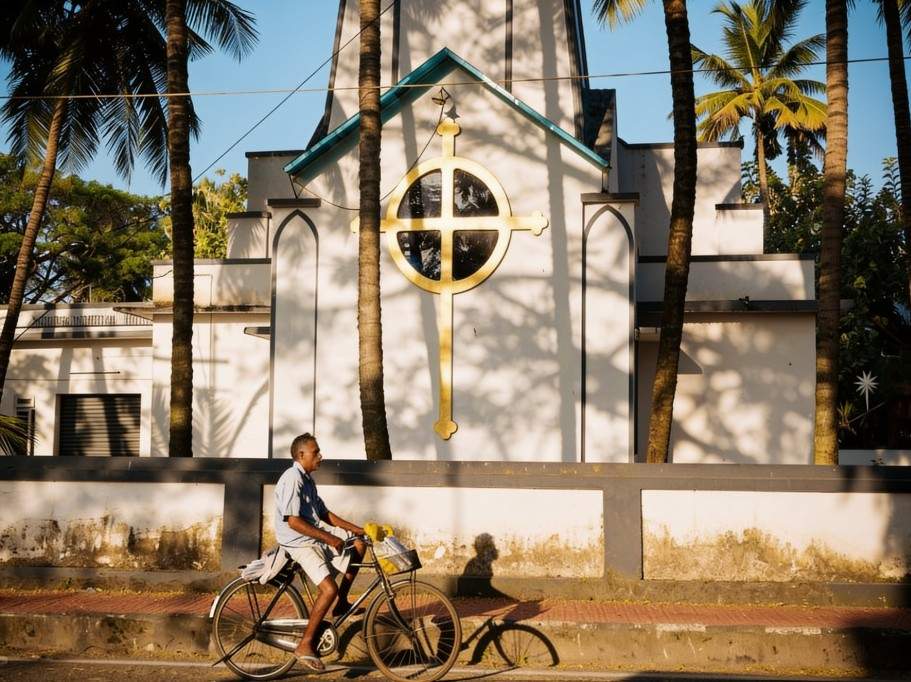
Around AD 52, a skeptical apostle is said to have stepped off a boat onto the Malabar coast, carrying little more than conviction and a handful of unanswered questions. Nearly two thousand years later, as India races through one of the fastest economic and technological transformations any nation has ever seen, a growing number of Catholic voices are asking an unexpected question: what can this ancient, doubting apostle still teach a Church trying to find its footing in a rapidly modernizing India? The answer, it turns out, may be more relevant today than at almost any point in the last century.
The Apostle Who Doubted First: Saint Thomas’ Arrival in India
Long before he became known as “Doubting Thomas,” the apostle carried a reputation for asking hard questions before settling into belief. According to longstanding Christian tradition, that same instinct shaped his missionary approach when he arrived in India. Rather than lecturing an ancient civilization already rich with its own philosophy, culture, and wisdom, Thomas is remembered for listening first, learning the rhythms of the land, and only then beginning to speak.
The Christian communities that trace their roots to his arrival on the Malabar coast have carried that posture for two millennia: fully Indian and fully Christian, without ever treating the two identities as being in conflict. This model of humble engagement rather than cultural imposition is precisely why his story is resurfacing now, at a moment when the Church in India is once again asking how to remain both faithful and relevant.
Why Saint Thomas’ Witness Matters for the Church in India Right Now
This reflection carries real significance for the Church, and its importance cuts in more than one direction. On the positive side, it offers a hopeful, constructive model at a moment when India’s rapid growth, booming cities, a globally competitive technology sector, and rising ambitions among its youth, could easily tempt religious communities to either chase relevance by imitating secular culture or retreat defensively into isolation. Saint Thomas’ example argues for a third way: confident presence without either compromise or withdrawal.
On the more cautionary side, this reflection surfaces real pressures facing Christian communities in India today. Farmers continue to face debt and a shifting climate. Young people worry about job markets that haven’t caught up with their ambitions. Families migrating to cities for work often lose the community support that once anchored them. And religious minorities, including Christians, increasingly navigate a legal and social climate where anti-conversion laws are sometimes used less to prevent coercion and more to intimidate charitable work, quietly narrowing the independence of institutions that have long served everyone regardless of creed. Naming these pressures honestly, rather than glossing over them, is itself part of the significance of this moment for India’s Church.
3 Lessons India’s Church Can Draw From Saint Thomas’ Example
1. Credibility is built through unconditional service, not persuasion. Much of the Church’s standing in India was earned quietly, through schools that never asked a student’s caste before teaching them and hospitals that never asked a patient’s religion before treating them. That inherited tradition of service remains one of the most persuasive arguments Christianity can offer in a pluralist society: dignity is not conditional on belief.
2. Honest doubt deserves welcome, not suspicion. Thomas is remembered as the apostle who doubted before he believed. A Church that welcomes hard questions from India’s young people, about faith, fairness, and purpose, follows his example rather than betraying it. Defensiveness toward honest questioning tends to push seekers away; humility tends to draw them closer.
3. Presence matters more than partisanship. Saint Thomas did not separate faith from the ordinary business of living; he built relationships within the culture he encountered rather than around it. For today’s Church, that means staying engaged with farmers, migrants, laborers, and minority communities navigating real hardship, without that engagement curdling into political
alignment or rhetoric.
A Spiritual Resolution
There is something quietly reassuring in the fact that the Church’s model for engaging a fast-changing India is not a triumphant conqueror but a doubting, listening apostle. Thomas’ faith was not undermined by his questions; it was refined by them. That same spiritual posture, presence without pride, conviction without coercion, is sustained not by willpower alone but by five ordinary practices that keep faith rooted through seasons of doubt and change:
- Confession, which clears away the defensiveness that turns honest questions into threats, restoring the humility Thomas himself modeled.
- Adoration, quiet time before Christ that steadies conviction without tipping into pride or the need to control outcomes.
- The Rosary, a patient, repeated rhythm of prayer offered for the marginalized, the migrant, and the doubting, much as Thomas carried others’ questions before he carried answers.
- The Eucharist, the ongoing source of the same unconditional presence that built the Church’s credibility in India in the first place.
- Scripture, returned to often, so faith remains rooted in encounter rather than mere cultural habit.
For individual Catholics and Church communities alike, the resolution is less about grand strategy and more about daily fidelity: showing up for the marginalized without demanding conversion in return, listening to a young person’s doubts without rushing to correct them, and trusting that quiet, consistent service will speak louder than any argument.
To remain informed about Catholic life, teachings, and global Church developments, readers may be encouraged to visit www.ewtnvatican.com for trusted Catholic news and resources.