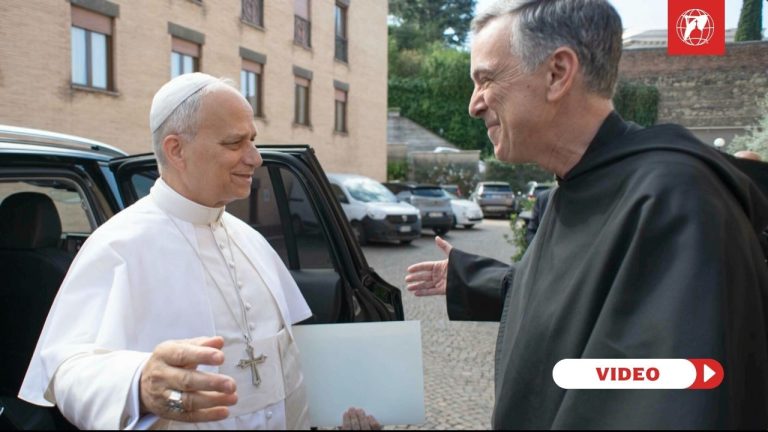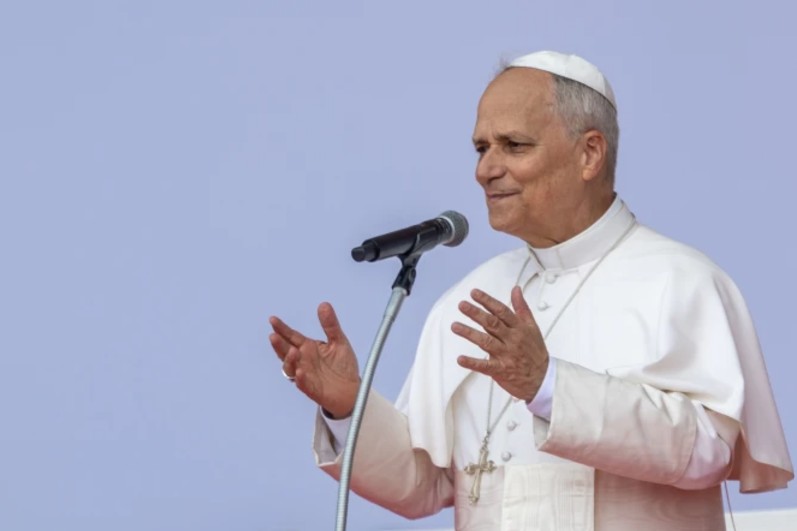
In the span of a single week, Pope Leo XIV sent three video messages to young people scattered across two continents: Portugal, Peru, and Brazil. Each message was addressed to a different gathering, a national youth day, a diocesan meeting, a massive outdoor festival, yet placed side by side, they reveal something more than routine papal greetings. A single thread runs through all three: an invitation for young people to stop fighting the restlessness inside them and instead let it become the engine of a genuine vocation.
Three Continents, One Message: Inside Pope Leo XIV’s Week Addressing Youth
The first message reached the young people of Lamego, Portugal, gathered for the country’s National Youth Day. There, Pope Leo XIV told them plainly not to fear the restlessness they carry within, framing it not as a flaw needing correction but as something closer to an engine meant to drive them forward. The language echoed Saint Augustine’s Confessions and its description of a beauty that is “ever ancient, ever new,” reframing restlessness not as anxiety to be managed but as a spiritual signal pointing toward a deeper question: Lord, what do you want me to do?
Days later, addressing young people in the Peruvian prelature of Chota and Cutervo, a region bordering Chiclayo, where the Pope himself once served as a missionary bishop, that same restlessness took on a sharper edge. He described it as a holy rebellion, urging young people to resist becoming what he called couch-bound youth, comfortable dozing in the familiar phrase “we’ve always done it this way.” Rather than framing this as a call to political activism, he described it as a demand to transform landscapes of suffering into spaces of hope by serving the most forgotten, precisely where he said the suffering face of Christ is found.
The third message, delivered to hundreds of thousands gathered for Brazil’s Halleluya Festival in Fortaleza, took a notably practical turn. Holding up Carlo Acutis, the young Italian sometimes called the “patron of the internet,” as a model, the Pope urged the crowd to use social media and artificial intelligence with moderation and discipline. His reasoning was not primarily moral but existential: these tools, he warned, can project people into an unreal world where the ephemeral and mere appearance quietly replace what is actually true and valuable.
Why ‘Holy Restlessness’ Resonates with a Generation Searching for Purpose
What stands out most across all three messages is the tone Pope Leo XIV chose to take. He did not idealize young people as flawless, nor did he treat them as a fragile category requiring protection from difficulty or challenge. He addressed their restlessness and their questions directly, taking both seriously, and sent them back out into the world rather than urging them to simply wait for stability to arrive on its own.
At Lamego, he offered a formula that functions almost as a definition of Christian maturity itself: God always calls people to holiness, and the saints are profoundly human. That single line captures the underlying logic connecting all three messages, holiness was never meant to be a distant, abstract ideal reserved for the extraordinary; it is meant to be lived out through the very restlessness, ambition, and searching that already characterizes youth.
Why This Coordinated Message Is Significant for the Church Today
This week of papal messaging carries real significance for the Church, and much of it points in an encouraging direction. Delivering three deliberately connected messages across three continents in a single week signals something beyond routine pastoral greeting; it reflects a coordinated, strategic investment in youth formation ahead of World Youth Day 2027 in Seoul, treating young people’s restlessness as spiritually productive rather than something to be diagnosed away or simply managed. That framing offers a meaningful counterpoint to broader cultural conversations that often treat youthful uncertainty purely as a problem to be solved rather than a signal worth listening to.
At the same time, a fair reading of this moment calls for one honest observation. Three video messages, however carefully crafted and widely shared, remain largely symbolic gestures unless they are followed by sustained, practical investment in youth ministry at the parish and diocesan level. The call toward disciplined use of social media and artificial intelligence, in particular, will require concrete formation and accompaniment well beyond a single festival address if it is to shape how young Catholics actually live day to day, rather than remaining an inspiring soundbite from a summer gathering.
Restlessness as an Ancient Christian Inheritance
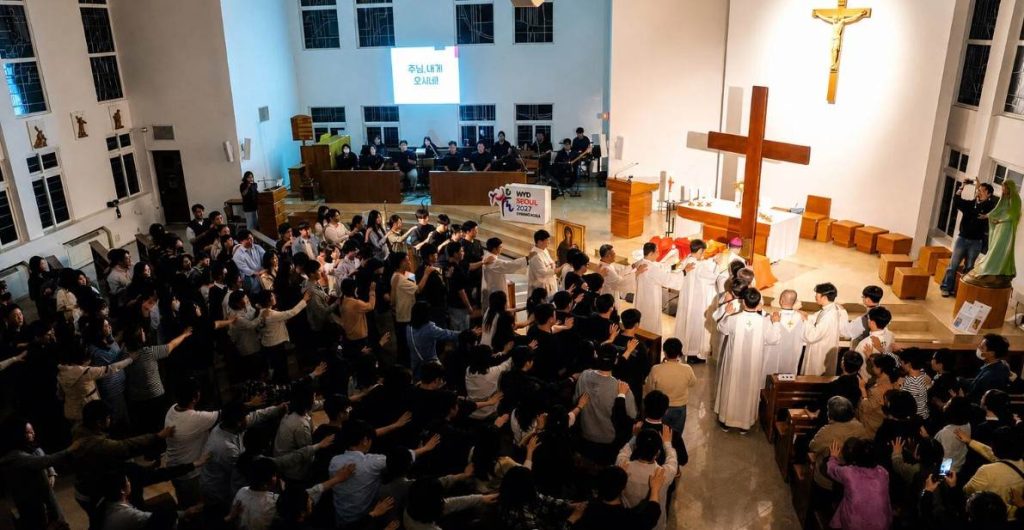
The Augustinian thread running through these messages points to one of Christianity’s oldest and most enduring spiritual insights: that the human heart is restless until it rests in God. Pope Leo XIV’s invitation to Portugal’s young people to embrace rather than silence that restlessness stands in a long tradition stretching back to Augustine’s own conversion, a restlessness that, rightly directed, becomes the very engine of a vocation rather than a wound to be numbed.
Carlo Acutis offers a strikingly contemporary expression of that same principle. A teenager who died in 2020 and was canonized as the Church’s first millennial saint, Acutis used his own technical skill with computers not to chase distraction but to catalog Eucharistic miracles and draw others toward faith, demonstrating that digital fluency and authentic holiness were never actually in competition with one another.
A Spiritual Resolution
Restlessness, left undirected, tends to scatter into noise or exhaustion. The messages Pope Leo XIV delivered this week point toward something steadier: a restlessness inhabited and channeled through five ordinary practices capable of turning youthful searching into lasting vocation.
- Confession, approached honestly and often, clears away the self-doubt and shame that can otherwise turn restlessness into despair rather than a genuine search for purpose.
- Adoration, quiet time spent before Christ, gives restlessness somewhere to land rather than spilling endlessly into noise or distraction.
- The Rosary, prayed steadily, offers young people a repeated rhythm capable of grounding a search for vocation that can otherwise feel scattered or urgent.
- The Eucharist, received regularly, becomes the concrete answer to the very question Pope Leo XIV described restlessness pointing toward: Lord, what do you want me to do?
- Scripture, read and prayed with regularly, roots that same restlessness in a tradition stretching back to Augustine himself, rather than leaving it as a purely modern, unanchored feeling.
Anchored by these five practices, restlessness stops being something to manage or outgrow and instead becomes exactly what Pope Leo XIV described: an engine capable of carrying young people from Lamego, Chota, and Fortaleza, and everywhere else, toward Seoul in August 2027, and toward the vocations still waiting to be discovered along the way.
A Summons Already Underway
Pope Leo XIV’s week of messages to young people across Portugal, Peru, and Brazil offers more than encouragement ahead of World Youth Day 2027; it offers a coherent spiritual vision, one that takes youthful restlessness seriously rather than treating it as a problem to be solved. As Seoul approaches, this consistent, cross-continental message suggests the real preparation for that gathering has already begun, not in logistics alone, but in how young people are being invited to understand themselves. Coverage of this developing story, including from platforms such as EWTN Asia Pacific News, continues to follow the road toward Seoul 2027 as it unfolds across the global Church.
To remain informed about Catholic life, teachings, and global Church developments, readers may be encouraged to visit www.ewtnvatican.com for trusted Catholic news and resources.