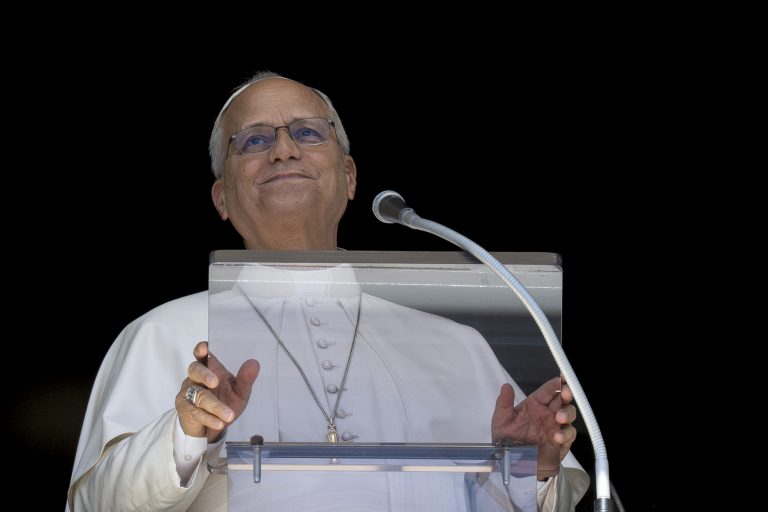
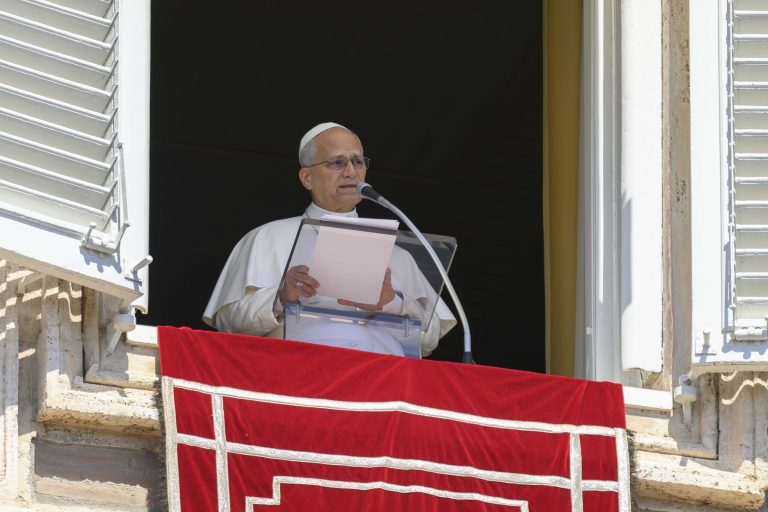
Pope Leo XIV arrived in Algiers Monday, becoming the first Pope to visit the Muslim-majority nation. His presence in the North African country marks a turning point for interfaith dialogue and a return to the very roots of the early Church.
As the sun set over the Bay of Algiers, the Pope stood at the Basilica of Our Lady of Africa, looking out over the Mediterranean. He was not just a head of state, but a “son of Saint Augustine” returning to the land of his spiritual father. This historic 48-hour visit has captured the world’s attention, but what does it mean for the future of the Church in Africa?
1. A Historic First: Breaking New Ground in Algiers
For centuries, no Roman Pontiff had set foot on Algerian soil. This changed on April 13, 2026, when Pope Leo XIV’s plane touched down at Houari Boumediene Airport. The visit is a powerful signal of the Vatican’s commitment to the “peripheries” of the Catholic world.
Algeria is the largest country in Africa, yet its Catholic population is a tiny minority—less than 1% of the total population. Most are migrant workers from sub-Saharan Africa or students. By choosing Algeria as his first stop, Pope Leo XIV is telling this “hidden” Church that they are not forgotten.
“I come as a brother and a pilgrim of peace,” the Pope said during his arrival ceremony. “I come to listen, to learn, and to walk alongside you.”
Why Algeria? Why Now?
The timing of the visit is no coincidence. As the Church in Europe faces secularization, the Church in Africa is experiencing explosive growth. However, North Africa remains a unique challenge. Pope Leo’s visit aims to:
•Strengthen Interfaith Ties: Algeria is a leader in the Muslim world. A strong relationship here sets a precedent for the entire region.
•Honor the Martyrs: The Pope paid tribute to the 19 “Martyrs of Algeria,” including the monks of Tibhirine, who were beatified in 2018.
•Reconnect with History: Algeria was once a powerhouse of Christian thought, home to giants like Saint Augustine.
The strategic importance of Algeria cannot be overstated. As the largest country in Africa by land area, it serves as a gateway between the Mediterranean and the Sahara. For the Catholic Church, Algeria represents a “bridge” to the Islamic world. By visiting Algiers, Pope Leo XIV is demonstrating that the Church is not a European institution, but a global one that belongs in every corner of the earth.
Furthermore, the Pope’s focus on the “peripheries” is a hallmark of his papacy. He often says that the world is seen more clearly from the edges than from the center. In Algeria, the Catholic community is on the very edge—a small, humble presence that survives through friendship and service rather than power or influence. This “spirit of the periphery” is exactly what Pope Leo wants to bring back to the heart of the universal Church.
2. Walking with Saint Augustine: A Personal Pilgrimage
For Pope Leo XIV, this trip is deeply personal. Before his election, he was Robert Prevost, the Prior General of the Augustinians. He has spent his life studying the works of Saint Augustine of Hippo, the 4th-century Doctor of the Church who was born and died in what is now Algeria.
On Tuesday, the Pope traveled to Annaba, the site of ancient Hippo Regius. He walked through the archaeological ruins where Augustine once preached his famous sermons. Standing amidst the ancient stones, the Pope looked visibly moved.
The Legacy of Hippo
Saint Augustine is often called the “Doctor of Grace.” His writings, such as Confessions and The City of God, formed the bedrock of Western theology. Yet, we often forget that he was an African bishop. Pope Leo’s visit reminds us that Christianity is not a “Western” import to Africa; it has been here since the beginning.
During his visit to the ruins of Hippo, Pope Leo XIV spent a moment of silent prayer in the area believed to be Augustine’s cathedral. He then addressed a small group of pilgrims, highlighting how Augustine’s struggle with his own “restless heart” is a universal human experience. “Augustine found that the truth is not an idea, but a person—Jesus Christ,” the Pope said. This personal encounter with Christ is what transformed a brilliant but troubled young man into one of the greatest saints in history.
Did you know? Saint Augustine’s library in Hippo was one of the few things to survive the Vandal invasion in 430 AD. Today, his legacy continues to inspire millions of “restless hearts” seeking God. The fact that his works have survived for over 1,600 years is a testament to their enduring power and relevance.
A Modern Augustinian Vision
Pope Leo XIV’s own background as an Augustinian monk (Order of Saint Augustine, or OSA) deeply colors his view of the world. The Augustinian rule emphasizes community, shared life, and the “oneness of heart and mind” on the way to God. In Algeria, a country that has struggled with internal divisions and the scars of colonialism, this message of unity is particularly potent.
By returning to Hippo, the Pope is not just looking at old stones; he is looking for a way forward. He is asking how the ancient wisdom of the African Church can help solve the modern problems of migration, poverty, and religious extremism. For Pope Leo, the answer lies in “interiority”—the practice of looking within oneself to find God, and then looking outward to find God in our neighbor.
3. Our Lady of Africa: A Sanctuary for All
One of the most emotional moments of the trip took place at the Basilica of Notre-Dame d’Afrique. This stunning Neo-Byzantine church sits on a cliff 124 meters above the sea. Inside, a famous inscription reads: “Notre Dame d’Afrique priez pour nous et pour les Musulmans” (Our Lady of Africa, pray for us and for the Muslims).
This phrase captures the spirit of the Algerian Church. It is a Church of service, not proselytization. The Augustinian Missionary Sisters and other religious orders work in hospitals, schools, and libraries, serving their Muslim neighbors with “discreet and faithful presence.”
A Lesson in Dialogue
The Pope’s visit to the Great Mosque of Algiers further emphasized this theme. He met with the Grand Imam and other religious leaders to discuss how faith can be a force for peace rather than conflict. This meeting was not just a photo opportunity; it was a deep, theological exchange about the role of religion in the 21st century.
“Religion must never be used to justify violence,” the Pope stated firmly. He spoke about the “fraternity of the desert,” a concept that draws on the shared history of Christians and Muslims in the Sahara. This message resonates deeply in a country that has known both the beauty of faith and the pain of extremist conflict. The Grand Imam echoed these sentiments, welcoming the Pope as a “true friend of the Algerian people.”
The Martyrs of the Desert
No discussion of the Church in Algeria is complete without mentioning the 19 martyrs who gave their lives during the “Black Decade” of the 1990s. Among them were the seven monks of Tibhirine, whose story was immortalized in the film Of Gods and Men. These men and women chose to stay with their Muslim neighbors even when their lives were in danger.
Pope Leo XIV visited the site where these martyrs are remembered, offering a prayer for all victims of violence. He described their sacrifice as a “seed of peace” that is only now beginning to sprout. Their lives were a powerful witness to the fact that love is stronger than death, and that friendship can transcend even the deepest religious divides. This “martyrdom of friendship” is perhaps the most profound legacy of the Algerian Church.
4. 9 Things to Know About the Pope’s Mission
To help you follow the significance of this journey, here are nine essential facts about Pope Leo XIV’s time in Algeria:
1.The First Ever: No Pope has visited Algeria before 2026.
2.The Duration: The visit lasted 48 hours before the Pope moved on to Cameroon.
3.The Host: President Abdelmadjid Tebboune personally welcomed the Pontiff.
4.The Martyrs: The Pope prayed at the site of the 1996 Tibhirine monastery tragedy.
5.The Languages: Masses were celebrated in French, Arabic, and Latin.
6.The Youth: The Pope met with African students studying in Algiers.
7.The Environment: He spoke about the “Great Green Wall” project to stop desertification.
8.The Title: He was welcomed as a “Son of Saint Augustine.”
9.The Gift: The Pope presented a rare facsimile of an Augustinian manuscript to the National Library.
5. Actionable Takeaways: What Can We Learn?
Pope Leo XIV’s visit isn’t just for the history books; it offers practical lessons for every believer.
Embrace the “Peripheries”
Who are the “invisible” people in your community? The Pope went to a place where Catholics are a tiny minority. We are called to step outside our comfort zones and reach out to those on the margins.
Study the Roots of Your Faith
The Pope’s pilgrimage to Hippo reminds us of the importance of tradition. Take time this week to read a passage from Saint Augustine’s Confessions. You might find that his 1,600-year-old struggles are surprisingly similar to your own.
Practice “Discreet Presence”
In Algeria, the Church serves through action rather than words. How can you witness to your faith through service today? Sometimes, a “beautiful” act of kindness speaks louder than any sermon.
Spiritual Resolution
As we reflect on Pope Leo XIV’s historic visit to Algeria, let us renew our own hearts in Christ and respond to this witness of peace with a deeper return to the sacramental life of the Church.
The Sacrament of Confession: To examine our consciences honestly and seek God’s mercy, so that our hearts may be purified of sin and made ready to become instruments of reconciliation and peace.
The Holy Rosary: To place Algeria, the Church in Africa, and the intentions of the Holy Father under the maternal care of the Blessed Virgin Mary, asking her to guide souls to her Son and to strengthen the faithful in hope.
Eucharistic Adoration: To spend time before Our Lord truly present in the Blessed Sacrament, praying especially for deeper understanding of our Catholic faith, for persecuted Christians, and for the grace to become faithful witnesses of Christ’s charity.
Attending Mass: To return with greater devotion to the Holy Mass, the source and summit of the Christian life, where Christ nourishes His people and sends them forth to live the Gospel with humility, courage, and love.
The Holy Scriptures: To meditate prayerfully on the Word of God, especially those passages that call us to peace, conversion, and holiness, so that like Saint Augustine our restless hearts may find their rest in the Lord.
To remain informed about Catholic life, teachings, and global Church developments, readers may be encouraged to visit www.ewtnvatican.com for trusted Catholic news and resources.