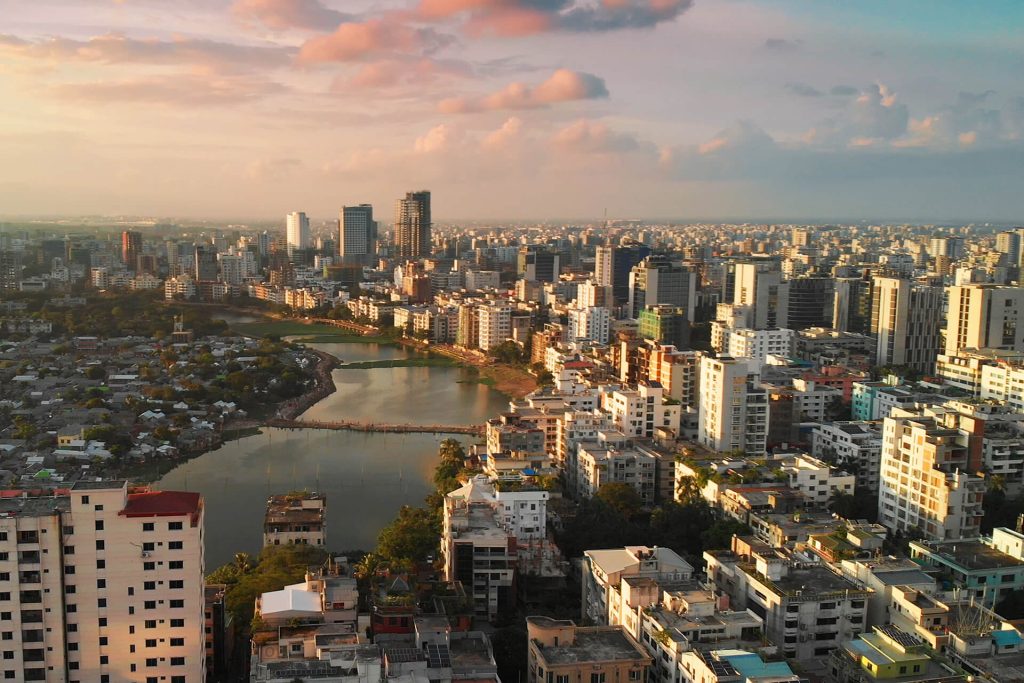
Image from Dhaka skyline from a bird’s eye view © Lumenite
When Faith Meets Environmental Action
With saplings in hand during heavy monsoon rains, young believers in Bangladesh are bringing Pope Francis’ environmental vision to life. The Laudato Si Bangladesh tree campaign represents far more than an environmental initiative—it is a profound spiritual movement that challenges us to reconsider our relationship with creation, with one another, and with God himself.
Since 2020, Catholic youth across eight dioceses in Bangladesh have planted more than 10,000 trees through the “One Catholic, One Tree” principle. This remarkable achievement emerged from the Catholic Bishops’ Conference of Bangladesh’s response to Pope Francis’ 2015 encyclical Laudato Si’, which calls Catholics to recognize environmental and spiritual crises.
What makes the Laudato Si Bangladesh campaign truly transformative are the lessons it teaches about faith, action, and community. As we explore three beautiful lessons from this campaign, we discover how the Laudato Si Bangladesh movement demonstrates that creation care is central to faith.
Lesson 1: Faith Requires Action, Not Mere Contemplation
The first and most powerful lesson from the Laudato Si Bangladesh tree campaign is this: faith without works is dead. The campaign’s foundational principle—”One Catholic, One Tree”—transforms abstract theological commitment into tangible environmental stewardship.
Cardinal Patrick D’Rozario, Archbishop Emeritus of Dhaka, articulated this vision with clarity and conviction. He explained that the Laudato Si Bangladesh initiative was designed to move Catholics beyond passive agreement with environmental principles into active participation in creation’s healing. Each Catholic in Bangladesh was invited to plant one tree as a sign of their faithful citizenship to the world.
This is not symbolic action divorced from real impact. When 400 youths participated in the Bangladesh Catholic Church’s 38th National Youth Day in February 2023, they did not merely discuss environmental protection in seminars. They planted trees. They committed to reducing plastic consumption. They pledged to stop littering. They transformed their daily habits.
Xavier Oli Minj, a 29-year-old Oraon Indigenous youth from Dinajpur district, exemplifies this integration of faith and action. As secretary of the Dinajpur Diocese youth commission, Minj participated in Laudato Si Bangladesh seminars and educational programs. These experiences awakened in him a conviction that environmental care was not optional but integral to his faith identity.
Minj then took a bold step: he challenged himself and his peers to plant a tree each and recruit two friends to do the same. The Dinajpur Diocese’s youth groups succeeded in this challenge, demonstrating how peer-to-peer mobilization can scale environmental action rooted in faith.
What distinguishes this approach is that the Laudato Si Bangladesh campaign does not separate spiritual conversion from behavioral change. Minj’s personal testimony reveals this integration: “Now I don’t throw any garbage on the road, which I used to throw before. Now after eating a chocolate, I keep its shell in the pocket and later throw it in the designated place.”
This transformation represents ecological conversion—the spiritual awakening that moves believers from indifference to active stewardship. The Laudato Si Bangladesh movement teaches that faith demands we move beyond comfortable contemplation into uncomfortable action. We must get our hands dirty in the work of creation’s restoration.
Lesson 2: Every Individual Action Contributes to Collective Transformation
The second beautiful lesson from the Laudato Si Bangladesh tree campaign is that environmental restoration is not the exclusive work of governments, corporations, or international NGOs. It is the work of individual believers, each contributing their unique gifts and resources.
The campaign’s numerical target—400,000 trees representing 400,000 Catholics—emphasizes that every single person matters. When one person plants one tree and inspires two others to do the same, exponential change becomes possible. The fact that the Laudato Si Bangladesh campaign exceeded its target, ultimately planting over one million trees by 2023, demonstrates the power of distributed action.
This lesson carries profound spiritual significance rooted in Catholic teaching. Each person possesses inherent dignity and agency. The Laudato Si Bangladesh campaign affirms that every individual, regardless of economic status or social position, can participate in creation’s healing.
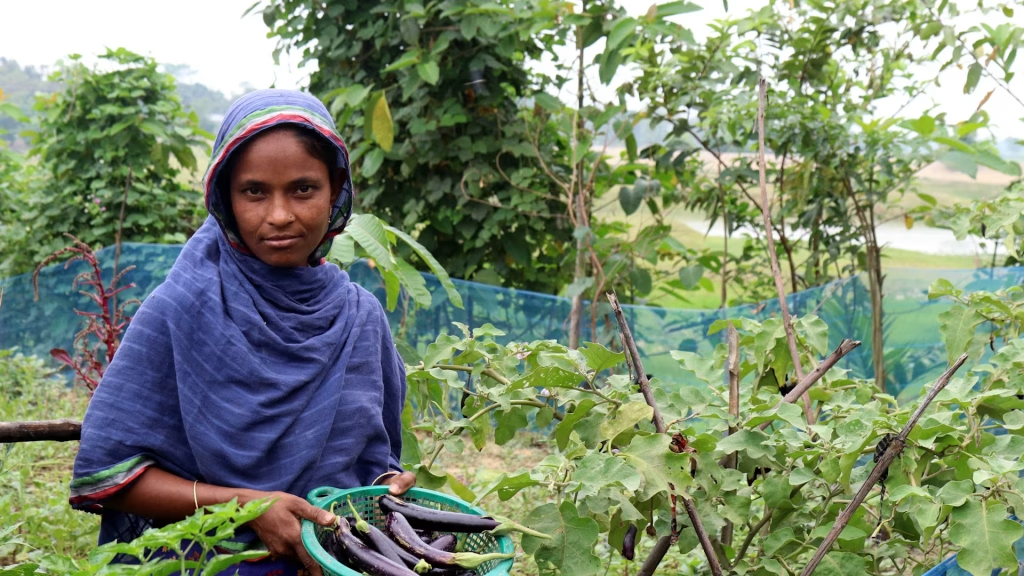
Consider the diversity of participants in the Laudato Si Bangladesh initiative. A farmer in a rural village plants trees in his garden. A student in Dhaka plants saplings in a rooftop garden. An elderly woman named Latika Mandal preserves 150 varieties of indigenous vegetable seeds, planting them in backyards and now earning income by selling seeds in local markets.
All are agents of ecological conversion. All are participating in the Laudato Si Bangladesh vision. None is more important than the others; all are essential to the movement’s success.
The 80% participation rate of Catholic Church-run educational institutes in the Laudato Si Bangladesh movement reflects this principle of distributed action. Schools did not wait for government mandates or international funding. Teachers and students took initiative, organizing tree-planting days and establishing school gardens.
This lesson offers hope to readers who may feel overwhelmed by environmental challenges. The Laudato Si Bangladesh campaign demonstrates that you do not need to be a policy maker to make a difference. Your individual action, multiplied by thousands of others, creates transformation.
Lesson 3: Creation Care Connects Us to the Creator, to Each Other, and to the Poor
The third beautiful lesson from the Laudato Si Bangladesh tree campaign is that environmental stewardship is inseparable from justice and love. Laudato Si Bangladesh emphasizes that environmental degradation disproportionately affects the poor and vulnerable.
Bangladesh’s coastal communities, already struggling with poverty, face the greatest threat from climate change. Rising sea levels, cyclones, and erosion threaten the livelihoods of farmers and fishers in vulnerable districts like Satkhira. The Laudato Si Bangladesh campaign specifically targeted these areas, recognizing that creation care is fundamentally about protecting those most at risk.
Bishop James Romen Boiragi of the Khulna Diocese and Caritas Bangladesh officials led tree-planting efforts in the vulnerable Shyamnagar area of Satkhira district, where mangrove forests and agricultural land face constant environmental pressure. These efforts directly address Bangladesh’s acute climate vulnerability and protect communities from devastating natural disasters.
Holy Cross Fr. Hubert Liton Gomes, secretary of the Episcopal Commission for Justice and Peace for the Catholic Bishops’ Conference of Bangladesh, explained the theological foundation clearly and compellingly: “God created the world and told us to prosper in it but we are destroying it. We all have resources, but these resources are being wasted due to the aggressive attitude of some. And as a result, some regions of the world are suffering more and Bangladesh is one of them that are suffering more from environmental disasters and will be.” This statement captures the urgency of the Laudato Si Bangladesh movement.
The Laudato Si Bangladesh campaign teaches ecological conversion by developing “a relationship with creation, the creator and human beings—especially the poor among God’s creation.” When youth plant trees to protect coastal villages from cyclones, they are not merely performing environmental service. They are expressing love for their vulnerable neighbors and honoring God’s creation.
The interfaith dimension of the Laudato Si Bangladesh movement further illustrates this lesson. When 200,000 Christians from other denominations joined the effort through the United Forum of Churches, and when Muslim and Hindu neighbors participated alongside Catholic youth, the campaign transformed into a community-wide environmental movement. This interfaith collaboration models how faith communities can unite around shared environmental stewardship.
Key Takeaways: How Laudato Si Bangladesh Transforms Communities
The Laudato Si Bangladesh tree campaign demonstrates that Pope Francis’ encyclical is not a distant Vatican document but a living, breathing call to action. In the hands of young believers, it becomes a movement that heals the earth, strengthens communities, and deepens faith.
The three lessons—that faith demands action, that individual commitment creates collective change, and that environmental stewardship is inseparable from justice—offer guidance to Catholic communities worldwide. The Laudato Si Bangladesh initiative shows us that creation care is not a future aspiration but a present reality that transforms how we live, work, and relate to one another.
Spiritual Resolution: From Environmental Action to Sacramental Life
As we reflect on the beautiful lessons of the Laudato Si Bangladesh tree campaign, we are invited into deeper communion with God’s creation and with Christ himself. The movement’s success is not merely measured in trees planted but in hearts transformed and spirits awakened to their responsibility as stewards of creation.
This spiritual awakening naturally leads us to the Sacramental life of the Church. Through the Sacrament of Confession, we acknowledge our environmental negligence and commit to renewed stewardship. Through Eucharistic Adoration, we contemplate the mystery of Christ’s presence and our role in his redemptive work for all creation. Praying the Holy Rosary with intention for environmental healing connects us to Mary’s intercession for our common home.
Active participation in the Holy Mass and reception of the Eucharist unite us with Christ’s sacrificial love, which extends to all creation. In the Eucharist, we receive Christ’s body and blood, and we are called to become his body in the world—a body that cares for creation, protects the vulnerable, and works for justice.
Reflection on Sacred Scripture deepens our understanding of creation care. The Genesis account of humanity’s role as stewards of creation, the Psalms’ celebration of God’s handiwork, and Jesus’ teachings about caring for the least among us all call us to environmental responsibility rooted in faith.
The Laudato Si Bangladesh campaign demonstrates that creation care is not separate from our spiritual life but integral to it. As we plant trees, reduce waste, and protect vulnerable communities, we are living out our baptismal commitment to follow Christ and serve his creation. The young believers of Bangladesh show us that faith and environmental action are inseparable—that to love God is to love and protect his creation.
For more information on Catholic environmental teachings and to stay informed about the global Church’s mission, visit www.ewtnvatican.com. There you will find resources to deepen your understanding of Laudato Si’, connect with environmental initiatives in your own community, and discover how you too can participate in creation’s healing through faith-driven action rooted in prayer and sacramental life.