A Quiet Faith Behind the Chrysanthemum Throne
What does it mean when a member of one of the world’s oldest, most sacred royal institutions carries a Catholic heritage? For centuries, Japan’s Imperial Family has stood as the spiritual head of Shinto, the nation’s indigenous faith. Yet woven quietly into its modern history is a lesser-known thread: real, documented Catholic connections among people who married into and were educated alongside the imperial line.
This is not a rumor pulled from social media. It’s a story rooted in verifiable history, Japanese Catholic institutions, and public records and it carries a spiritual significance that deserves a closer, more thoughtful look.
The Documented Catholic faith in Japan’s Imperial Family:
Princess Nobuko of Mikasa: Born and Baptized Catholic
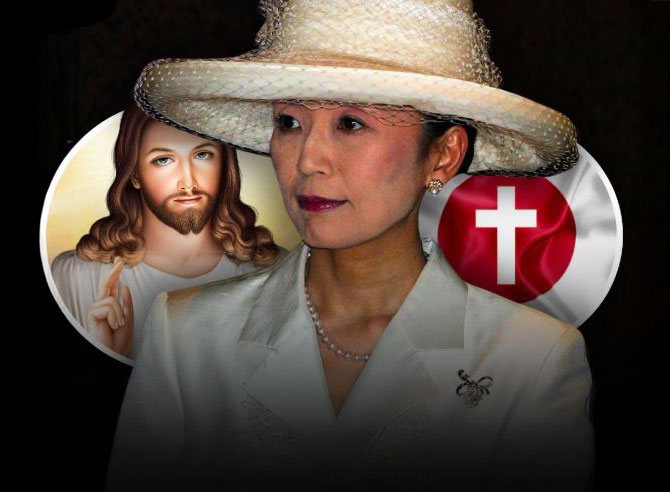
The clearest, most well-documented case is Princess Tomohito of Mikasa, born Nobuko Asō. Born on April 9, 1955, into a devout Catholic family, Nobuko was the daughter of Takakichi Asō and granddaughter of former Prime Minister Shigeru Yoshida. She married Prince Tomohito of Mikasa which is the first cousin of then-Emperor Akihito in 1980, formally entering the Imperial Family. She was born a Catholic, making her one of the clearest examples of Christian faith entering the highest levels of Japanese royalty.
Her brother, incidentally, is former Japanese Prime Minister Tarō Asō himself a practicing Catholic, making theirs one of the most prominent Catholic families in modern Japanese public life.
Empress Michiko’s Catholic Education
Empress Emerita Michiko, wife of Emperor Emeritus Akihito, is officially listed as Shinto, in keeping with the Imperial Family’s ceremonial role. However, she was educated at Catholic institutions associated with the Sacred Heart order, a detail that has fueled decades of discussion among royal historians about her family’s religious background.
Empress Emerita Michiko’s Son’s Wife and the Sacred Heart Connection to Naruhito
Perhaps most striking for readers today: the mother of Emperor Naruhito Empress Emerita Michiko was educated at Catholic schools and graduated from Sacred Heart University, a Catholic women’s college in Tokyo. That means the reigning Emperor of Japan was raised by a mother formed, in part, by Catholic education a quiet but genuinely significant thread connecting the Chrysanthemum Throne to the Catholic Church.
Prince Asaka’s Post-War Conversion
Historically, Prince Yasuhiko Asaka, an uncle by marriage to Emperor Shōwa, converted to Roman Catholicism in 1951 notably after he had left the Imperial Family as a commoner under Japan’s post-war constitutional reforms, which abolished collateral imperial branches.
Why This Matters: The Deeper Spiritual Significance
It’s easy to treat royal trivia as mere gossip. But there is something genuinely moving about a tiny religious minority in Catholics make up less than 0.4% of Japan’s population, roughly 430,000–535,000 people out of 125 million having such an outsized, quiet presence near the very center of Japanese identity and tradition.
Here’s the spiritual angle worth reflecting on:
- Faith survives against the odds. Japan’s Catholic history begins with St. Francis Xavier’s arrival in 1549, followed by roughly 250 years of brutal persecution under the Tokugawa shogunate, when practicing Christianity could mean death. The “Hidden Christians” (Kakure Kirishitan) preserved the faith in secret for generations. That a Catholic family could later marry into the Imperial Family — the very symbol of the nation those persecutions were meant to protect — is a powerful testament to reconciliation and endurance.
- Catholic education shaped Japan’s elite quietly, not loudly. Institutions like Sophia University (founded in 1913 at the request of Pope Pius X) and the Sacred Heart schools were never mass-conversion machines fewer than 1% of their students are Catholic. Yet they shaped generations of Japan’s most influential families, including, by education if not creed, members of the Imperial household itself. Faith often works this way: not through numbers, but through formation, values, and quiet witness.
- A living bridge between East and West. Pope Francis’s historic 2019 visit to Japan meeting Emperor Naruhito at the Imperial Palace and visiting Sophia University symbolized a Church that has found a respectful, permanent home in a nation still officially headed by a Shinto-linked institution. The Catholic threads inside the Imperial Family’s story are a small but real sign of that ongoing bridge.
Spiritual Resolution
Taken together, these threads point to something deeper than royal trivia. Princess Nobuko of Mikasa’s baptism, Empress Emerita Michiko’s Sacred Heart formation, and Prince Asaka’s post-war conversion are not isolated curiosities they are quiet evidence that grace does not require majorities to leave a mark. Catholics remain under 0.4% of Japan’s population, yet their presence has reached into homes, schools, and even the household closest to the Chrysanthemum Throne. That is the resolution this story offers: faith rarely announces itself with numbers or headlines. More often, it takes root patiently, through formation and fidelity, and surfaces generations later in the most unexpected places even beside a throne built on an entirely different tradition.
Japan’s Imperial Family and Catholic Faith: A Lasting Spiritual Legacy Japan’s Imperial Family will remain, by constitutional and cultural design, the ceremonial head of Shinto. But the Catholic threads running quietly alongside it from Xavier’s 16th-century mission, through centuries of hidden persecution, to a baptized princess and a Sacred Heart-educated empress tell a story of faith’s endurance that deserves more attention than it usually receives. It is a reminder that the Church’s influence in Asia is often measured not in converts or headlines, but in the lives, it forms and the history it quietly carries forward. EWTN Asia Pacific will continue to help and bring these deeper, often-overlooked stories of Catholic faith and history across the region to light.
To remain informed about Catholic life, teachings, and global Church developments, readers may be encouraged to visit www.ewtnvatican.com for trusted Catholic news and resources.