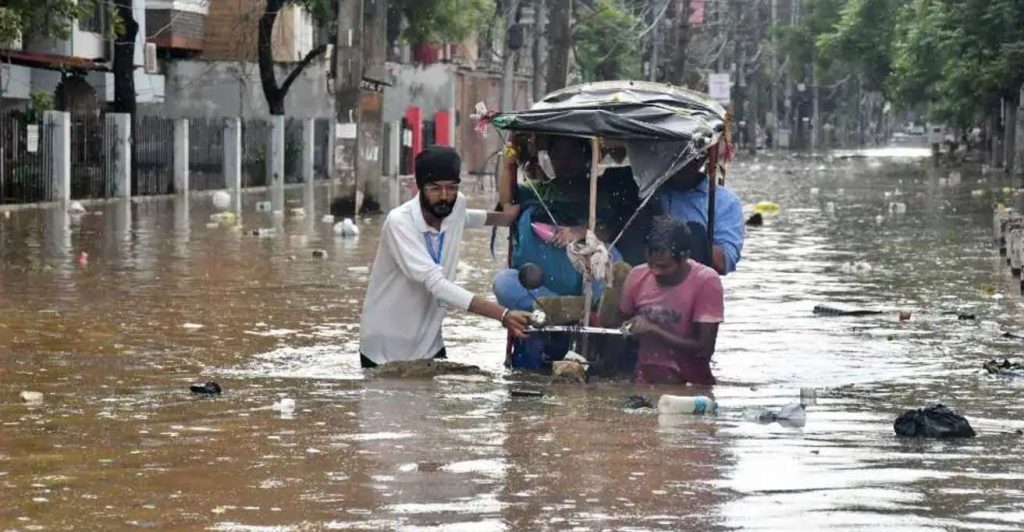
Assam is enduring its worst flooding in nearly six decades, and the numbers behind the disaster are staggering: at least 84 people dead since July 19, hundreds of thousands displaced, and entire villages still cut off from basic assistance weeks after the rains began. Amid this widespread devastation, the Diocese of Dibrugarh in northeastern India is now shifting from emergency response into the harder, longer work of rehabilitation, and appealing directly to charitable organizations, mission agencies, and individuals for the support that long-term recovery will require.
Inside the Disaster: Assam’s Worst Flooding in Six Decades
Unusually heavy monsoon rains caused the Brahmaputra River and its tributaries to overflow across large portions of Assam, submerging more than 34,000 hectares of farmland and affecting close to 900,000 domestic animals and livestock. Officials have described the disaster as the state’s worst flooding in nearly six decades, with an estimated 650,000 people affected statewide and more than 18,000 losing their homes entirely. Within the Diocese of Dibrugarh specifically, official figures show more than 212,000 people affected across eight districts, with Charaideo, Jorhat, and Sivasagar among the hardest-hit areas.
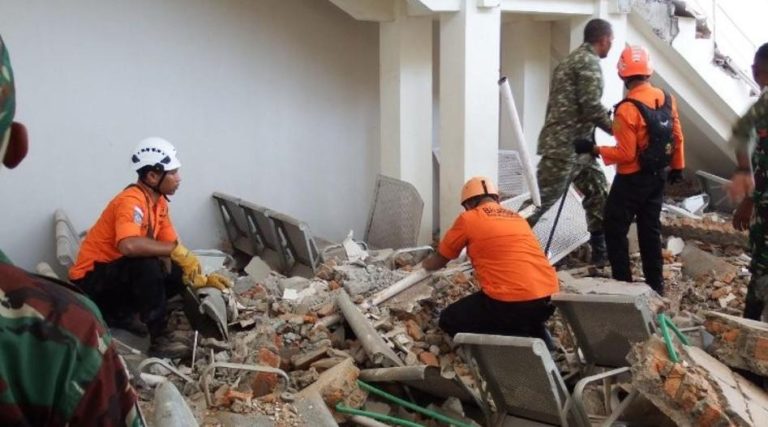
Tens of thousands of displaced residents have taken shelter in government-run relief camps, while the Indian Air Force, National Disaster Response Force, and state agencies continue coordinated rescue and relief operations. Even as floodwaters have begun to recede in some areas, many communities, particularly in remote and isolated villages, remain difficult to reach, leaving significant gaps between what government relief efforts can cover and what local communities still urgently need.
A Church Washed Away, A Community Still Standing
The flooding did not spare the Church’s own infrastructure. St. Thomas Church in Parsiparlo was completely washed away before parishioners had any opportunity to save its contents, one of many losses across a diocese now facing significant rebuilding needs on top of its relief work. Hundreds of homes within the diocese were also destroyed or badly damaged, leaving many families in temporary shelters with little certainty about when, or how, they will be able to rebuild.
Father John Minj of the Dibrugarh Diocese told UCA News that relief materials had already been prepared for flood victims, while emphasizing where the diocese’s efforts are specifically focused. He explained that government relief work is already underway, but that the Church’s particular priority lies in reaching the far-flung villages that government assistance has not yet managed to reach. That distinction captures something important about the diocese’s role in this crisis: not competing with government relief efforts, but filling the gaps those efforts inevitably leave behind, especially in the most isolated communities.
Why This Relief Effort Is Significant for the Church Today
This response carries genuine significance for the Church, and much of it points in an encouraging direction. The diocese’s local knowledge and relationships, built over years of pastoral presence in these communities, allow it to reach households that larger, more centralized relief operations often struggle to locate quickly. That the diocese is already shifting its language from emergency relief toward long-term rehabilitation signals a mature, sustained commitment to recovery, rather than a response limited to the immediate news cycle surrounding the disaster.
At the same time, an honest reading of this moment requires acknowledging real limitations. The loss of St. Thomas Church itself illustrates a difficult reality facing disaster-affected dioceses: the Church must often rebuild its own damaged infrastructure at the very moment its people need pastoral and material support most urgently. With more than half a million people affected across the state, a single diocesan appeal, however well organized, cannot meet the full scale of need on its own. Sustained support from beyond the immediate region, exactly what this appeal is asking for, remains essential if recovery is to reach the families still waiting weeks after the floodwaters first rose.
A Building Lost, A Church That Endures
There is a striking spiritual truth embedded in the loss of St. Thomas Church, one Catholic teaching has always insisted on even when it is difficult to feel in the moment: the Church was never primarily a building. Scripture describes believers themselves as living stones, built together into a spiritual house, a reminder that while floodwaters can destroy brick, mortar, and pews, they cannot wash away the community of faith those structures were built to serve in the first place.
This distinction offers real comfort to a parish community that has lost its physical church while continuing to gather, pray, and serve one another through disaster. The building can be rebuilt in time; the faith and mutual care sustaining Parsiparlo’s Catholic community through this crisis already demonstrates that the Church itself, understood rightly, was never actually washed away.
A Spiritual Resolution
Rebuilding after a disaster of this scale takes far longer than the news cycle around it typically lasts, and sustaining that long recovery requires spiritual roots as much as material resources. Five ordinary practices offer exactly that kind of steady foundation for a community facing months, and likely years, of rebuilding ahead.
- Confession, offered gently amid loss and displacement, clears space for whatever fear or despair disaster survivors may be quietly carrying, restoring hope even amid real devastation.
- Adoration, quiet time before Christ, offers displaced families and relief workers alike a place to bring exhaustion and grief that words cannot fully express.
- The Rosary, prayed steadily, can be offered specifically for Assam’s flood victims and for the isolated villages still waiting for aid to reach them.
- The Eucharist, celebrated again once parish life stabilizes, will remain the true center around which Parsiparlo’s community continues to gather, even without its church building.
- Scripture, particularly its reminder that believers themselves are living stones forming God’s true dwelling, grounds this community’s identity in something floodwaters could never actually reach.
To remain informed about Catholic life, teachings, and global Church developments, readers may be encouraged to visit www.ewtnvatican.com for trusted Catholic news and resources.