A New Dawn for Bangladesh’s Faithful
On March 25, 2026, Pope Leo XIV made a historic announcement that would reshape the spiritual landscape of northern Bangladesh. The establishment of the Diocese of Joypurhat marked a pivotal moment for the Catholic Church in Asia Pacific, creating the nation’s ninth Catholic diocese and bringing renewed hope to thousands of Indigenous faithful. This momentous decision wasn’t simply administrative—it represented the Church’s deep commitment to serving marginalized communities and strengthening faith in areas where spiritual resources had been stretched thin.
The Diocese of Joypurhat emerges as a beacon of hope in a region where Catholics represent less than 1% of the population. Yet within this small minority lies a vibrant, dynamic community predominantly composed of Indigenous peoples: the Santal, Oraon, Mahali, Munda, and Paharia. These communities, among the poorest and most discriminated against in Bangladesh, have found solace and solidarity in the Catholic faith. The creation of this diocese directly addresses their spiritual needs while simultaneously strengthening the Church’s presence across Asia Pacific.
For believers seeking to understand how the Catholic Church grows and adapts to serve diverse populations, the Diocese of Joypurhat offers compelling insights. This article explores five powerful ways this new Catholic Diocese of Joypurhat connects Bangladesh’s faithful, examining the infrastructure challenges, the visionary leadership of Bishop Paul Gomes, and the transformative potential of this historic establishment.
1. The Historic Erection: Understanding the Diocese of Joypurhat’s Creation
The Diocese of Joypurhat represents more than just administrative reorganization—it symbolizes the Church’s responsiveness to the needs of remote, underserved populations. Created by taking territory from both the Diocese of Rajshahi and the Diocese of Dinajpur, the Diocese of Joypurhat now encompasses three civil districts: Joypurhat, Bogra, and Naogaon in northern Bangladesh.
This strategic division was carefully planned to ensure that the Diocese of Joypurhat could provide more personalized pastoral care to its approximately 23,000 Catholics spread across 7,018 square kilometers. The diocese became a suffragan of the Archdiocese of Dhaka, positioning it within a hierarchical structure that provides guidance while allowing for localized decision-making tailored to the unique cultural and spiritual needs of the Diocese of Joypurhat’s faithful.
The announcement came through Archbishop Kevin Randall, the apostolic nuncio to Bangladesh, who conveyed Pope Leo XIV’s decision with profound significance. For many Catholics in the region, the establishment of the Diocese of Joypurhat felt like a direct answer to prayers. One local Catholic, Hilarius Mardy, captured this sentiment beautifully: “I think the new bishop and the diocese are an Easter gift from Pope Leo XIV to us. I hope the new bishop will carry out his pastoral work properly with our laypeople.”
2. “An Easter Gift”: The Spiritual Significance of the Diocese of Joypurhat
The timing of the Diocese of Joypurhat’s establishment—just days before Easter—carried profound spiritual meaning for believers. Easter, the celebration of Christ’s resurrection and renewal, perfectly aligned with the renewal and hope that the Diocese of Joypurhat brought to northern Bangladesh’s Catholic communities.
For the faithful of the Diocese of Joypurhat, this announcement represented far more than ecclesiastical restructuring. It signified that their voices had been heard at the highest levels of the Church. The Diocese of Joypurhat now had dedicated leadership focused exclusively on their spiritual welfare, their cultural preservation, and their development as a community.
The symbolic weight of this “Easter gift” extended beyond emotional resonance. The Diocese of Joypurhat’s creation demonstrated the Church’s commitment to inculturation—the integration of local cultures into Catholic practice. This approach ensures that the Diocese of Joypurhat’s Indigenous faithful experience their faith in ways that honor their heritage while maintaining Catholic orthodoxy.
3. Indigenous Roots: The Heart of the Diocese of Joypurhat
The Diocese of Joypurhat’s most distinctive characteristic is its profound connection to Indigenous communities. The majority of the diocese’s 23,000 Catholics belong to tribal groups that have maintained their cultural identity despite centuries of marginalization and discrimination.
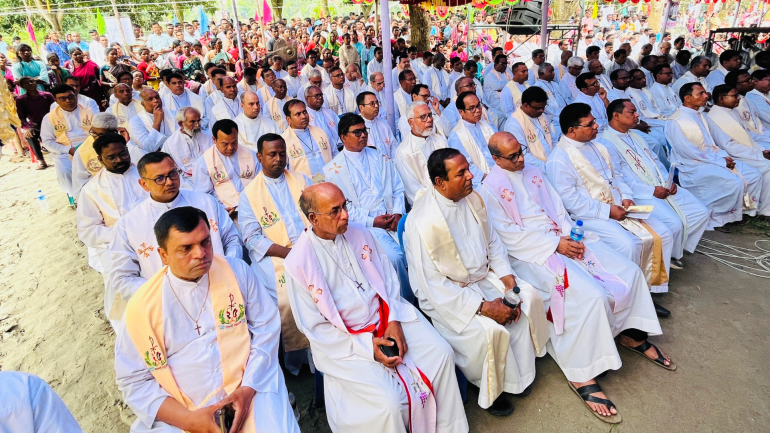
The Santal people form a significant portion of the Diocese of Joypurhat’s faithful. Known for their strong community bonds and spiritual depth, the Santal have embraced Catholicism while maintaining their cultural traditions. Similarly, the Oraon, Mahali, Munda, and Paharia peoples contribute to the Diocese of Joypurhat’s rich spiritual tapestry, each bringing their unique perspectives and traditions to Catholic worship.
These Indigenous communities face extraordinary challenges. They survive primarily through subsistence farming, work as agricultural laborers, and frequently experience poverty, illiteracy, and vulnerability to natural disasters. Many migrate to cities or abroad seeking employment, fracturing family bonds and creating spiritual challenges. Yet within the Diocese of Joypurhat, the Church has become a stabilizing force, offering not only spiritual guidance but also practical support for these marginalized populations.
The Diocese of Joypurhat’s commitment to these communities extends to liturgical practice. The diocese actively integrates Indigenous languages, music, and traditional symbols into the Mass, ensuring that worship feels authentic and culturally resonant. This approach transforms the Diocese of Joypurhat into a model for how the global Church can honor cultural diversity while maintaining doctrinal unity.
4. Building from Scratch: The Infrastructure Challenge Facing the Diocese of Joypurhat
Perhaps the most striking reality facing the Diocese of Joypurhat is the absence of basic infrastructure. When Bishop Paul Gomes accepted his appointment as the first bishop of the Diocese of Joypurhat, he inherited a diocese with 10 parishes and 2 quasi-parishes—but no bishop’s house, no cathedral, and minimal administrative facilities.
In his first public statement about the Diocese of Joypurhat, Bishop Gomes spoke with refreshing candor: “There is no infrastructure here except for the parishes. I have to build a new bishop’s house and other infrastructure, and I hope to complete it with everyone’s cooperation.”
This challenge, while daunting, reflects the reality of many emerging dioceses in Asia Pacific. The Diocese of Joypurhat must simultaneously establish physical structures and deepen spiritual formation. The diocese’s 15 priests—8 diocesan and 7 religious—must stretch their limited resources across a vast geographic area to serve the Diocese of Joypurhat’s scattered faithful.
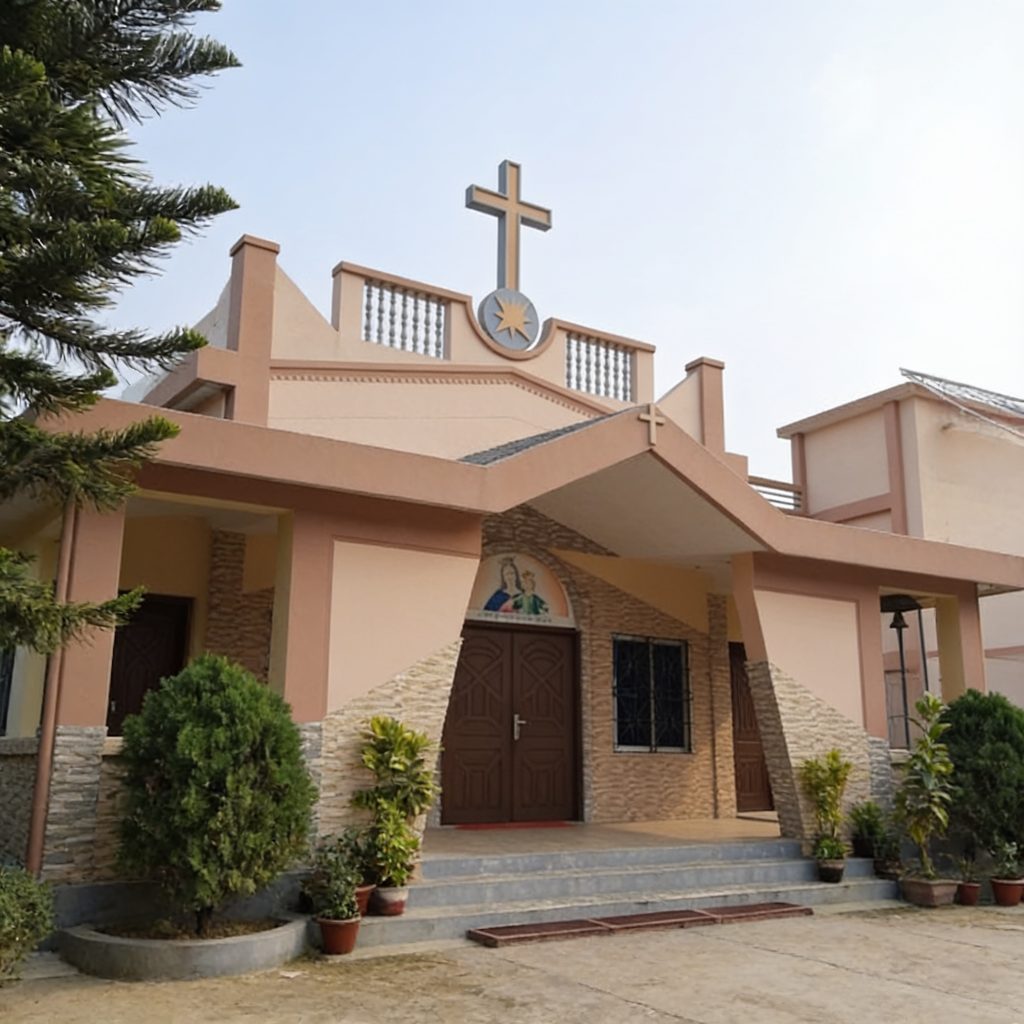
The absence of a cathedral proved particularly symbolic. Bishop Gomes’ episcopal consecration, scheduled for June 5, 2026, took place not in a grand cathedral but in a humble parish church near Joypurhat city. This humble setting actually embodied the Diocese of Joypurhat’s authentic spirit—a church rooted in community rather than architectural grandeur, focused on pastoral presence rather than institutional magnificence.
5. The Vision of Bishop Paul Gomes: Leading the Diocese of Joypurhat into the Future
Bishop Paul Gomes brings decades of experience to his role as the first bishop of the Diocese of Joypurhat. Born in 1962 in Kharbaria within the Diocese of Rajshahi, Gomes has spent his entire priestly life serving the region he now leads as bishop of the Diocese of Joypurhat.
His credentials for leading the Diocese of Joypurhat are impressive. Ordained in 1992, Gomes served in various pastoral roles before becoming rector of the Holy Spirit Major Seminary in Dhaka, where he shaped the formation of future priests who would serve dioceses throughout Bangladesh, including the Diocese of Joypurhat. His academic credentials include a master’s degree and licentiate in dogmatic theology from the University of Santo Tomas in Manila, along with specialized training in psycho-spirituality.
For the Diocese of Joypurhat, Bishop Gomes articulated a clear vision focused on strengthening faith, education, moral values, and overall community development. He emphasized that the Diocese of Joypurhat’s mission extends beyond spiritual matters to encompass holistic human development. The Diocese of Joypurhat, under his leadership, commits to educational programs, health centers, microcredit initiatives, and vocational training—all designed to uplift the poorest and most vulnerable.
Bishop Gomes also recognized that building the Diocese of Joypurhat requires cooperation extending far beyond the diocese’s boundaries. He called upon Catholics throughout Bangladesh to support this new mission territory, understanding that the Diocese of Joypurhat’s success depends on solidarity and shared commitment to serving marginalized communities.
The Diocese of Joypurhat: A Model for Catholic Growth in Asia Pacific
The Diocese of Joypurhat represents a crucial moment in the Catholic Church’s engagement with Asia Pacific’s Indigenous populations. This new diocese demonstrates that the Church remains committed to reaching the most remote and marginalized communities, providing them with dedicated pastoral care and institutional support.
The establishment of the Diocese of Joypurhat also reflects broader trends in global Catholicism. As the Church’s center of gravity shifts toward the Global South, dioceses like Joypurhat become increasingly important as models for contextualizing faith within diverse cultural frameworks. The Diocese of Joypurhat shows how Catholic orthodoxy and cultural authenticity can coexist, enriching both the local community and the universal Church.
Connecting Faith, Community, and Action
The Diocese of Joypurhat stands as a powerful testament to the Catholic Church’s commitment to serving the world’s most vulnerable populations. Through five powerful ways—historic establishment, spiritual significance, Indigenous roots, infrastructure development, and visionary leadership—the Diocese of Joypurhat connects Bangladesh’s faithful to a larger community of faith.
Yet understanding the Diocese of Joypurhat’s significance extends beyond intellectual appreciation. This story invites us to deeper engagement with our own faith. The Diocese of Joypurhat’s faithful, despite extraordinary poverty and discrimination, demonstrate remarkable spiritual resilience. Their example calls us to strengthen our own commitment to Catholic practice.
How does the Diocese of Joypurhat inspire your faith journey? Consider these practices that deepen your connection to the Church:
Go to Confession: The Diocese of Joypurhat’s faithful gather regularly for reconciliation, experiencing Christ’s mercy in tangible ways. Confession cleanses the soul and restores our relationship with God, just as the Diocese of Joypurhat restores spiritual resources to underserved communities.
Visit the Adoration: Spend time in Eucharistic adoration, meditating on Christ’s presence. The Diocese of Joypurhat’s parishes offer adoration opportunities where the faithful encounter Jesus directly, strengthening their faith through silent communion.
Pray the Rosary: The rosary connects us to Mary’s intercession and deepens our meditation on Christ’s mysteries. The Diocese of Joypurhat’s communities pray the rosary together, finding strength and unity through this ancient devotion.
Hear Mass: Attend Mass regularly, participating fully in the Church’s central act of worship. The Diocese of Joypurhat’s faithful gather for Mass in humble parish churches, experiencing the transformative power of the Eucharist.
Read the Bible: Engage Scripture regularly, allowing God’s Word to transform your heart and mind. The Diocese of Joypurhat’s catechumens study Scripture intensively, discovering in its pages the foundation for their growing faith.
The Diocese of Joypurhat reminds us that the Catholic Church exists not for institutional self-preservation but for authentic service to humanity’s spiritual needs. By engaging more deeply in confession, adoration, the rosary, Mass, and Scripture, we join the Diocese of Joypurhat’s faithful in building a Church that truly serves the poorest and most marginalized among us.