Introduction: When the Earth Shook Mindanao Today, the Catholic Church Answered Christ’s Call
On June 8, 2026, at 11:37 AM local time, the earth trembled beneath Mindanao with devastating force. A powerful magnitude 7.8 earthquake struck off the coast of Mindanao, centered near Sarangani at a depth of 35 kilometers. The shaking was felt across the entire Mindanao region, from General Santos City to Davao and beyond. Tsunami warnings were immediately issued for coastal areas.
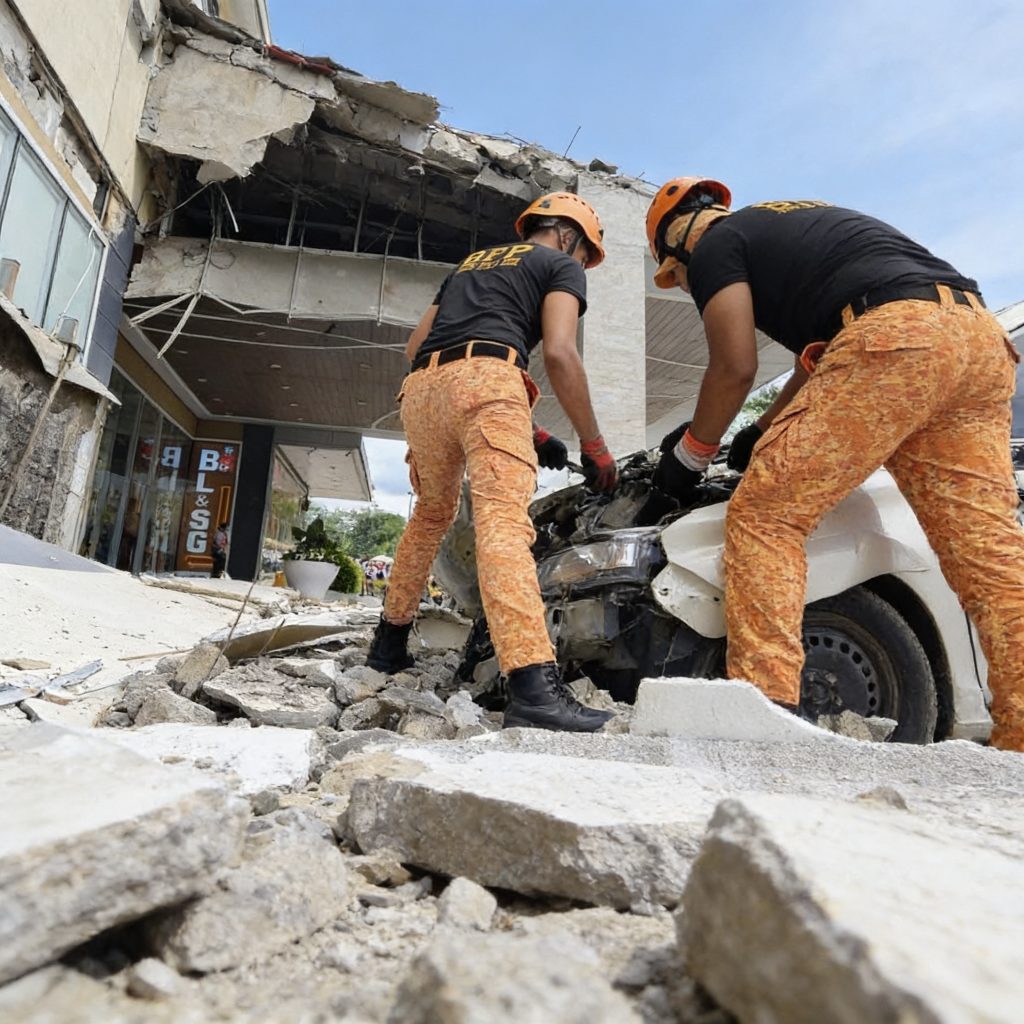
The damage was catastrophic. Multiple buildings collapsed in General Santos City, South Cotabato. A Jolibee restaurant partially collapsed, its structure crumbling under the force of the earthquake. Homes, churches, schools, and commercial buildings sustained extensive damage throughout the affected regions. Hundreds of people were injured. Families were displaced from their homes. The entire region was thrown into crisis mode.
Yet amid this catastrophe unfolding in real time, something extraordinary is emerging. The Catholic Church across Mindanao is immediately mobilizing its vast network of parishes, dioceses, and charitable organizations to serve those who are suffering right now. This isn’t a delayed response or a hesitant institutional action. This is the Catholic Church living out its fundamental mission in the present moment: to serve the poor and vulnerable in their darkest hour.
The Mindanao earthquake relief response is becoming a powerful testament to the Catholic Church’s commitment to corporal and spiritual works of mercy. Caritas Philippines is activating its disaster response protocols. Diocesan leaders are issuing pastoral directives. Priests are moving into affected areas. Catholic volunteers are mobilizing. This article explores five remarkable ways the Catholic Church is coordinating Mindanao earthquake relief today, demonstrating how Catholic faith and Catholic charity transform disaster into opportunity for immediate, sacrificial service.
What Makes Catholic Mindanao Earthquake Relief Coordination So Effective Today?
The June 8, 2026 Mindanao earthquake struck a region where the Catholic Church has deep roots and extensive institutional presence. The Archdiocese of Davao, the Diocese of Davao, the Diocese of Legazpi, the Diocese of Daet, and the Diocese of Marbel represent centuries of Catholic presence and pastoral commitment in Mindanao. When the Mindanao earthquake struck today, the Catholic Church didn’t hesitate to mobilize its full resources immediately.
The Mindanao earthquake relief efforts led by the Catholic Church today are remarkable not because they are perfect, but because they demonstrate that Catholic institutions can respond with both efficiency and compassion in real time. The Catholic Church’s approach to Mindanao earthquake relief coordination extends far beyond material aid—it encompasses spiritual care, immediate emergency response, and a commitment to serving communities as the disaster unfolds.
Caritas Philippines brought decades of disaster response experience to today’s Mindanao earthquake relief effort. The organization’s network of trained staff, established protocols, and relationships with government agencies meant that Catholic Mindanao earthquake relief could begin immediately as the shaking stopped. Within hours of the Mindanao earthquake, Caritas Philippines was coordinating relief efforts.
1. Opening Sacred Spaces: Catholic Parishes Become Sanctuaries of Hope Today
The first and most visible way the Catholic Church is coordinating Mindanao earthquake relief today is by opening Catholic parishes and church facilities to serve as emergency shelters. As the Mindanao earthquake struck and families fled their homes, Catholic parishes across General Santos City, South Cotabato, and surrounding municipalities immediately opened their doors.
Catholic parishes throughout Mindanao are transforming their buildings into evacuation centers as this crisis unfolds. Parish halls are being cleared to accommodate displaced families. Church buildings are being opened as safe refuge. Rectories are being converted into first aid stations. The Catholic Church’s immediate response to the Mindanao earthquake demonstrates that sacred spaces exist not merely for liturgical worship, but as instruments of service to the community in times of greatest need.
Diocesan leaders are issuing urgent pastoral directives instructing all Catholic parishes to open their doors for Mindanao earthquake relief. “If there are families in need of shelter and no other safe evacuation centers are available,” bishops are instructing, “immediately open parish halls, classrooms, or church buildings as temporary refuge.” This isn’t merely a suggestion—it is an urgent call to action rooted in Gospel values and Catholic commitment to human dignity in the present moment.
The Catholic Church’s Mindanao earthquake relief coordination through sacred spaces is serving multiple purposes right now. Beyond providing physical shelter, these Catholic locations are offering psychological comfort grounded in faith. Families know they are safe not just from the elements, but in spaces consecrated to Christ’s peace and mercy. The Mindanao earthquake relief efforts are transforming Catholic churches into living witnesses to Christ’s compassion in this moment of crisis.
Priests and parish staff are working around the clock to welcome displaced families into Catholic parishes. They are providing blankets, water, and food. They are offering comfort to traumatized children. They are listening to survivors describe their fear and loss. The Mindanao earthquake relief response through Catholic parishes is happening in real time, as families desperately need shelter and care.
2. Activating Caritas Philippines: Catholic Charity Coordinating Comprehensive Relief Today
The second remarkable aspect of Catholic Mindanao earthquake relief coordination is the immediate activation of Caritas Philippines, the social action arm of the Catholic Church. As news of the Mindanao earthquake broke this morning, Caritas Philippines immediately activated its national disaster response protocols.
Caritas Philippines is mobilizing its national network to respond to today’s Mindanao earthquake with remarkable speed. The organization’s disaster response protocols, refined through decades of experience responding to typhoons, earthquakes, and other calamities, are being deployed in General Santos City and surrounding areas right now. Catholic Mindanao earthquake relief efforts are benefiting from Caritas Philippines’ established relationships with government agencies, international organizations, and local communities.
The Catholic Church’s Mindanao earthquake relief coordination through Caritas Philippines is ensuring that aid reaches the most vulnerable immediately. Catholic social teaching emphasizes preferential option for the poor—a commitment to prioritize those most in need. The Mindanao earthquake relief efforts led by Caritas Philippines are embodying this principle through rapid assessment of vulnerability and targeted assistance as the crisis unfolds.
Caritas Philippines is conducting rapid needs assessments in real time following the Mindanao earthquake. Staff members are moving through affected areas identifying families most in need of assistance. Catholic volunteers are working alongside trained Caritas Philippines personnel to distribute emergency supplies. The Mindanao earthquake relief coordination through Caritas Philippines is ensuring that Catholic resources are deployed strategically and efficiently in this critical moment.
The Catholic Church’s Mindanao earthquake relief efforts through Caritas Philippines are also beginning to plan for long-term recovery. While immediate response focuses on emergency shelter and basic supplies, Caritas Philippines is already thinking about the months and years of recovery ahead. The Mindanao earthquake relief coordination recognizes that Catholic commitment to survivors extends far beyond the initial crisis response.
Caritas Philippines is also coordinating with international Catholic relief organizations. Catholic Relief Services, Caritas Internationalis, and other Catholic organizations are being contacted to provide additional support. The Mindanao earthquake relief response is becoming a coordinated Catholic effort that extends beyond the Philippines to the global Catholic Church.
3. Providing Spiritual First Aid: Catholic Priests Offering Sacraments and Pastoral Presence Today
While material aid addresses immediate physical needs, the Catholic Church’s Mindanao earthquake relief response recognizes that survivors also need spiritual and emotional support right now. This is where Catholic priests and pastoral ministers possess unique capabilities grounded in the Sacraments and Catholic spiritual tradition.
In the hours following the Mindanao earthquake, Catholic priests are moving into affected areas offering what might be called “spiritual first aid.” They are sitting with grieving families. They are administering the Sacrament of Confession to those seeking reconciliation and grace in this moment of crisis. They are offering the Eucharist to those who can receive it. They are listening to survivors process their fear and loss. The Mindanao earthquake relief efforts that include this spiritual dimension are addressing wounds that food and water alone cannot heal.
Diocesan leaders are instructing all Catholic clergy to remain spiritually vigilant and pastorally ready. Bishops are issuing urgent calls for priests to “transform this difficult moment into an opportunity for solidarity and faith. Together, let us be instruments of Christ’s mercy, serving and protecting His flock in times of trial.” This pastoral leadership is shaping Catholic Mindanao earthquake relief efforts as expressions of Christ’s love in the present moment.
Catholic pastoral counseling is becoming a cornerstone of Mindanao earthquake relief coordination. Trained Catholic counselors, many of them religious sisters and brothers with years of experience in spiritual direction, are being mobilized to help survivors process trauma through the lens of faith. The Mindanao earthquake relief efforts are recognizing that Catholic spiritual care and psychological care are not competing approaches but complementary ones rooted in Catholic understanding of the human person.
Priests are celebrating Mass in evacuation centers as survivors gather to pray. The Eucharist is being brought to those too injured to leave their shelters. The Sacrament of Confession is being offered to those seeking reconciliation. The Mindanao earthquake relief response is ensuring that survivors have access to the Sacraments that sustain Catholic faith and provide grace in times of crisis.
Religious sisters and brothers are providing direct care to survivors. They are comforting traumatized children. They are sitting with the elderly who have lost everything. They are prrayerfully present to those grieving lost loved ones. The Mindanao earthquake relief efforts demonstrate the Catholic religious life in action—vowed to serve the poorest and most vulnerable.
4. Pooling Catholic Resources: Diocesan Coordination and Caritas Philippines Distribution Today
The fourth remarkable aspect of Catholic Mindanao earthquake relief coordination is how the Catholic Church is pooling its resources across diocesan lines to maximize impact in this critical moment. Rather than individual parishes maintaining separate supply chains, the Mindanao earthquake relief efforts are creating coordinated systems where Catholic resources are being distributed strategically right now.
The Archdiocese of Davao, the Diocese of Davao, the Diocese of Legazpi, the Diocese of Daet, and the Diocese of Marbel are coordinating their Mindanao earthquake relief efforts through Caritas Philippines. This approach means that a family might receive rice distributed by one Catholic parish, water provided by another diocesan effort, medical supplies from Catholic Relief Services, and blankets from Catholic Charities—all coordinated through unified Catholic systems as the crisis unfolds.
This approach to Mindanao earthquake relief coordination means that Catholic resources are not being duplicated or wasted. Caritas Philippines is maintaining transparent inventory systems and real-time communication between dioceses, ensuring that Mindanao earthquake relief supplies reach those most in need immediately. The Catholic Church’s Mindanao earthquake relief coordination is preventing the common problem where some areas receive excess aid while others go without.
The pooling of resources for Mindanao earthquake relief is demonstrating practical wisdom rooted in Catholic social teaching. When the Mindanao earthquake struck today, no single Catholic diocese had sufficient supplies to meet all needs. By combining resources across diocesan boundaries, the Catholic Church is transforming scarcity into sufficiency. The Mindanao earthquake relief efforts show that Catholic unity multiplies capacity for service in this moment of crisis.
Financial resources are being pooled for Catholic Mindanao earthquake relief. Catholic parishes are launching emergency fundraising campaigns. Contributions are flowing into diocesan accounts designated for Mindanao earthquake relief. Catholic schools, Catholic universities, and Catholic organizations are contributing to the relief effort. This unified approach means that funds can be deployed quickly and strategically through Caritas Philippines without the delays that often accompany bureaucratic coordination.
The Catholic Church’s Mindanao earthquake relief coordination is also mobilizing in-kind donations from Catholic institutions. Catholic hospitals are providing medical supplies and emergency care. Catholic schools are contributing food and blankets. Catholic businesses are donating transportation and equipment. The Mindanao earthquake relief efforts demonstrate the breadth of Catholic institutional presence and commitment to service in this critical moment.
5. Organizing Catholic Prayer: The Church United in Intercession for Survivors Today
The fifth and perhaps most profound way the Catholic Church is coordinating Mindanao earthquake relief is through organized prayer and liturgical response happening right now. The Catholic Church recognizes that prayer is not weakness but strength—a way of accessing divine grace and transforming suffering through faith in this moment of crisis.
Catholic Mass is becoming a focal point for Mindanao earthquake relief efforts. Bishops and priests throughout the affected dioceses are offering Masses specifically for survivors of the Mindanao earthquake. These Masses are becoming occasions for the Catholic community to gather, grieve together, and intercede for those suffering right now. The Mindanao earthquake relief response includes these liturgical celebrations as essential components of community healing in this critical moment.
Diocesan leaders are issuing urgent calls for Catholic prayer and spiritual vigilance. Bishops are instructing parishes to lead special Masses for the Mindanao earthquake. They are calling the faithful to “transform this difficult moment into an opportunity for solidarity and faith. Together, let us be instruments of Christ’s mercy, serving and protecting His flock in times of trial.” This pastoral leadership is shaping the entire character of Catholic Mindanao earthquake relief efforts as expressions of Christ’s love.
Catholic rosary vigils are being organized in parishes throughout Mindanao as this crisis unfolds. The faithful are gathering to pray the Holy Rosary, seeking the intercession of the Blessed Virgin Mary for survivors and for the repose of those who died in the Mindanao earthquake. These Catholic prayer gatherings are serving multiple purposes: they are providing spiritual comfort to survivors, they are demonstrating the Church’s pastoral presence, and they are inviting the broader community to participate in Catholic Mindanao earthquake relief efforts through prayer.
Catholic Eucharistic Adoration is being extended in parishes throughout the affected regions. Parishes are establishing extended hours of Eucharistic Adoration, inviting the faithful to spend time in the presence of Christ in the Blessed Sacrament, interceding for survivors of the Mindanao earthquake. The Catholic Church understands that Mindanao earthquake relief efforts include not just material aid but spiritual intercession—bringing the suffering of survivors before Christ in the Blessed Sacrament right now.
Priests are leading prayers for the dead in parishes and evacuation centers. The faithful are praying for those who lost their lives in the Mindanao earthquake. They are commending their souls to God’s mercy. They are seeking the intercession of the saints for the deceased. The Mindanao earthquake relief response includes spiritual care for the dead as well as the living.
Lessons for Catholic Communities Everywhere
The Catholic Church’s Mindanao earthquake relief coordination today offers crucial lessons for Catholic communities worldwide. First, Catholic institutions possess unique capabilities—sacramental ministry, pastoral care, established networks, community trust—that make them invaluable during disasters. Second, Catholic social teaching provides a framework for understanding disaster response as an expression of faith and commitment to human dignity.
Third, coordination requires intentional planning and clear pastoral leadership. The diocesan bishops coordinating Catholic Mindanao earthquake relief efforts are providing clear direction grounded in Gospel values. Fourth, Catholic resources—parishes, schools, hospitals, charitable organizations—can be mobilized rapidly when leadership acts decisively. Today’s Mindanao earthquake relief response demonstrates that Catholic institutional presence translates into capacity for service in this critical moment.
Finally, the Catholic Church’s Mindanao earthquake relief response demonstrates that faith is not an obstacle to effective disaster response—it is the foundation. When the Catholic Church coordinates Mindanao earthquake relief efforts, it brings not just material resources but spiritual strength, moral commitment to human dignity, and the grace of Christ’s redemptive love in this moment of crisis.
Conclusion: From Mindanao Earthquake Relief Today to Sacramental Renewal
The June 8, 2026 Mindanao earthquake is devastating a region right now, but it is also revealing something beautiful: the Catholic Church’s unwavering commitment to serve the suffering in Christ’s name in this present moment. The Catholic Church’s Mindanao earthquake relief coordination is demonstrating that Catholic faith isn’t merely personal devotion but public witness—a commitment to transform disaster into opportunity for mercy and service today.
As you reflect on the Catholic Church’s Mindanao earthquake relief efforts unfolding right now and the diocesan leaders, priests, and Catholic volunteers who are coordinating this response, consider how these lessons apply to your own spiritual life and Catholic commitment. The Catholic Church’s Mindanao earthquake relief efforts are living out Gospel values in real time—serving the hungry, clothing the naked, visiting the imprisoned, comforting the afflicted.
We invite you to deepen your own Catholic faith commitment through the Sacraments in response to today’s crisis. Visit the Confessional to seek reconciliation and grace for times when we fail to serve others as Christ calls us. The Sacrament of Confession connects us to Christ’s mercy and strengthens our commitment to love our neighbors. Spend time in Eucharistic Adoration, contemplating Christ’s presence in the Blessed Sacrament and asking for strength to serve your community with the same compassion shown by Catholic relief workers responding to the Mindanao earthquake today.
Pray the Holy Rosary, seeking the intercession of the Blessed Virgin Mary for those affected by the Mindanao earthquake and for all who suffer. The Rosary connects us to Mary’s maternal care and to the communion of saints who intercede for us. Attend Mass regularly to receive the Eucharist, which unites us with Christ and with the entire Catholic Church. In the Eucharist, we receive the grace to become instruments of Christ’s mercy in a suffering world.
Read Sacred Scripture, particularly the Gospels, which call us to love our neighbors without limit. The Mindanao earthquake relief efforts coordinated by the Catholic Church today are rooted in Gospel passages calling us to feed the hungry, shelter the homeless, and comfort the suffering. When we read Scripture and meditate on Christ’s teachings, we are formed in the same compassion that motivates Catholic Mindanao earthquake relief efforts happening right now.
The Catholic Church’s Mindanao earthquake relief coordination today reminds us that our Catholic faith calls us to active service in this present moment. When we live out our faith through the Sacraments, through prayer, and through concrete acts of charity, we become instruments of Christ’s mercy in a suffering world. The Catholic Church’s Mindanao earthquake relief efforts demonstrate what is possible when Catholics take seriously their call to be Christ’s hands and heart in the world today.
For more information on Catholic disaster relief efforts and faith-based community service, visit www.ewtnvatican.com for trusted Catholic news and resources on how your Catholic faith can make a difference in your community and world. Learn more about how the Catholic Church is responding to today’s Mindanao earthquake and how you can support Catholic relief efforts in this critical moment.