image from THE DIOCESE OF TAGBILARAN
The ground beneath Flores earthquake shook before dawn on August 15, 2026, and within hours the Catholic Church in Indonesia was already moving. The Flores earthquake, a magnitude 7.7 shock off the island’s northern coast, had its epicentre roughly 30 kilometres northeast of Mbay, the capital of Nagekeo Regency in East Nusa Tenggara . At least 68 people died, more than 213 were injured, and over 9,200 fled their homes . The Flores earthquake is the deadliest to strike Indonesia since 2022, and the Church’s response has become a powerful story of faith in action.
Did you know the epicentre of the Flores earthquake sits in one of the most Catholic corners of Asia? Flores is roughly 70 percent Catholic, and the tremor struck just as families attended morning Masses for the Solemnity of the Assumption . What happened next shows what the Body of Christ looks like when it moves as one. Here are seven powerful ways Caritas is bringing hope to Nagekeo, East Nusa Tenggara, and the surrounding regencies after the Flores earthquake.
A Dawn That Changed Flores Forever
The Flores earthquake struck at 05:58 local time at a shallow depth of about 10 kilometres, along the Flores back-arc thrust fault . Shaking reached intensity VIII, severe, in Manggarai Regency, and a tsunami warning sent thousands fleeing to higher ground. A wave of 1.61 metres was recorded at Reok, and 0.94 metres at Maurole in Ende, before authorities lifted the warning about two and a half hours later .
The human toll of the Flores earthquake mounted quickly. Manggarai and East Manggarai recorded the most deaths, while Nagekeo lost at least eight of its own . More than 2,400 homes were damaged, along with schools, health facilities, and government offices. In Maumere, a maritime passenger terminal collapsed. More than 1,500 aftershocks have followed the Flores earthquake, including one on August 17 that killed two more people in Ngada . The governor of East Nusa Tenggara declared a 14-day state of emergency, and rescue teams, aircraft, and a naval vessel joined the search for survivors .
How Caritas Indonesia Mobilized Within Hours
Caritas Indonesia, known locally as Karina, did not wait for the dust to settle. The Catholic relief agency immediately coordinated with the dioceses of Ruteng, Labuan Bajo, Kupang, Maumere, and Ende to monitor the situation and assess the damage of the Flores earthquake . By the end of the first day, Caritas Indonesia had declared a Level III (Orange) emergency, activating volunteers, humanitarian posts, and relief supplies across four affected dioceses .
Father Fredy Rante Taruk, Executive Director of Caritas Indonesia, explained the mission plainly:
“Caritas Indonesia is responding swiftly to the earthquake disaster in East Nusa Tenggara as part of the humanitarian responsibility of the Catholic Church in Indonesia.”
The agency also activated its Karina Emergency Response Network, a national solidarity fund, and the Diocese of Maumere’s Crisis Response Team to support hard-hit Sikka Regency . For survivors of the Flores earthquake, this speed meant food, tents, and comfort arrived with the first light of hope.
One Church, One Response: The Heart of the Mission
The guiding spirit of the entire Flores earthquake operation is a simple phrase: One Church, One Response. Rather than each diocese acting alone, Caritas Indonesia brought bishops, parishes, religious communities, and volunteers into a single coordinated effort .
“Caritas is mobilizing all components of the Church to work together, creating synergies and supporting one another so that we can respond to the humanitarian situation quickly, effectively and reach the people and communities affected,” Father Fredy said .
This unity matters in East Nusa Tenggara, where distances are vast and roads are now blocked by landslides. Parishes gather information on damage in their own communities and report to the diocesan level, so help flows where it is needed most . The One Church, One Response framework turns a scattered archipelago of faith communities into one helping hand for every Flores earthquake survivor.
Parishes Become Shelters in Nagekeo and Beyond
In the Archdiocese of Ende, Nagekeo Regency reported the heaviest Church impact from the Flores earthquake, with at least 20 church buildings damaged . Yet the same parishes became refuges. At Aeramo Parish in Nagekeo, Caritas established a service post that includes a shelter for elderly people, a beautiful detail that speaks volumes about the Church’s priorities .
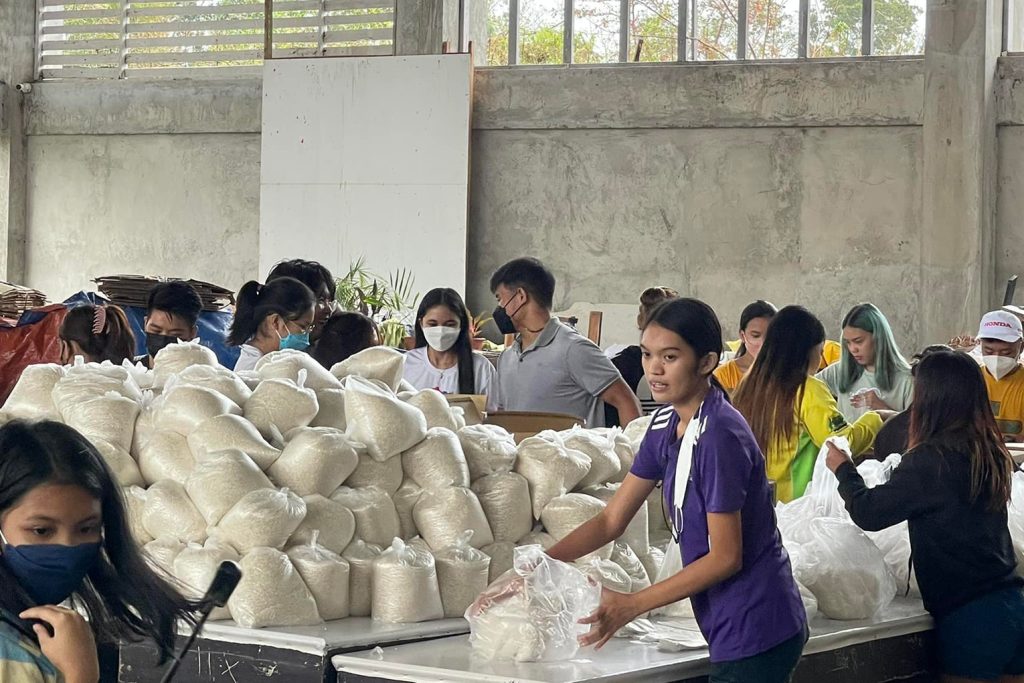
Across the island, the Flores earthquake damaged more than 50 churches, including Ruteng Cathedral, and the Bishop of Ruteng advised that services temporarily not be held inside church buildings . Bishops instructed parishes, clergy, and religious communities to open church and diocesan facilities as temporary shelters . In the Diocese of Labuan Bajo, Caritas set up humanitarian posts, distributed shelter kits, and offered psychosocial support to about 150 affected households .
Healing Beyond Hospital Walls
The Flores earthquake damaged 36 health facilities, forcing difficult decisions . In the Diocese of Ruteng, Caritas helped evacuate patients from the regional general hospital and erected emergency tents nearby, guarding against aftershocks and weakened buildings . Similar evacuations took place at hospitals in Sikka and Ende, where fifteen patients and five infants received care in a tent on the hospital grounds .
In Sikka, Caritas and parish Socio-Economic Development Commissions activated a humanitarian coordination post, preparing ready-to-eat meals, beds, clean water, and hygiene kits for displaced residents . The Church’s care after the Flores earthquake extends beyond the spiritual. It feeds, shelters, and heals.
Faith That Stood When the Roof Fell
The most moving stories of the Flores earthquake come from its first moments. The quake struck during Assumption Day Masses, and Father Luigi Galvani, a Camillian missionary in Maumere, gave a first-hand account:
“One of our Fathers was distributing Holy Communion when the tremor reached its maximum intensity. Shortly afterward, pieces of the roof fell precisely in the area of the altar. He was truly fortunate and, above all, we can say: thanks be to God, he was spared.”
A crucifix and several statues fell, including a statue of St. Joseph whose head broke off. Another priest, seeing the faithful run outside, followed them and concluded the celebration with an early final blessing, entrusting everyone to the protection of the Lord .
“The Feast of the Assumption of the Virgin Mary was marked by fear and uncertainty, but the people’s faith and hope remain alive,” Father Galvani said .
Six Urgent Needs You Can Help Meet
Caritas Indonesia’s initial assessment identified six urgent needs for Flores earthquake survivors: evacuation and safety support, clean water, ready-to-eat food, shelter kits, hygiene kits, and emergency health services . Special attention goes to vulnerable groups: children, older people, pregnant and breastfeeding women, people with disabilities, and those who need regular medication .
Caritas also warns that misinformation creates additional risks as aftershocks continue . Sharing verified updates is itself a work of mercy. Readers across Asia Pacific can support Flores earthquake relief through their national Caritas organization, parish collections, and above all through prayer, the Church’s first and farthest-reaching response.
The Keywords Behind This Story
For readers and editors tracking this developing story, five keywords anchor the coverage: Flores earthquake, the main keyword identifying the disaster itself; Caritas Indonesia, the Church’s relief agency leading the response; Nagekeo, the regency nearest the epicentre; East Nusa Tenggara, the province now under a 14-day emergency; and One Church, One Response, the framework uniting the relief effort.
Each appears throughout this article, in the title, and in the meta description, helping readers find trustworthy Catholic coverage of the Flores earthquake. Editors should place the main keyword in the first paragraph, in at least one subheading, and in image alt text, and should keep paragraphs short so the article reads easily on mobile phones, the primary device for faith audiences across Asia Pacific.
A Powerful Summary: From Solidarity to the Sacraments
The Flores earthquake tore through homes, churches, and hospitals across East Nusa Tenggara, but it revealed something stronger: a Church that responds as one body. Caritas Indonesia mobilized within hours. Parishes in Nagekeo became shelters. Priests finished Mass amid falling debris. And the faithful, marked by fear on the Feast of the Assumption, kept their hope alive.
Their witness invites our response. Solidarity with Nagekeo begins on our knees. Go to Confession and let God’s mercy renew your heart, for a merciful heart serves best. Spend time in Eucharistic Adoration, lifting Flores earthquake victims and rescuers before the Lord present in the Blessed Sacrament, the same Eucharist a priest held at the altar as the earth shook.
Pray the Holy Rosary, entrusting the grieving families of Flores to Our Lady of the Assumption, whose feast they were celebrating when disaster struck. Participate actively in Holy Mass and offer the Eucharist for the dead, the injured, and the displaced. And read Sacred Scripture, where God’s word sustains every trial: “The Lord is close to the brokenhearted” (Psalm 34:18).
To stay informed about the Flores earthquake relief effort and the life of the Church worldwide, visit www.ewtnvatican.com for trusted Catholic news and resources. The people of Nagekeo, East Nusa Tenggara, are not alone, and neither are we.