When Distance Becomes a Bridge to Faith
Nine hours by boat from the nearest city, Balut Island sits at the edge of the world. Located in Davao Occidental, this remote volcanic island in the Philippines is separated from mainland Mindanao by the Sarangani Strait, accessible only by treacherous waters and unpredictable weather. With a population of approximately 24,000 people, most of whom are Muslim or members of the indigenous B’laan tribe, Balut Island might appear to be the last place where a thriving Catholic faith community would flourish.
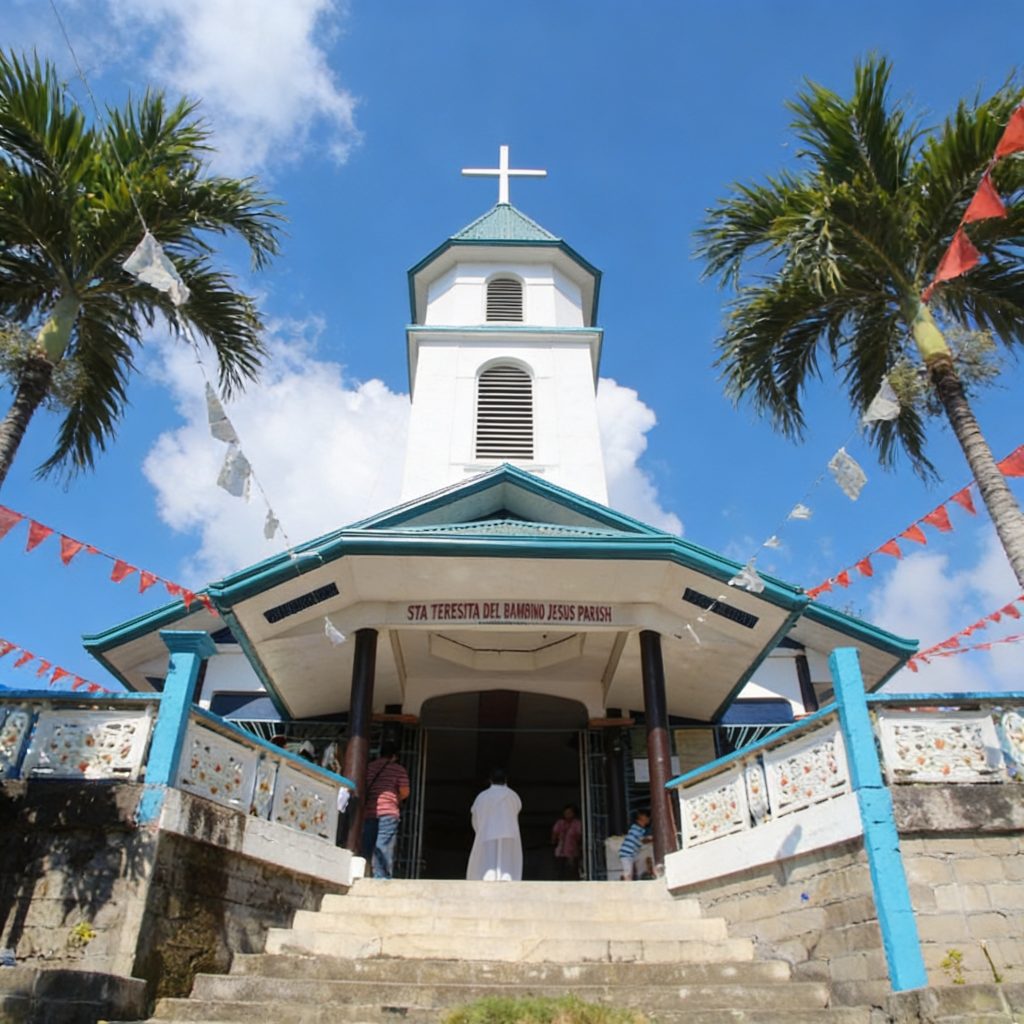
Yet here stands Sta. Teresita del Niño Jesus Parish, celebrating two decades of spiritual growth and community transformation. The parish has not merely survived on this remote island—it has thrived, growing from a small foundation to a network of 12 basic Christian communities. The story of Balut Island is not one of obstacles crushing faith, but rather of faith transforming obstacles into opportunities.
This article explores the ten most surprising ways that Balut Island’s Catholic community has overcome spiritual barriers, turning geographic isolation, economic poverty, and cultural diversity into the very foundations of a vibrant, authentic faith community. Whether you are seeking to strengthen your own parish, understand the power of grassroots faith, or simply be inspired by a remarkable story of perseverance, the lessons from Balut Island will challenge and uplift you.
1. Geographic Isolation as Spiritual Opportunity
When most people hear “remote island,” they think of limitation. Balut Island’s geographic isolation—nine hours by boat from General Santos City—initially appears to be a severe disadvantage. Yet this very isolation has become a spiritual asset.
The distance from urban centers has created a unique environment where faith is not diluted by the noise and distractions of modern secular life. Without shopping malls, entertainment complexes, or constant digital connectivity, the people of Balut Island have fewer competing claims on their time and attention. The parish has become the natural gathering place for the community.
This isolation has also fostered a deep sense of interdependence. When you live on a remote island, you cannot rely on external institutions to solve your problems. Instead, you must build solutions together. The parish has become not just a place of worship, but the center of community life—a place where spiritual and practical needs are addressed together.
Furthermore, the geographic barriers have protected the parish from certain modern spiritual threats. While many parishes in urban areas struggle with secularism and religious indifference, Balut Island’s Catholic community has maintained a strong, unified faith culture. The very distance that once seemed like a curse has become a blessing. This geographic isolation creates a protective environment where the fundamentals of Catholic faith remain central to daily life. The island’s remoteness protects the community from secular pressures that dilute faith in urban areas worldwide.
2. Economic Poverty Strengthening Faith Dependence
The people of Balut Island survive primarily through fishing and coconut farming. Most families live in modest circumstances, far from the material abundance that characterizes wealthier regions. By worldly standards, this economic reality might be seen as a barrier to faith.
Yet economic poverty has paradoxically strengthened the spiritual life of Balut Island’s Catholic community. When material resources are limited, people naturally turn to spiritual resources. The parish cannot rely on expensive programs or elaborate facilities to attract members. Instead, faith itself becomes the primary draw.
Evangeline Musaling-Pacinabao, an Indonesian-born catechist who has served the parish for over 22 years, articulates this reality with profound wisdom: “Life is great if God is at the center, even if we are poor.” This statement captures the spiritual truth that the Balut Island community has discovered through lived experience.
Economic constraints have also prevented the kind of institutional bloat that sometimes weakens parishes in wealthier areas. Every resource is carefully stewarded. Every program must serve a genuine spiritual purpose. The result is a lean, focused parish that prioritizes authentic spiritual formation over elaborate infrastructure. In this way, poverty becomes a teacher of spiritual values.
3. Limited Resources Fostering Creative Faith Solutions
Balut Island’s limited resources have sparked remarkable creativity in the parish’s approach to ministry. Without access to expensive religious education materials, the parish has developed its own catechetical programs. Without the ability to hire multiple professional staff members, the parish has empowered lay leaders and catechists.
The basic Christian communities that form the backbone of Balut Island’s parish structure are themselves a creative response to limited resources. Rather than attempting to serve the entire island from a single parish church, the parish has organized itself into 12 smaller communities, each with its own leadership and spiritual focus.
These communities meet regularly for prayer, scripture study, and mutual support. They organize their own spiritual activities and address the specific needs of their neighborhoods. This decentralized structure means that spiritual care reaches even the most remote corners of the island.
The catechists, particularly women like Evangeline, represent another creative solution to resource limitations. These lay leaders have received training in Catholic doctrine and spiritual formation. They teach in schools, lead recollections and workshops, and provide ongoing spiritual guidance to their communities. Their ministry extends the reach of the parish far beyond what would be possible with clergy alone. This creative approach demonstrates that spiritual effectiveness depends not on financial resources but on authentic commitment.
4. Small Numbers Building Tight-Knit Community
Balut Island’s Catholic population is small—approximately 10% of the Indonesian households have embraced the faith, and the overall Catholic population represents a minority on the island. In a competitive religious marketplace, small numbers might seem like a disadvantage.
Yet the small size of the Catholic community has created something precious: a tight-knit, deeply committed faith family. Everyone knows everyone else. Personal relationships are strong. The parish is not an anonymous institution but a genuine community where each person is known and valued.
This intimacy has profound spiritual consequences. When you worship alongside people you know deeply, when you pray with those who share your struggles and joys, faith becomes more real and more powerful. The parish is not a place you attend; it is a family you belong to.
The small size has also meant that leadership roles are distributed widely. Rather than a few professionals doing all the ministry, many lay people are actively involved in leading prayer, teaching, and serving others. This widespread participation strengthens the faith of the entire community. Small communities create accountability and mutual support that strengthen spiritual commitment.
5. Interfaith Coexistence Creating Mutual Respect
Balut Island is home to Muslims, members of the B’laan tribe, and a growing Catholic population. Rather than viewing this religious diversity as a threat, the parish has embraced it as an opportunity for authentic witness and mutual respect.
Father Saturnino Andoy, the parish priest, articulates the parish’s approach: “Our doors are always open to anybody who wants to join our faith or our celebrations.” This openness is not a compromise of Catholic identity but an expression of it.
When the parish celebrates its 20th anniversary, non-Catholic residents are invited to participate. They share meals with the faithful and witness the joy and unity of the Catholic community. This authentic witness—people living their faith with genuine joy and commitment—is far more powerful than any aggressive recruitment effort.
The interfaith context has also protected the parish from a subtle spiritual danger: the assumption that faith is simply cultural inheritance. When Catholicism is the dominant religion, people can drift into nominal faith, attending Mass out of habit rather than conviction. On Balut Island, faith is a conscious choice. People become Catholic not because everyone else is, but because they have encountered the living God in the witness of the community.
6. Lay Leadership Filling Priestly Gaps
Balut Island does not have an abundance of priests. Father Saturnino Andoy serves the parish, but the reality is that one priest cannot be everywhere at once. This scarcity of ordained clergy could have been a crippling limitation.
Instead, the parish has responded by empowering lay leaders. Catechists like Evangeline take on responsibilities that in other parishes might fall to priests or professional staff. They teach religious education in schools, lead spiritual recollections, organize prayer groups, and provide pastoral care to their communities.
This lay leadership is not a second-best substitute for ordained ministry. Rather, it represents a recovery of an ancient Christian practice. In the early Church, lay people were actively involved in teaching, leading prayer, and building community. The Balut Island parish has rediscovered this reality.
The empowerment of lay leaders has several spiritual benefits. First, it multiplies the pastoral presence of the parish. With 12 basic Christian communities, each with its own lay leaders, spiritual care reaches far more people than would be possible with clergy alone.
Second, it deepens the faith of the lay leaders themselves. When you take responsibility for teaching others, your own understanding of the faith deepens. When you lead prayer, you encounter God more intimately. Lay leadership is not just a practical solution; it is a spiritual opportunity that strengthens the entire faith community.
7. Catechists as Spiritual Anchors
The role of catechists on Balut Island deserves special attention. These are lay people, often women, who have received training in Catholic doctrine and spiritual formation. They serve as spiritual anchors for their communities.
Evangeline’s 22-year ministry illustrates the profound impact of dedicated catechists. She travels throughout the island, often walking for hours to reach remote communities. She teaches in schools, leads prayer groups, and provides spiritual guidance. She has been instrumental in the conversion of many Indonesian migrants to the Catholic faith.
The catechists represent a model of ministry that is both ancient and urgently needed in the modern Church. They are not professionals with advanced degrees and impressive titles. They are ordinary people, deeply committed to their faith, who have chosen to dedicate themselves to helping others encounter Jesus Christ.
The catechists embody a crucial truth: spiritual leadership does not require ordination. What it requires is genuine faith, commitment to ongoing formation, and a willingness to serve others. The catechists of Balut Island demonstrate this truth in their daily lives through their tireless dedication.
8. Community Meals and Shared Meals as Sacramental
In the Catholic tradition, meals have always carried spiritual significance. The Eucharist itself is a sacred meal. On Balut Island, the parish has extended this sacramental understanding to community meals.
When the parish celebrates its 20th anniversary, non-Catholic residents are invited to share meals with the faithful. These are not merely social events; they are expressions of the parish’s spiritual identity and values. In sharing food, the community shares something deeper: a commitment to unity, hospitality, and mutual care.
The practice of shared meals also reflects the reality of island life. In a community where resources are limited, sharing food is both a practical necessity and a spiritual practice. When you eat together, you affirm your belonging to one another.
The Eucharist, celebrated at the parish church, is the center of this sacramental meal practice. In the Eucharist, the community encounters the risen Christ and is united in his body. The parish meals, while not sacraments in the strict sense, participate in this sacramental reality. They are signs and instruments of the unity that Christ creates among his people.
9. Devotion to Mary Transcending Cultural Barriers
One of the most striking features of Catholic faith on Balut Island is the central role of devotion to Mary. The parish is dedicated to Sta. Teresita del Niño Jesus, but the Blessed Virgin Mary is honored throughout the community.
Marian devotion has proven to be a powerful bridge across cultural and religious boundaries. Many of the Indonesian migrants who have converted to Catholicism have been drawn to the faith through devotion to Mary. The figure of Mary as mother, protector, and intercessor resonates deeply across cultures.
The parish celebrates Marian feast days with particular solemnity. The rosary is prayed regularly in the community. Marian processions and celebrations draw both Catholics and non-Catholics. In Mary, the community finds a figure who embodies both strength and tenderness, both cultural particularity and universal appeal.
Devotion to Mary also provides a spiritual anchor during difficult times. When life is hard—when fishing is poor, when illness strikes, when economic pressures mount—the community turns to Mary. She becomes a source of hope and consolation, a reminder that God cares for his people and walks with them through all circumstances.
10. Perseverance as Spiritual Witness
Perhaps the most surprising way that Balut Island overcomes spiritual barriers is through simple perseverance. The community does not give up. Year after year, decade after decade, the people of Balut Island continue to gather for prayer, to teach their children the faith, to support one another in their spiritual journey.
This perseverance is not dramatic or flashy. It does not make headlines or attract media attention. It is the quiet, steady commitment of ordinary people to their faith and to one another. Yet it is profoundly powerful.
Perseverance in faith is itself a spiritual practice. It teaches us that faith is not primarily about feelings or experiences, but about commitment and fidelity. It teaches us that God is faithful, even when circumstances are difficult. It teaches us that the spiritual life is a marathon, not a sprint.
The perseverance of Balut Island’s Catholic community is a witness to the world. In an age of constant change and shifting values, here is a community that has held fast to its faith. In a world of individualism and self-interest, here is a community that has chosen to build something together. In a society that often equates success with material wealth, here is a community that has found true wealth in spiritual communion.
Understanding Balut Island’s Faith Community
Throughout this article, we have explored how Balut Island has become a model of spiritual resilience and authentic faith community. The term “Balut Island” appears frequently because it is central to understanding the unique context in which these spiritual breakthroughs have occurred.
Balut Island is not just a geographic location; it is a spiritual laboratory where the essential elements of Christian faith are being lived out in their purest form. On Balut Island, we see what happens when a community prioritizes faith over material comfort, when it chooses authentic witness over aggressive recruitment, when it builds on the foundation of genuine spiritual encounter.
The lessons of Balut Island are not limited to remote island communities. They speak to every parish, every faith community, every individual Christian seeking to deepen their spiritual life. Balut Island teaches us that spiritual barriers are not obstacles to be feared but opportunities to be embraced. Balut Island shows us that faith flourishes not in comfort and abundance, but in commitment and community.
From Barriers to Blessings
The story of Balut Island teaches us a profound spiritual truth: what we perceive as barriers often become the very means through which God works in our lives. Geographic isolation, economic poverty, limited resources, small numbers, religious diversity, lay leadership, catechetical formation, communal meals, Marian devotion, and perseverance—each of these could be viewed as a limitation. Yet on Balut Island, each has become a source of spiritual strength.
As you reflect on the lessons of Balut Island, consider how the barriers in your own life might become opportunities for deeper faith. Consider how your parish community might embrace creative solutions to resource limitations. Consider how authentic witness might be more powerful than aggressive recruitment.
Most importantly, consider how the spiritual practices that sustain the Balut Island community might deepen your own faith journey. The community on Balut Island is sustained by essential practices that are available to every Catholic:
First, the Sacrament of Confession. In this sacrament, we encounter God’s mercy and are reconciled to him and to the community. The people of Balut Island understand that spiritual growth requires regular confession, the honest acknowledgment of sin, and the reception of God’s forgiveness. Make confession a regular part of your spiritual life, seeking reconciliation with God and the faith community.
Second, Eucharistic Adoration. In the presence of the Blessed Sacrament, we encounter Jesus Christ himself. The Balut Island community gathers regularly to spend time in adoration, to pray, to listen to God’s voice, and to be transformed by his presence. Consider beginning a regular practice of eucharistic adoration in your own parish or home.
Third, the Holy Rosary. This ancient prayer, so central to the Balut Island community, is a powerful means of encountering Mary and through her, Jesus Christ. The rosary connects us to the mysteries of Christ’s life, death, and resurrection. Make the rosary a regular part of your spiritual practice, praying it daily if possible.
Fourth, active participation in the Holy Mass. The Eucharist is the source and center of Christian life. On Balut Island, the community gathers regularly to celebrate Mass, to receive the body and blood of Christ, and to be united as one body in him. Commit yourself to regular, active participation in the Mass, receiving the Eucharist with reverence and devotion.
Fifth, reading and meditating on Sacred Scripture. The word of God is living and active. The Balut Island community is sustained by the word of God, which is proclaimed in the liturgy, studied in catechetical classes, and meditated upon in personal prayer. Make Scripture reading a regular part of your spiritual life, allowing God’s word to transform your heart and mind.
The barriers that Balut Island has overcome are not unique to that remote island. Every parish, every faith community, every individual Christian faces barriers—barriers of doubt, of temptation, of difficulty, of isolation. Yet the story of Balut Island reminds us that these barriers need not defeat us. When we ground ourselves in authentic faith, in genuine community, in the sacramental life of the Church, and in the spiritual practices that have sustained Christians for centuries, we discover that barriers become bridges.
For more information about deepening your Catholic faith and understanding the spiritual practices discussed in this article, visit EWTN Vatican for trusted Catholic news, resources, and spiritual guidance.
The faith of Balut Island is not exceptional because the people there are exceptional. It is exceptional because they have chosen to prioritize what truly matters: their relationship with God and with one another. That choice is available to each of us, in whatever circumstances we find ourselves. May the story of Balut Island inspire you to make that choice today.