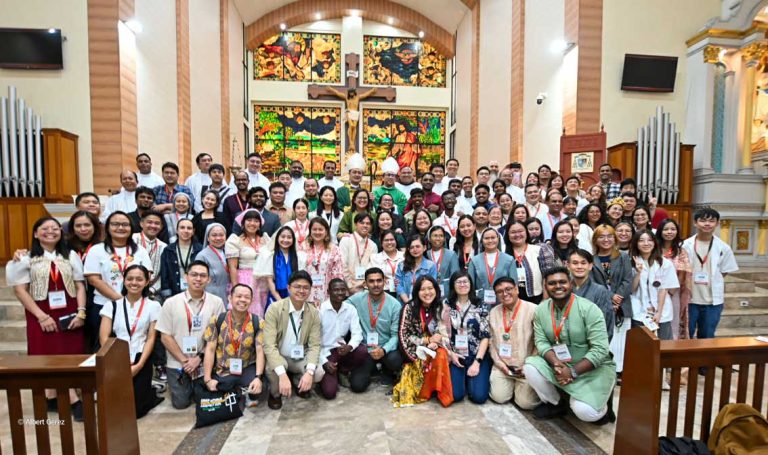
A small, simple idea, one hundred Australian Catholics each committing a modest annual gift, has quietly grown into a six-year partnership now reaching some of the most vulnerable communities in Southeast Asia. This week, the giving initiative known as Pilgrims 100 celebrated two milestones at once: welcoming its hundredth member and crossing AU$100,000 raised, funds now directed toward education programs for displaced communities in Myanmar through Jesuit Mission Australia.
Inside Pilgrims 100: A Simple Model with Six Years of Impact
Pilgrims 100 was founded by James and Genevieve Hill, who set out to build a long-term community of committed supporters for Jesuit Mission Australia’s work across Asia. The model itself is refreshingly straightforward: each member contributes AU$1,000 annually, and every year, the group votes together to decide which project their collective giving will support. Jesuit Mission Australia manages the funds directly, providing members with regular updates on outcomes and, notably, opportunities to visit the very communities their generosity has helped.
Over the past six years, that steady, member-driven model has supported nine separate Jesuit Mission Australia projects spread across Cambodia, Laos, Timor-Leste, and Vietnam. This year’s vote directed the group’s full AU$100,000 milestone toward education programs for displaced communities inside Myanmar, a country now facing one of the region’s most severe and prolonged humanitarian crises.
Why Myanmar Needs This Support Now More Than Ever
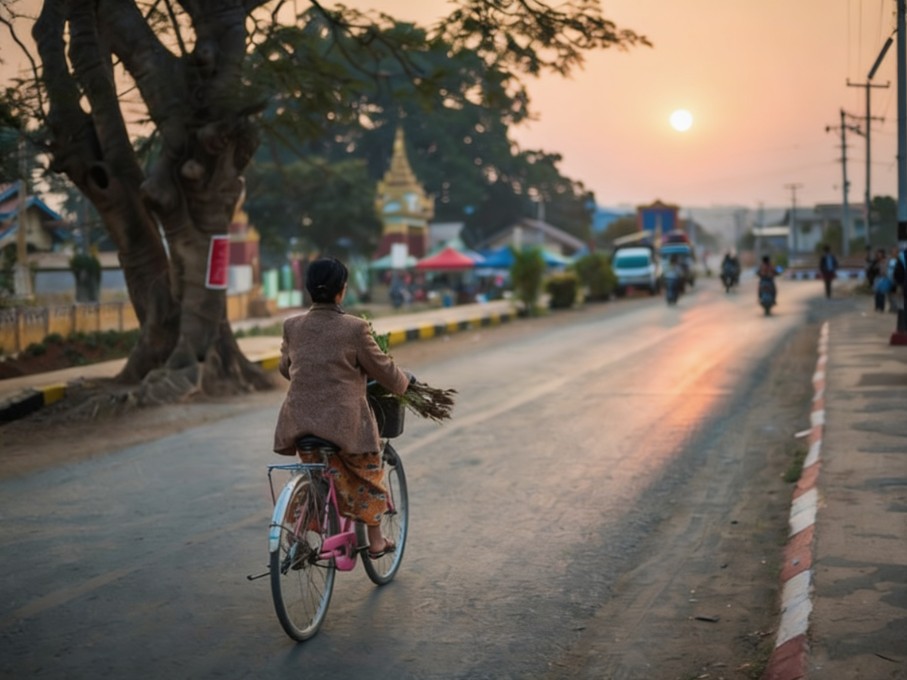
The scale of need behind this year’s chosen project is difficult to overstate. More than four years of escalating conflict since fighting broke out in February 2021 have left an estimated 18 to 20 million people in Myanmar, including roughly 6 million children, in urgent need of humanitarian assistance. That already severe crisis deepened further after a 7.7 magnitude earthquake struck the country in March 2025, compounding years of displacement, hunger, and instability. Since 2021, Jesuit Mission’s broader Emergency Action Fund has helped more than 850,000 women, men, and children across 14 countries survive crisis and displacement, with Myanmar remaining one of its most consistent areas of focus.
The Jesuit partners carrying out this work on the ground do so under real and ongoing danger. Local clergy and Church workers have continued serving displaced communities even amid direct threats to their safety, a reality that underscores just how much courage and sacrifice already underlies the projects Australian donors help sustain from afar. Education, the specific focus of this year’s Pilgrims 100 contribution, remains one of the most stabilizing forms of support available in a crisis like this, offering displaced children a sense of continuity, safety, and hope that material aid alone cannot fully provide.
Why This Giving Model Is Significant for the Church Today
This story carries genuine significance for the Church, and much of it points in an encouraging direction. Pilgrims 100 represents a sustainable, participatory model of Catholic philanthropy, one where laypeople are not simply asked to donate passively but actively vote each year on where their collective generosity should go, and are invited to witness its impact firsthand. That kind of ownership tends to build deeper, more durable commitment than a single emergency appeal, precisely why the initiative has managed to sustain six consecutive years of giving rather than fading after an initial wave of enthusiasm.
This partnership also strengthens a meaningful bond between the Church in Australia and the wider suffering Church across Asia, translating solidarity from an abstract concept into concrete, sustained support for specific communities. At the same time, an honest reading of this milestone calls for some proportion. Twenty million people in need is a humanitarian crisis of enormous scale, and AU$100,000, however meaningfully applied to specific education projects, represents a modest contribution relative to the scope of Myanmar’s ongoing catastrophe. The real significance of Pilgrims 100 lies less in solving the crisis outright and more in demonstrating a replicable model of committed, long-term giving that other Catholic communities could adopt for their own sustained support of vulnerable populations elsewhere.
Walking as a Pilgrim, Ready to Move
The name Pilgrims 100 draws directly from the spirituality of Saint Ignatius of Loyola, who spent much of his life as a wandering pilgrim, famously described as living with “one foot raised,” always ready to go wherever the needs of others called him. That image, deliberately echoed in Jesuit Mission Australia’s own “One Foot Raised” fundraising campaign, captures something essential about authentic Ignatian spirituality: readiness is not simply a mindset, but a posture that shapes concrete action.
Pilgrims 100 embodies that same readiness in miniature. Rather than waiting for a single dramatic crisis to prompt a one-time response, its hundred members have committed to an ongoing posture of generosity, moving year after year toward whatever community needs their support most, much like the pilgrim spirituality that first inspired the Jesuit order itself.
A Spiritual Resolution
Six years of consistent giving requires more than good intentions in a single moment; it requires a spiritual foundation capable of sustaining generosity long after the initial enthusiasm of a new cause has faded. Five ordinary practices offer exactly that kind of steady foundation for anyone seeking to give, and keep giving, over the long term.
- Confession, which clears away the self-interest that can quietly creep into even generous giving, restoring a purer motivation rooted in solidarity rather than personal recognition.
- Adoration, quiet time before Christ that deepens the same readiness to respond that Ignatian spirituality describes as living with one foot raised.
- The Rosary, a steady rhythm of prayer that can be offered specifically for the displaced children and families in Myanmar now benefiting from these education programs.
- The Eucharist, received faithfully, forms the deeper solidarity with the suffering that makes sustained, sacrificial giving possible over years rather than a single gesture.
- Scripture, particularly Christ’s own call to care for the displaced and the vulnerable, grounds this kind of giving in something more enduring than a passing campaign or news cycle.
A Small Group with a Lasting Impact
What began as a modest idea from two Australian Catholics has grown, six years and one hundred members later, into a genuine lifeline for displaced communities across Southeast Asia, now directed toward some of Myanmar’s most vulnerable children and families. Pilgrims 100 offers a hopeful, replicable example of what sustained, participatory generosity can accomplish when a community commits to walking together over the long haul rather than responding only once. Coverage of stories like this one, including from platforms such as EWTN Asia Pacific News, continues to help these models of sustained Catholic giving reach wider audiences who might be inspired to start something similar in their own communities.
To remain informed about Catholic life, teachings, and global Church developments, readers may be encouraged to visit www.ewtnvatican.com for trusted Catholic news and resources.