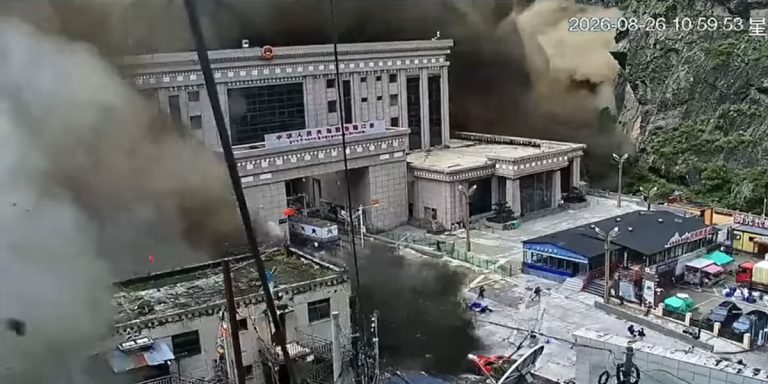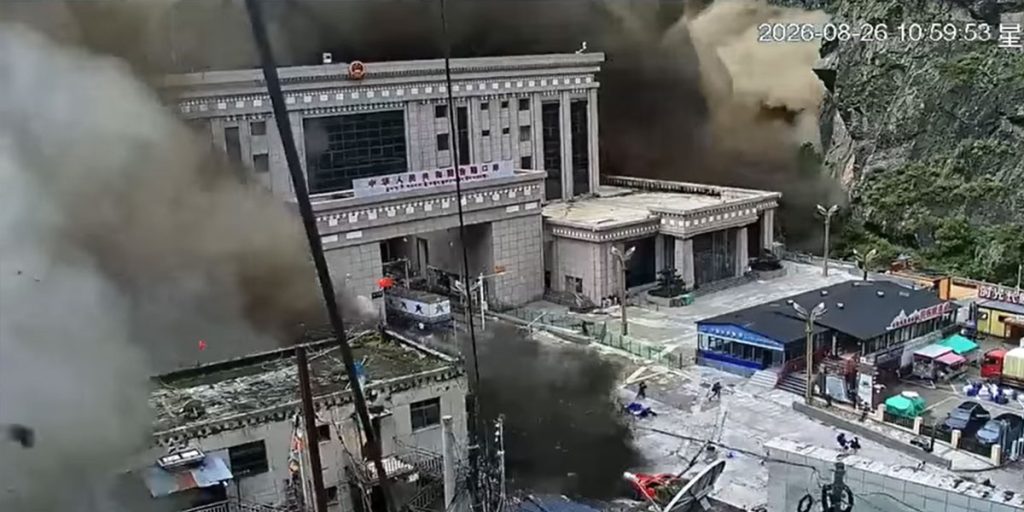
CCTV footage showing floodwater destroying the Gyirong Port
NEPAL — What began as an ordinary Wednesday morning became a catastrophe in a matter of minutes. A devastating flash flood and mudslide swept through communities near Nepal’s border with Tibet on August 26, leaving at least 160 people dead across Nepal and the Tibet region of China, while hundreds of people remained missing as rescue operations continued. In Nepal alone, police reported at least 157 deaths; China reported three deaths and 265 people missing in Gyirong province.
The flood struck early, after an avalanche of ice and rock from a glacier blocked a river and then released a powerful surge downstream, according to the Associated Press. Communities in Rasuwa, Nuwakot and Nuwakot districts were among the hardest hit. Roads, bridges, homes, vehicles, hydropower facilities, and market areas were damaged or carried away by water thick with mud and debris.
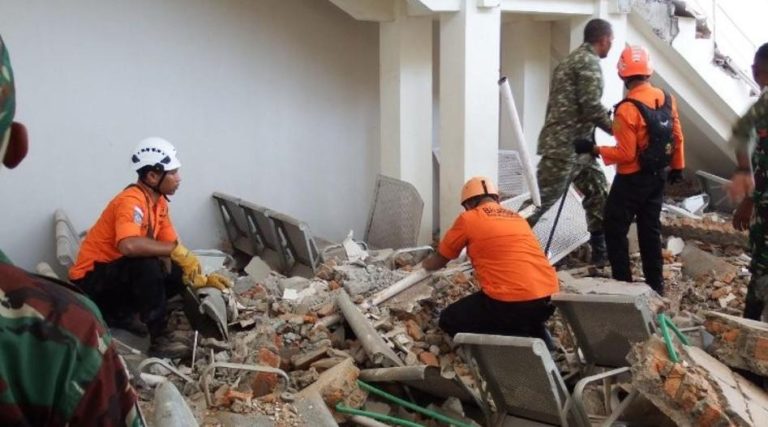
As of the latest reports, Nepali authorities said 403 people were missing, including 341 foreign nationals. Many had been travelling in the region for pilgrimage or trekking, while local residents and emergency personnel also remained unaccounted for. Rescue work has been hindered by damaged roads, broken communications, strong winds, and unstable conditions.
A Morning That Changed Countless Lives
The disaster’s suddenness is among its most painful features. People were preparing for work, opening shops, travelling, or simply beginning a normal day. Within a short time, families were separated, homes were buried in mud, and communities faced an unimaginable search for loved ones.
It is important to say plainly that the victims are not an illustration for someone else’s lesson. They are beloved sons and daughters, parents, children, neighbors, workers, pilgrims, and friends. They deserve our sorrow, our prayers, and concrete solidarity. Yet their suffering can also awaken us to a sober truth we often try to put aside: life is fragile, and love should not be delayed.
We often tell ourselves, “I’ll do it tomorrow.” We say, “I’ll visit them next time.” “I’ll apologize when I’m ready.” “I’ll start when life becomes less busy.” We presume that another chance will certainly come, that relationships can wait, that conversion can be postponed. But no one is promised another ordinary morning.
The Wisdom of Numbering Our Days
The Christian response to a tragedy is not fear, fatalism, or the presumption that God directly sends disasters as punishment. The Church entrusts those who have died to the mercy of God, prays for survivors and rescuers, and seeks to help those who suffer. At the same time, faith teaches us to face the limits of our lives honestly, so that we may use the days given to us with greater love.
Psalm 90, a prayer that reflects on both God’s eternity and human frailty, gives us words for such a moment:
“Teach us to count our days aright, that we may gain wisdom of heart.” — Psalm 90:12
To number our days does not mean becoming anxious about death. It means recognizing that each day is a gift, not an entitlement. It means refusing to waste the time we have been given on resentment, pride, neglect, or indifference. It means calling the person we have been meaning to call, offering forgiveness, seeking reconciliation, making time for prayer, and choosing to live for Jesus now and not at some imagined point when life is easier.
The people of Nepal did not wake that Wednesday morning expecting their lives to be overturned before midday. Their grief calls the world to compassion, but it can also invite each of us to ask a personal and necessary question: What act of love, mercy, or faith have I been putting off?
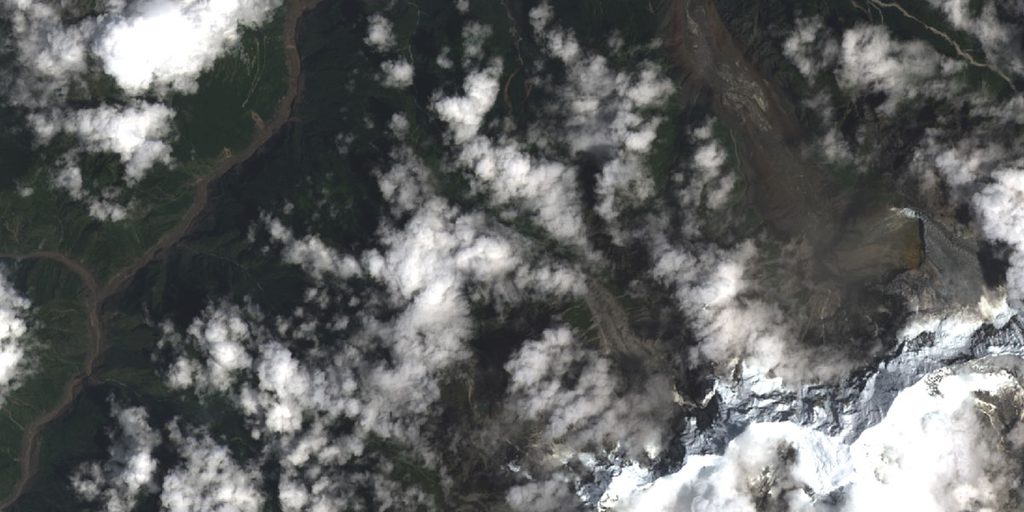
Satellite Image of Nepal after flash flood Source: USGS Earth Explorer
Prayer and Solidarity for Nepal
At least 19 bridges and nearly 40 kilometres of road were reportedly swept away in the disaster area, while officials warned people to stay away from the banks of the Trishuli, Bhotekoshi, and Narayani rivers. The scale of loss will take time to understand, and the work of relief and recovery will continue long after initial headlines fade.
Christians can respond first by praying earnestly for the dead, the missing, the injured, displaced families, local communities, and the rescue teams working in exhausting and dangerous conditions. We can also support reputable humanitarian and Church-based relief organizations as their needs become clear, and follow the safety instructions issued by local authorities rather than spreading unverified images or reports.
To pray for Nepal is not to look away from suffering. It is to place the suffering of others before the Lord, trusting that He sees every life and every tear. It is also to ask for the grace to be more present to the people entrusted to our own care.
Do Not Wait to Live for Christ
The tragedy in Nepal is a severe reminder that love cannot always be postponed. If there is someone you need to forgive, begin that journey today. If you have been absent from a loved one’s life, reach out while you can. If you have put off prayer, return to God now. If you have delayed a good work, a needed apology, or a concrete act of service, do not wait for the perfect moment.
This does not mean living under constant fear. It means living awake to grace. Jesus calls His disciples to love God and neighbor in the present moment, where repentance, mercy, reconciliation, and charity become real. The time to begin is not when life becomes less busy. The time to begin is today.
Spiritual Resolution: Entrusting Nepal and Our Lives to God
Let us pray for the people of Nepal, especially those who died so suddenly, those still missing, the injured, the bereaved, and those risking their lives in rescue work. Bring their names, if known, and their grief before God at Holy Mass. Spend time in Eucharistic Adoration, asking the Lord to receive the dead into His mercy and to console all who mourn. Pray the Holy Rosary, particularly the Sorrowful Mysteries, for families awaiting news and for all who live with the uncertainty of disaster.
Let this tragedy also move us toward conversion. Seek the Sacrament of Confession if sin or resentment has kept you from peace with God or neighbor. Receive the Eucharist worthily at Holy Mass, where Christ gives Himself to us and teaches us to give ourselves in love. Open Sacred Scripture, especially Psalm 90, and ask God for a wise and grateful heart. Then make one concrete act of love today: speak the apology, make the visit, send the message, offer help, or begin the prayer you have postponed.
May the Lord have mercy on those who have died, strengthen all who are searching and serving, and bring comfort to the people of Nepal.
For more trusted Catholic news, faith resources, and global Church developments, visit www.ewtnvatican.com.