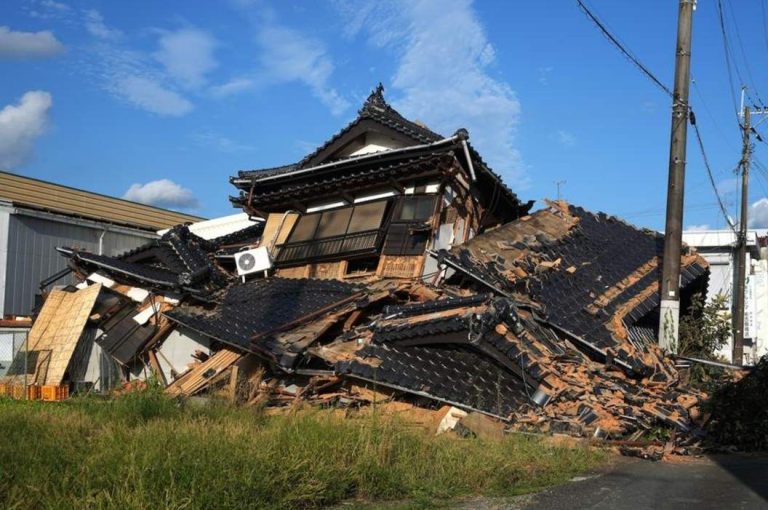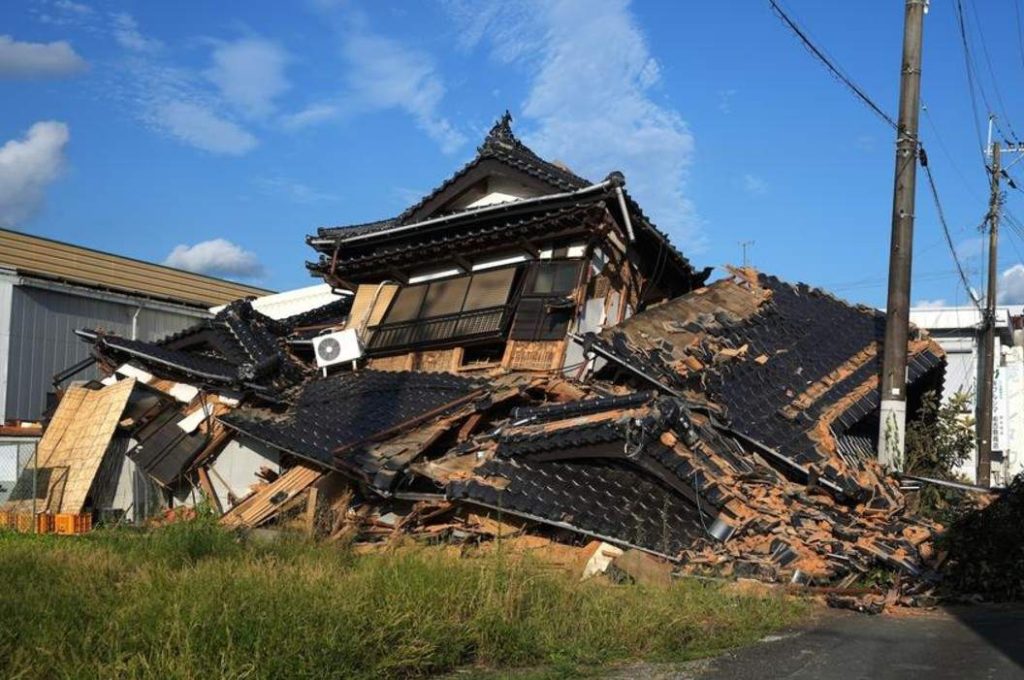
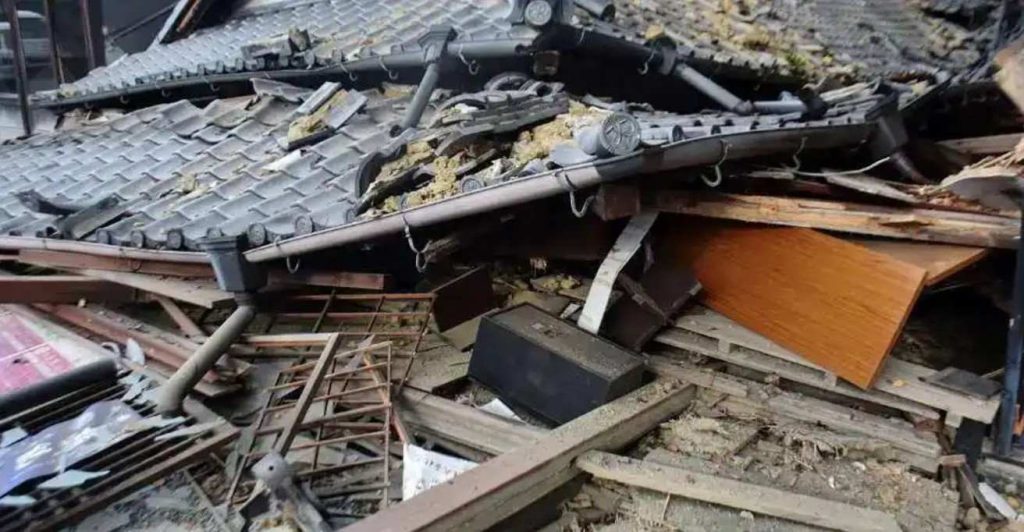
A magnitude 7.1 earthquake tore through Kumamoto Prefecture on Japan’s southwestern island of Kyushu on July 28, flattening homes, damaging bridges, sparking fires, and leaving tens of thousands of households without power or water. Amid the wreckage stands a small Catholic parish in the city of Yatsushiro, its church, rectory, and parish hall significantly damaged, its mostly immigrant congregation shaken, and one of its youngest members among the disaster’s victims. As the wider Japanese Catholic Church moves quickly to respond, the story unfolding in Kumamoto offers a window into both the scale of this disaster and the quiet resilience of a community often overlooked in Japan’s broader religious landscape.
Inside the Damage: A Small Parish Hit Hard in Yatsushiro
The Church of Our Lady of Sorrows in Yatsushiro sustained significant damage to its main building, rectory, and parish hall in the earthquake. Bishop Josep Maria Abella of the Diocese of Fukuoka visited the affected parishes on July 29, accompanied by the diocesan chancellor and the priest responsible for social ministry. Describing what he witnessed, Abella said simply that old houses had collapsed and roads were damaged, though the team was still able to reach the hardest-hit areas by car. He noted that many residents appeared exhausted after spending the previous night in evacuation shelters.
Yatsushiro is a small parish, with roughly 200 parishioners, most of them originally from the Philippines and Vietnam, immigrant communities that make up a significant portion of Japan’s small but active Catholic population. The parish is currently mourning the loss of one of its own: Peter Son, a 24-year-old Vietnamese parishioner, was killed when steel roof trusses collapsed at a metalworking factory in nearby Kosa Town during the earthquake, according to the Diocese of Fukuoka.
How the Catholic Church in Japan Is Mobilizing Relief
The Diocese of Fukuoka, which covers the entire affected prefecture, is now assessing damage across Church properties, including schools, kindergartens, and hospitals, while coordinating closely with Caritas Japan and the Catholic Bishops’ Conference of Japan’s Emergency Response and Support Team. Cardinal Isao Kikuchi, president of the bishops’ conference, confirmed that Caritas Japan had already begun direct discussions with Bishop Abella to organize assistance for the affected communities.
The broader scale of the disaster underscores why this coordinated Church response matters. The earthquake’s death toll has risen to at least 13, with nearly 10,000 people still in evacuation centers. A gas explosion at a shopping mall in the city of Kashima and the collapse of a paper plant in Yatsushiro itself added further casualties to an already severe disaster, while roughly 80,000 homes lost running water and around 14,000 households remain without electricity. Against that backdrop, the Church’s ability to mobilize quickly, reaching a small immigrant-majority parish alongside its wider prefecture-level relief efforts, reflects an emergency response network built specifically to act fast when disaster strikes.
Why This Relief Effort Is Significant for the Church Today
This response carries real significance for the Church, and in this case, that significance is largely encouraging. Japan’s Catholic population is small, a minority within a minority religion in a country where Christians make up only a tiny fraction of the population, and much of that community’s day-to-day vitality rests on immigrant parishioners from the Philippines, Vietnam, and elsewhere in Asia. The speed and coordination of this relief effort, extending fully to a modest parish rather than concentrating only on larger, more visible institutions, reflects a pastoral commitment that treats every local community as worth protecting and rebuilding, regardless of size or demographic profile.
At the same time, an honest reading of this moment invites a sober acknowledgment. Japan’s Catholic Church, already stretched thin by an aging population and limited resources, now faces the added strain of rebuilding physical structures while also walking alongside a grieving community that has lost one of its youngest members. Genuine recovery here will likely take considerably longer than the initial wave of relief coordination, and sustained support, not just an immediate response, will be needed in the months ahead.
A Church Named for Sorrow, Now Living It
There is a striking, almost unintentional resonance in the fact that the damaged parish carries the name Our Lady of Sorrows, a Marian title rooted in Mary’s own grief at the foot of the Cross, watching her son suffer without being able to prevent it. A community bearing that name is now living out its own version of that sorrow, mourning a young parishioner while surveying damage to the very building built in her honor.
Catholic tradition has never treated Mary’s sorrow as something to look away from; it treats it as a source of comfort precisely because she understands loss firsthand. For a grieving, immigrant-majority parish far from its members’ countries of origin, that shared sorrow offers something more than sentiment: a reminder that their grief is held, understood, and accompanied, not just by the wider Church responding with material aid, but by the very namesake of their own parish.
A Spiritual Resolution
Rebuilding a damaged church, rectory, and parish hall is necessary and already underway, but the deeper rebuilding this community needs will be sustained by something more enduring than construction alone. Five ordinary practices offer that steadier foundation as Yatsushiro’s parishioners grieve and recover together.
- Confession, offered gently in a season of grief, clears space for whatever guilt or helplessness survivors may quietly be carrying after sudden loss.
- Adoration, quiet time before Christ, offers a grieving community somewhere to bring sorrow that words alone cannot fully express.
- The Rosary, prayed together as a parish, can be offered specifically for Peter Son’s family and for all those affected by the earthquake across Kumamoto.
- The Eucharist, celebrated again once the parish hall is restored, will remain the center around which this small, resilient community continues to gather.
- Scripture, particularly the Church’s own understanding of Mary’s sorrow at the Cross, reminds parishioners that their grief is accompanied rather than carried alone.
A Small Parish, A Larger Witness
The earthquake that struck Kumamoto Prefecture caused widespread devastation across the region, but the story emerging from one small, immigrant-majority Catholic parish in Yatsushiro offers something worth noticing amid the wider disaster coverage: a Church moving quickly to reach even its smallest communities, and a grieving congregation finding unexpected meaning in the very name of the parish it now works to rebuild. Coverage of this disaster and the Church’s ongoing relief efforts, including from platforms such as EWTN Asia Pacific News, will continue following how Kumamoto’s Catholic community recovers in the weeks ahead.
If this story moved you, share it with someone who might wish to keep Japan’s earthquake survivors in their prayers, and consider remembering the Yatsushiro parish community, and the family of Peter Son, in your own prayers today.
To remain informed about Catholic life, teachings, and global Church developments, readers may be encouraged to visit www.ewtnvatican.com for trusted Catholic news and resources.