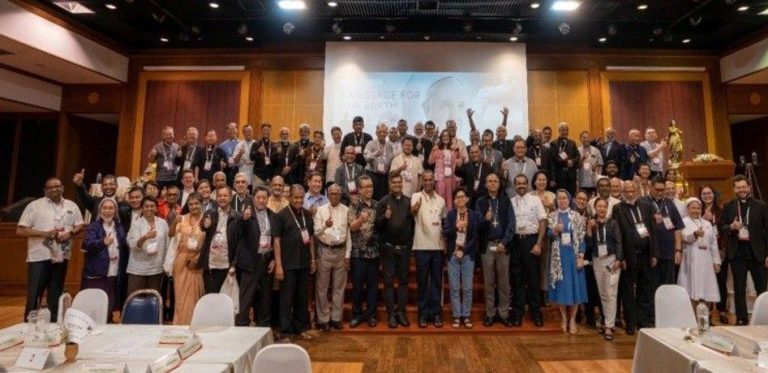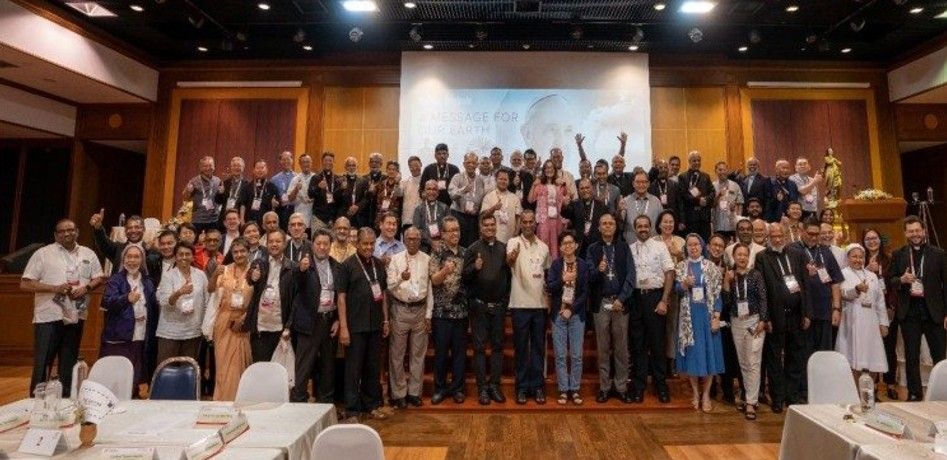
More than 120 cardinals and bishops representing 22 episcopal conferences spent a week in Jakarta discussing dialogue, synodality, and reconciliation across one of the world’s most religiously diverse continents. But as the assembly closed, a pointed question lingered beneath all the encouraging language: does a call to build bridges actually mean anything if it doesn’t translate into real protection for the people most at risk? That question, more than any single statement from the gathering, may end up defining whether this moment becomes a genuine turning point for the Church in Asia or simply another well-intentioned document.
Inside the FABC’s Closing Message: A Church Called to Cross Boundaries
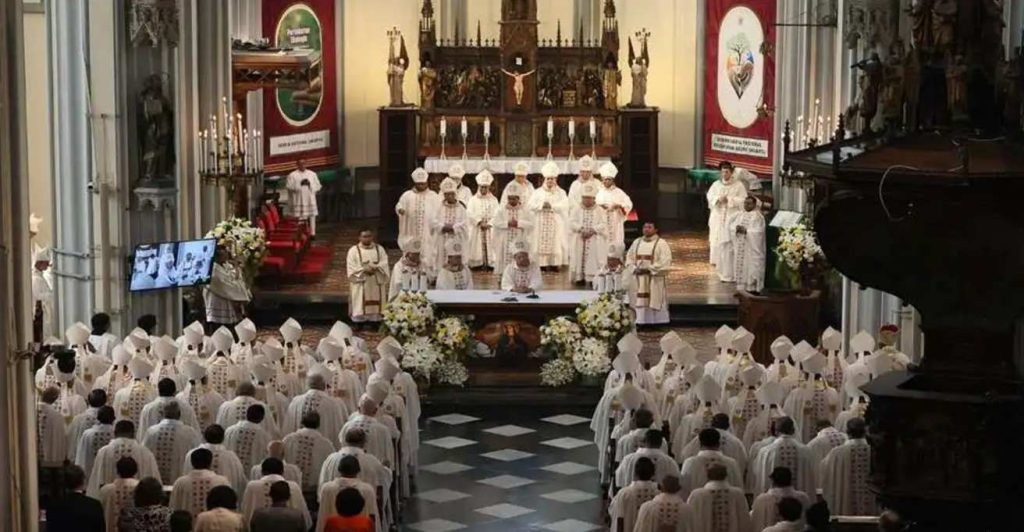
The 12th Plenary Assembly of the Federation of Asian Bishops’ Conferences concluded on July 26 with the promulgation of its Message to the Peoples of Asia, titled “You Will See Greater Things,” a reference to Christ’s words in the Gospel of John. Read by Archbishop Gilbert Armea Garcera during the closing Eucharistic celebration at the Cathedral of Our Lady of the Assumption in Jakarta, and signed by Cardinal Filipe Neri Ferrão, president of the FABC, the message committed the region’s bishops to return home as a missionary, synodal Church, one that listens deeply, crosses boundaries, accompanies the poor and vulnerable, and works alongside people of other faiths in pursuit of truth, justice, and peace.
Perhaps the message’s most striking image came in its closing lines, entrusting this mission to Mary, described as Mother of Asia, and praying that Christ himself, named directly as “the living Bridge,” would make the region’s bishops instruments of reconciliation and hope. That image reframes the entire week’s theme: bridge-building, in this telling, is not a diplomatic strategy invented by the assembly, but a role already modeled by Christ himself.
Why Dialogue Alone Isn’t Enough: The Call to Protect the Vulnerable
Commentary surrounding the assembly made clear that fine words about dialogue would not be enough on their own. Analysts following the gathering argued that for the assembly to remain genuinely relevant, it needed to confront pressing realities directly: rising religious intolerance, the protection of vulnerable minority communities, and the economic precarity facing much of the continent, rather than settling for what one commentary bluntly called mere rhetorical acknowledgment.
Pakistan offers a clear, real-world test case for what this actually requires. There, Christians make up less than two percent of a population exceeding 240 million, and local Church leaders describe crossing religious divides not as an abstract ideal but as a daily necessity for survival, navigating restrictive laws, communal tension, and the marginalization of minority communities. Bishops and priests in that context have spent years building trust through practical partnerships with human rights defenders and interfaith peace councils, exactly the kind of grounded, protective bridge-building the assembly’s closing message points toward on a continental scale.
Why This Closing Message Is Significant for the Church Today
This moment carries real significance for the Church, and much of it points in an encouraging direction. The assembly’s explicit commitment to accompanying the poor and vulnerable, rather than limiting itself to abstract calls for interreligious dialogue, suggests a self-awareness among Asia’s bishops that credibility depends on concrete follow-through. Pakistan’s example, where local Christians have already been practicing this kind of costly, protective bridge-building for years, offers genuine hope that the assembly’s vision is grounded in real pastoral experience rather than aspiration alone.
At the same time, an honest reading of this moment requires acknowledging a real risk that commentators themselves have named: a closing message, however beautifully written, remains just words until dioceses across such a vast and varied continent translate it into sustained action protecting minority communities, migrants, and the economically precarious. Whether this assembly becomes a genuine turning point or another well-meaning document will likely be measured over years, not in the days immediately following its conclusion.
Christ as the Living Bridge
The FABC’s closing image of Christ as “the living Bridge” carries deep scriptural resonance. Throughout the Gospels, Christ consistently crossed boundaries that others considered fixed, speaking with a Samaritan woman at a well, dining with tax collectors, healing on the Sabbath, touching those considered ritually unclean. In each case, his bridge-building was never merely symbolic connection for its own sake; it was protective, restoring dignity to people society had pushed to the margins.
This is precisely the standard the assembly’s closing message sets for the Church in Asia moving forward: bridges are not measured by how many groups are invited to the same table, but by whether those crossing the bridge, the poor, the persecuted, the marginalized, actually find safety and dignity on the other side.
A Spiritual Resolution
Carrying a message like this from a cathedral in Jakarta into daily parish life across an entire continent requires more than good intentions. Five ordinary practices offer the steady foundation needed to turn a closing statement into lasting, protective action.
- Confession, which clears away the complacency that lets fine words substitute for real follow-through, restoring genuine accountability to the mission just proclaimed.
- Adoration, quiet time before Christ that deepens the same attentiveness needed to actually notice who remains vulnerable at the margins.
- The Rosary, a steady rhythm of prayer that can be offered specifically for persecuted and marginalized Christian communities across Asia, keeping them present in prayer long after the assembly’s headlines fade.
- The Eucharist, celebrated at the very Mass where this closing message was proclaimed, remaining the source from which any authentic mission of protection and accompaniment must continually draw.
- Scripture, returned to often, especially Christ’s own pattern of crossing boundaries protectively rather than merely symbolically, keeping that standard in view long after the assembly disperses.
A Bridge Worth Building Carefully
The FABC’s 12th Plenary Assembly closed with genuinely hopeful language, a Church committed to listening deeply, crossing boundaries, and accompanying the poor and vulnerable across one of the world’s most complex regions. Whether that language becomes lived reality will depend on choices made in ordinary parishes and dioceses long after Jakarta’s cathedral bells fall silent. Coverage of this assembly and its aftermath, including from platforms such as EWTN Asia Pacific News, will continue following how this bridge-building mission takes shape across the continent in the months ahead.
If this reflection gave you a renewed sense of what genuine bridge-building requires, share it with your community, and consider praying today for the vulnerable communities this message was ultimately written to protect.
To remain informed about Catholic life, teachings, and global Church developments, readers may be encouraged to visit www.ewtnvatican.com for trusted Catholic news and resources.