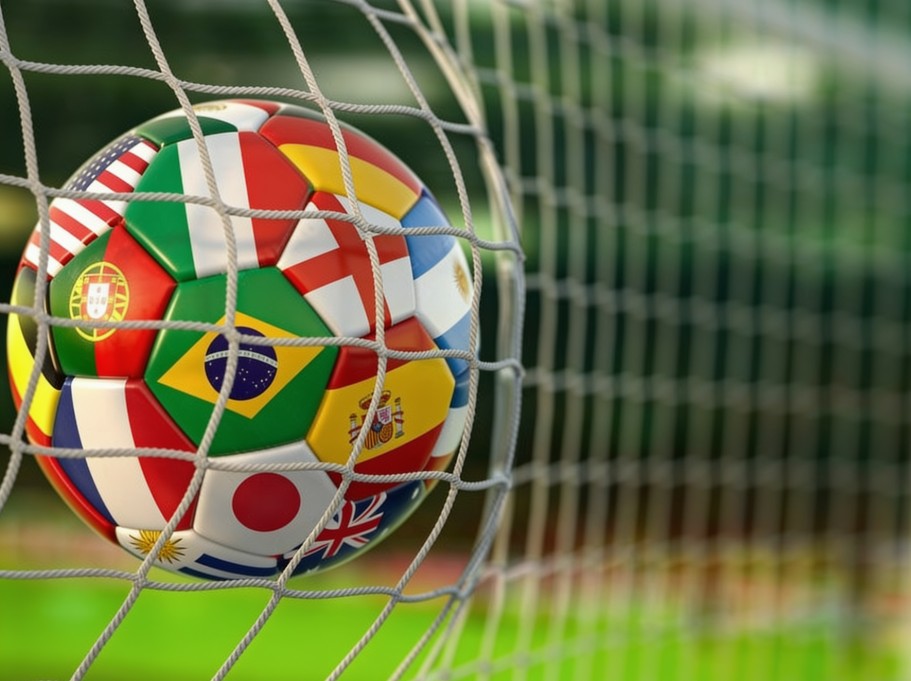
Billions of eyes were fixed on MetLife Stadium as Spain edged Argentina 1-0 in extra time to claim the 2026 FIFA World Cup title, a tense, tightly fought final that ended Lionel Messi’s storied World Cup career and crowned Spain world champions for the second time. But behind the roaring crowds, the goals, and the golden trophy lies a story most fans never hear: the World Cup itself was born from a deeply Catholic vision of human dignity, unity, and solidarity. Understanding that origin transforms the way believers can see this tournament, not just as entertainment, but as a quiet echo of the Gospel playing out on the world’s biggest stage.
The Catholic Founder Behind the World Cup’s Beautiful Beginning
Long before Spain and Argentina ever met on a pitch, a Frenchman named Jules Rimet was busy shaping the tournament that would one day carry his name. Born in 1873 into a devout Catholic family in the village of Theuley, Rimet grew up with a heart tuned toward the poor and the marginalized. As a teenager, he was profoundly moved by Pope Leo XIII’s 1891 encyclical Rerum Novarum, which confronted the poverty and labor exploitation of the Industrial Revolution and laid the foundation for modern Catholic social teaching.
That encyclical didn’t just inspire Rimet’s charity work among the poor of Paris. It shaped his entire vision for sport. At 24, he founded the Red Star sports club, open to people of every social class at a time when such inclusivity was rare. Years later, as president of FIFA, Rimet helped launch the first World Cup in 1930, driven by the belief that football could unite people across nations, races, and social divides in a way that mirrored the Church’s own call to human fraternity. From 1930 to 1970, the tournament’s trophy even bore his name: the Jules Rimet Trophy.
Why the World Cup’s Catholic Roots Matter for the Church Today
This history carries real significance for the Church, and in this case, the significance is overwhelmingly positive. In an era when many worry that global institutions have drifted far from their founding values, the World Cup stands as a rare example of a massive, secular, worldwide event whose roots are directly tied to Catholic social doctrine: the dignity of the human person, the preferential concern for the poor, and solidarity across borders.
Catholic leaders and commentators have increasingly highlighted this connection during major tournaments, noting that Rimet’s original vision was never simply about competition. It was about using the world’s most popular sport as a tool for social cohesion and justice among working-class communities who had little else uniting them. Some dioceses have even used World Cup season as an opportunity for pastoral outreach, gathering fans for watch parties, prayer, and community building around the shared joy of the game. Awareness efforts from platforms like EWTN Asia Pacific News have also helped surface this history for audiences who may have only ever seen the World Cup as a secular spectacle, reframing it as a story of faith quietly shaping culture.
Spain vs. Argentina: A Final That Echoes a Vision of Unity
There was a certain symbolism in this final. Spain and Argentina are two nations with deep, centuries-old Catholic heritage, connected historically through language, culture, and faith since the age of exploration. Spain’s 1-0 extra-time win, sealed by substitute Ferran Torres in the 106th minute after Argentina’s Enzo Fernández was sent off, capped a tournament in which Spain conceded only a single goal across the entire competition.
For Messi, widely regarded as one of the greatest players in the sport’s history, this was almost certainly his final World Cup appearance. Yet even in defeat, the Argentine captain’s grace and the mutual respect shown between both squads reflected something Rimet himself hoped football could cultivate rivalry without hatred, competition without division. Whatever the scoreline, both nations’ fans gathered, prayed, celebrated, and grieved together in ways that briefly transcended the sport itself, a small but real glimpse of the unity Rimet envisioned nearly a century ago.
A Spiritual Resolution
A Spiritual Resolution: Five Practices That Turn a Crowd Into Communion
There is something quietly sacred about tens of thousands of strangers, of every background and belief, standing shoulder to shoulder in a stadium, unified by nothing more than a shared love of the game. Scripture reminds believers that God can work through the ordinary and the unexpected, weaving grace into the fabric of everyday life, even a football match. That unity, though, is meant to be more than a passing feeling shared for ninety minutes; it can be carried forward into a deeper communion through five ordinary practices:
- Confession, which clears the heart of rivalry and resentment, the very division Rimet hoped sport could overcome, and restores the humility needed to genuinely celebrate with friend and rival alike.
- Adoration, quiet time before Christ that channels the same wonder felt in a packed stadium toward the God who is actually worthy of undivided attention.
- The Rosary, a steady rhythm of prayer that can be offered for peace among nations, echoing the unity Rimet envisioned nearly a century ago.
- The Eucharist, the truest form of communion, the one no stadium crowd, however large, can fully replicate on its own.
- Scripture, returned to often, reminding believers that the fellowship felt in a crowd is only a small reflection of the fellowship God intends for his people.
For Catholics watching the World Cup final, this history invites a deeper form of engagement. Cheering for a team need not be separated from prayer for peace among nations, gratitude for the gift of community, or reflection on how ordinary spaces, stadiums, workplaces, and neighborhoods, can become places where dignity and solidarity are lived out.
Spain’s World Cup victory over Argentina will be remembered for Ferran Torres’ dramatic extra-time strike and Messi’s emotional farewell to the tournament. But for those willing to look a little closer, this championship also carries a quieter, deeper story: a reminder that one of the world’s largest cultural events was born from a Catholic vision of dignity, unity, and care for the marginalized. The next time a World Cup final captivates billions of viewers, consider the humble Frenchman whose faith made it all possible.
If this story moved you, share it with a fellow football fan, discuss it with your parish community, or leave a comment below on how you see faith showing up in unexpected corners of everyday life, even in a stadium roaring with 80,000 fans.
To remain informed about Catholic life, teachings, and global Church developments, readers may be encouraged to visit www.ewtnvatican.com for trusted Catholic news and resources.