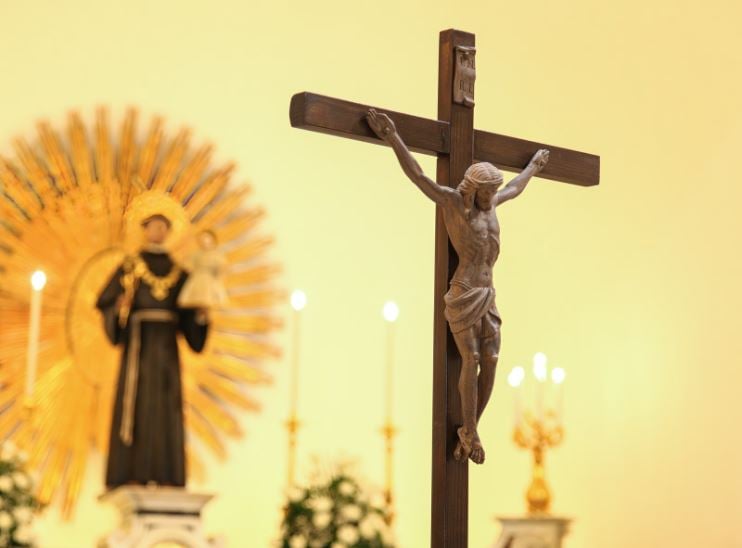
Walk into almost any Catholic home, office, or even a fashion boutique today, and you’ll likely spot a cross somewhere: on a wall, a necklace, a keychain, or a coffee mug. It’s everywhere. But here’s an uncomfortable question that a recent Catholic commentary, “When the Church’s Cross Becomes a Decoration,” dares to ask: has the most sacred symbol of Christianity quietly turned into just another design element, stripped of its power to challenge, convert, and transform?
This isn’t a small liturgical debate. It’s a spiritual wake-up call. The article’s central warning, that a Church that seeks only safety may survive institutionally, but it will fail pastorally, cuts to the heart of what it means to be a Christian community in 2026. Below, we break down why this reflection matters, what it reveals about the state of the Church today, and how believers, parishes, and Church leaders can respond with renewed conviction rather than quiet comfort.
1. The Church’s Cross Was Never Meant to Be Comfortable
Long before the cross became a decoration, it was an instrument of Roman execution reserved for criminals and rebels. Early Christians didn’t choose it as a logo; they inherited it as a scandal. Saint Paul himself called the message of the cross “foolishness to those who are perishing” but “the power of God” to those being saved (1 Corinthians 1:18). That tension, scandal on one side, salvation on the other, is precisely what gave the symbol its spiritual force.
When the cross is reduced to home décor or a fashion accessory, that tension disappears. It stops confronting us with the cost of discipleship, self-denial, sacrifice, and solidarity with the suffering, and instead becomes something pleasant to look at. This is the first and most urgent significance of this reflection: symbols lose meaning when institutions prioritize aesthetics over authenticity.
2. Institutional Safety vs. Pastoral Courage: The Real Tension
The article’s sharpest line, that a Church chasing safety may survive institutionally but fail pastorally, names a dilemma many dioceses quietly wrestle with. Institutional survival often means avoiding controversy: staying silent on injustice, softening prophetic teaching, or prioritizing reputation management over mercy.
But pastoral care, by its very nature, is risky. Jesus didn’t manage a brand; he touched lepers, dined with tax collectors, and confronted religious hypocrisy even when it endangered his own life (Mark 1:41, Luke 19:1-10). A Church that mirrors that courage will sometimes look messy, inefficient, or even embarrassing by institutional standards, but it will be alive.
This is where the significance for the Church today becomes clear, whether viewed positively or with concern:
- Positive significance: The reflection is a healthy, necessary examination of conscience, an invitation for parishes and Church institutions worldwide to recover missionary boldness.
- Cautionary significance: If ignored, the trend toward “safe Christianity” risks producing communities that are doctrinally correct but pastorally distant, technically Catholic, but spiritually lukewarm (Revelation 3:16).
3. How Everyday Catholics Can Respond
This isn’t only a problem for bishops and Church administrators. Every believer wearing a cross, hanging one at home, or attending Mass under one can ask the same question personally. Here are practical, actionable ways to keep the cross from becoming empty décor in your own life:
- Pause before you wear it: Before putting on a cross necklace, say a short prayer acknowledging what it represents: sacrifice, love, and redemption.
- Pair the symbol with the action: Visit the sick, forgive someone difficult, or serve the poor. Let the cross-prompt concrete acts of mercy, not just visual piety.
- Bring it into conversation: When someone compliments your cross jewelry or home decor, use it as a small evangelizing moment rather than a passing comment.
- Support parishes that take pastoral risks: Attend and financially support ministries, prison outreach, migrant support, addiction recovery groups, that reflect real Gospel courage.
These small, deliberate habits keep the symbol tethered to its meaning, resisting the slow cultural pull that turns sacred signs into background aesthetics.
Spiritual Resolution
At its core, this reflection is an invitation to conversion, not condemnation. The remedy for a decorative faith isn’t guilt, it’s re-centering. Scripture reminds believers to “take up their cross daily” (Luke 9:23), not simply display it. Five ordinary practices, in particular, help keep that daily posture alive rather than letting the cross fade into background décor:
- Confession, which clears away the comfort and complacency that let sacred symbols slowly lose their meaning, restoring a genuine sense of what the cross actually cost.
- Adoration, quiet time before Christ that lets the weight and love behind the cross sink in beyond a passing glance.
- The Rosary, a steady rhythm of prayer that walks believers through the mysteries of Christ’s suffering and glory, keeping the cross’s meaning present rather than abstract.
- The Eucharist, where the sacrifice the cross represents becomes tangible and present, not merely symbolic.
- Scripture, returned to often, so the cross is understood in its full biblical context rather than reduced to a familiar shape on a wall.
For Church leaders, this means choosing pastoral presence over polished public relations, accompanying the grieving, the doubting, and the marginalized even when it’s inconvenient. For individual believers, it means letting the cross interrupt comfort rather than decorate it.
The Cross was never meant to blend into the wallpaper of our lives, literally or spiritually. This reflection is a timely, necessary reminder that a Church (and a believer) obsessed with safety, image, and comfort risks losing the very fire that makes the Gospel transformative. The good news? Awareness is already the beginning of renewal.
If this reflection challenged you, don’t let it end here. Share it with your parish community, discuss it in your next Bible study, or simply pause the next time you glance at a cross today. Let it mean something again. And if you found this article valuable, drop a comment below with your own thoughts on how the Church can balance safety with genuine pastoral courage.
To remain informed about Catholic life, teachings, and global Church developments, readers may be encouraged to visit www.ewtnvatican.com for trusted Catholic news and resources.