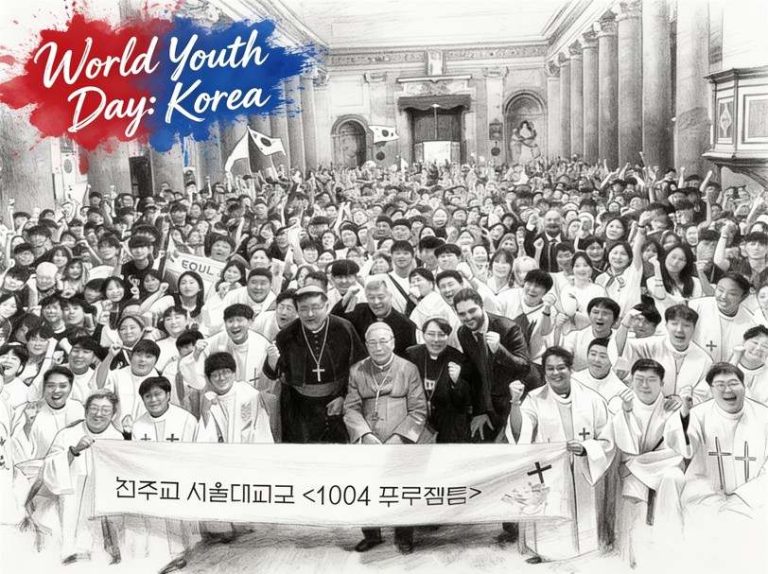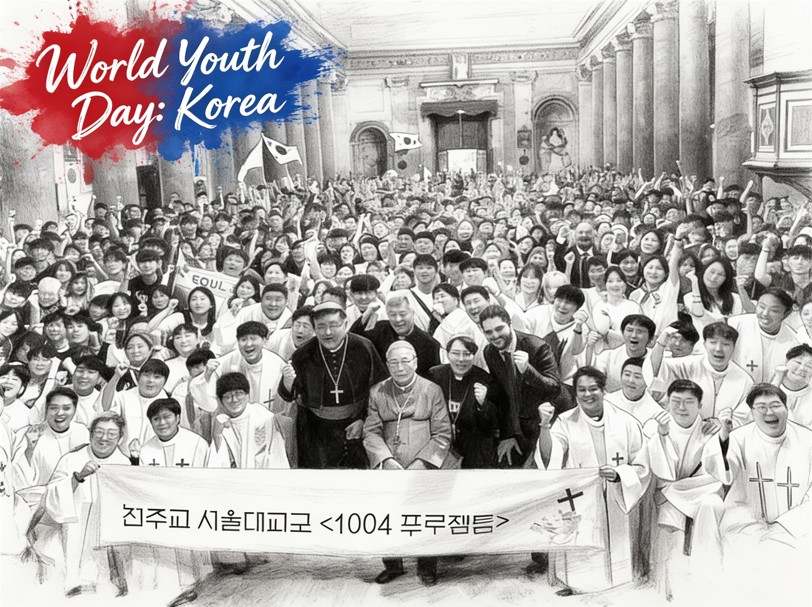
Picture a convent chapel that almost never opens its doors to outsiders, suddenly thrown open at night, candles lit, and ordinary people from the street kneeling quietly before a wooden cross. That is exactly what happened in Daegu, South Korea, on the night of July 2, when Franciscan nuns extended an unusual invitation: come as you are and stay as long as you need before the World Youth Day symbols.
That single image captures why this story matters far beyond Korea’s borders. As the Catholic Church counts down to World Youth Day (WYD) Seoul 2027, thirteen major religious congregations across the country have begun a monthlong pilgrimage to host the WYD Cross and the Icon of Our Lady, Salus Populi Romani, the two objects that have symbolized this global youth gathering since St. John Paul II first entrusted them to young people in 1984.
If you’ve been wondering what this pilgrimage is, why it matters spiritually, and how you can actually watch and follow it from wherever you are, this article walks you through all of it.
What Is Happening: The National Pilgrimage of the WYD Symbols
According to reporting on the pilgrimage, the journey of the WYD Cross and Icon among religious congregations began on July 1 and continues throughout the month, with each community organizing its own program around the symbols, several of which are open to the public.
Here is a snapshot of how the pilgrimage has unfolded so far:
- July 1–2: The Daegu Province of the Sisters of St. Paul of Chartres received the symbols and held a “Night of Praise” titled “The Cross Does Not End in Mere Suffering,” opening their usually private chapel to the public for two days.
- July 8–10: The Sisters of the Blessed Martyrs of Korea welcomed the symbols, followed by Eucharistic Adoration, Exposition, and a special Mass.
- July 10: The Salesian Family held a Mass with the WYD Cross and Icon at their Korean Provincial House in Singil-dong, Seoul.
- July 19–21: The Franciscan Order is scheduled to host the symbols next.
This congregation-level pilgrimage is itself part of a much larger, multi-year national journey. The WYD Cross and Icon returned to Korea in December 2025 after an international pilgrimage across nine countries during the 2025 Jubilee for Youth. On January 20, 2026, Archbishop Peter Chung Soon-taick of Seoul formally launched the nationwide pilgrimage at Myeongdong Cathedral, blessing 15 logo sculptures, one for each Korean diocese, before the symbols began traveling from diocese to diocese starting in Wonju. The full national tour will conclude when the symbols return to Seoul in June 2027, just before WYD itself.
Why the WYD Cross and Icon Carry So Much Meaning
To understand why nuns would open a cloistered chapel at night, it helps to know the backstory of these two objects.
The WYD Cross, often called the “Pilgrim Cross”, was given to young people by Pope John Paul II in 1984, and its handover is considered the true starting point of every World Youth Day. The Icon of Mary, Salus Populi Romani (“Health/Protectress of the Roman People”), was added later as a Marian companion to the cross. Together, they have crossed continents for four decades, carried by young people from one host country to the next as a living sign of faith passed from generation to generation.
For Korea, receiving these symbols carries extra weight. WYD Seoul 2027 will be the first World Youth Day held in a country where Christians are a minority, Catholics make up only around 12% of South Korea’s population, and the first in Asia since Manila in 1995. In a country still marked by division and religious pluralism, Church leaders have described the pilgrimage as an opportunity to build unity, not just among Catholics, but across religious and non-religious communities alike.
Why This Small Story Is a Big Deal
It would be easy to read this as a routine church logistics story, symbols moving from one convent to the next. But look closer, and there’s a deeper spiritual current running through it.
Father Justinino Choi In-Bee, secretary general of the Korean bishops’ Youth Commission, has explained that the Church considers the handover of the WYD cross as the actual starting point of World Youth Day itself, not the opening Mass, not the closing ceremony, but the moment the cross changes hands. That reframes this entire congregational pilgrimage: every Mass, every night of Eucharistic adoration, every open-door invitation to the public during July is, in a very real sense, part of World Youth Day already happening, two years before the event’s opening ceremony in Seoul.
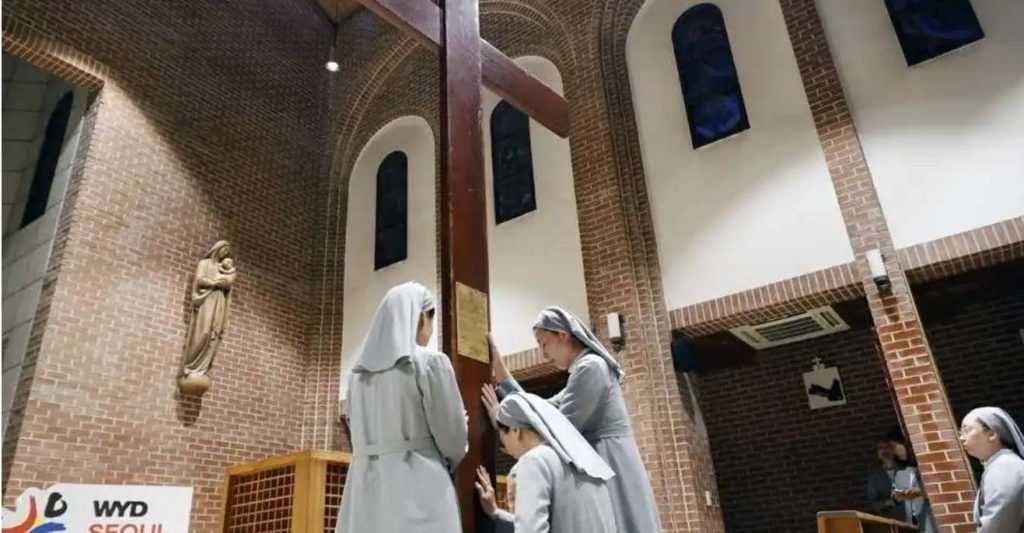
There’s also something quietly radical about Sister Dominica Kwon Min’s decision to open the Daegu convent chapel to the public. Cloistered and semi-cloistered religious life is built around withdrawal from the world for the sake of prayer. Choosing to break that pattern, even briefly, for the sake of the WYD symbols signals how seriously Korea’s religious communities are treating this moment: not as a photo opportunity, but as an invitation for anyone “whom God calls” to draw near.
This is the theological heartbeat of WYD Seoul 2027’s chosen theme, “Take courage! I have overcome the world” (John 16:33), a message aimed squarely at young people navigating uncertainty, doubt, and a rapidly secularizing culture. The pilgrimage of the cross through convents, provincial houses, and religious orders is, quite literally, courage on the move.
How to Follow the Pilgrimage and Watch WYD Coverage Live
Because many of these events are open to the public but not always physically accessible to international audiences, live streaming has become one of the most important ways for the wider Catholic world to stay connected to WYD Seoul 2027 preparations.
Several platforms currently offer or are expected to offer coverage of WYD-related events, Masses, and milestones:
- EWTN Asia Pacific News has been covering developments around WYD Seoul 2027, including symbol handovers and diocesan pilgrimage milestones, making it a useful resource for viewers across the region.
- EWTN’s global platforms and apps typically carry major Vatican and WYD liturgical events, often with multilingual options.
- The official WYD Seoul 2027 website and its social media channels post updates, official prayers, and schedules as the pilgrimage progresses.
- Diocesan and parish livestreams in Korea occasionally broadcast individual welcoming ceremonies and Masses tied to the symbols’ visits.
- Vatican Media and Vatican News provide coverage of major international milestones, such as the original 2024 handover ceremony at St. Peter’s Basilica.
If you want to follow along, it’s worth checking a few of these sources rather than relying on just one, since coverage of local diocesan events versus major international milestones tends to be split across different outlets.
Spiritual Resolution
Whether or not you’ll ever set foot in a Daegu convent or a Seoul parish hall, this pilgrimage offers something worth carrying into your own life: an invitation to make room. The sisters who opened their chapel didn’t need a bigger building or a special occasion, they needed only the willingness to say, “come as long as you need.” That’s a posture anyone can adopt, in prayer, in relationships, and in the small daily choices to be present rather than closed off.
As the WYD Cross and Icon continue their journey across Korea’s dioceses and religious communities through 2027, perhaps the real takeaway isn’t the schedule of events, but the reminder that courage and openness, the very theme chosen for WYD Seoul, often begin in the smallest, quietest gestures: an open door, a lit candle, a chapel that didn’t have to be shared, but was.
A Pilgrimage Worth Watching
The pilgrimage of the World Youth Day symbols through Korea’s religious congregations is more than a preparatory checklist item for WYD Seoul 2027, it’s a living rehearsal of the very courage, faith, and hospitality the event hopes to inspire in young people worldwide. From cloistered chapels opening their doors to Eucharistic adorations drawing new visitors, each stop on this journey adds another layer of meaning to what will unfold in Seoul come 2027.
If this story moved you, consider following along as the symbols continue their national tour, tuning into livestream coverage from EWTN Asia Pacific News and other Catholic broadcasters, and sharing this story with anyone curious about how a 1984 cross is still shaping young hearts today. And if you’ve followed WYD pilgrimages before, we’d love to hear your reflections in the comments below.
To remain informed about Catholic life, teachings, and global Church developments, readers may be encouraged to visit www.ewtnvatican.com for trusted Catholic news and resources.