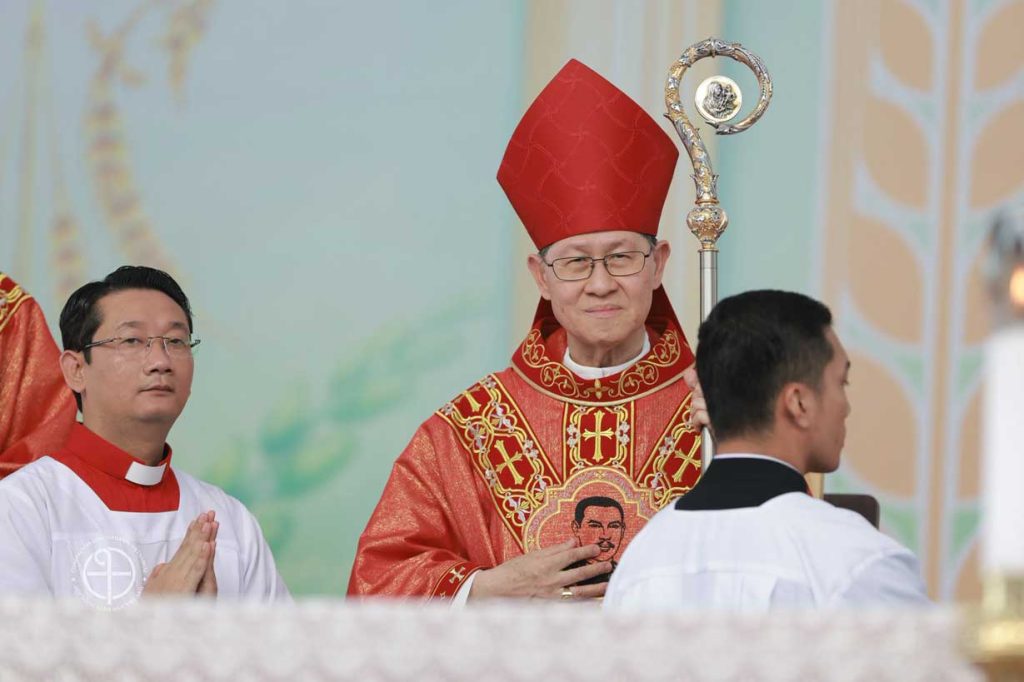
CA MAU, Vietnam — In a profound moment of grace for the Catholic Church in Asia, Cardinal Luis Antonio G. Tagle arrived in Vietnam as the Special Envoy of Pope Leo XIV to preside over a deeply significant event: the first-ever beatification ceremony held on Vietnamese soil .
On July 2, 2026, tens of thousands of the faithful gathered at the Tac Say Pilgrimage Center in the Diocese of Can Tho, located in the southern province of Ca Mau, to witness the beatification of Father Francis Xavier Truong Buu Diep . The martyred priest, who offered his life in 1946 to save his parishioners, was officially declared “Blessed,” marking the final step before canonization.
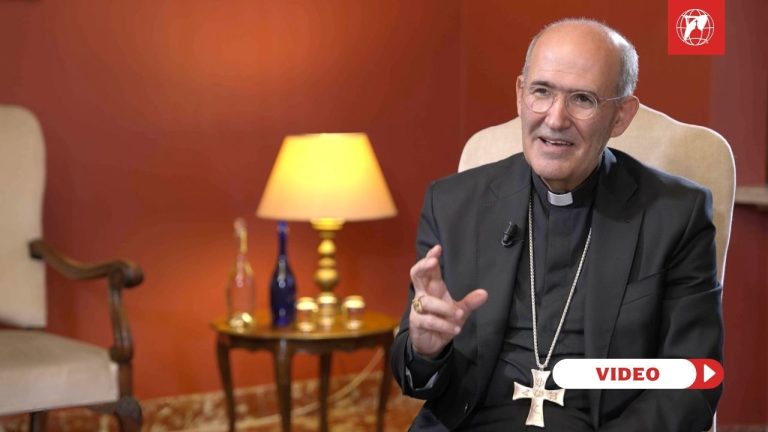
Cardinal Luis Antonio G. Tagle, arriving as the Special Envoy of Pope Leo XIV, brought a perspective that transcended the ceremonial. Having met with the authorities of Cà Mau province and the Vietnamese Bishops’ Conference, the Cardinal spoke not as a distant bureaucrat, but as a correspondent of the soul who had witnessed the local heartbeat. From his insights, we find that the life of Blessed Truong Buu Diep offers a profound, modern grammar for living ethically in an era of “fake news” and fragmentation.
Martyrdom is a Living Witness, Not Just a Death Sentence
The word “martyr” often carries the heavy, monochromatic weight of ancient history of lions, arenas, and tragic ends. However, Cardinal Tagle invites us to a more vibrant, proactive definition. He suggests that the essence of the martyr is not found in the moment of death, but in the Integrity of Presence maintained throughout life.
To be a martyr is to be a “witness to the truth.” This shift moves the concept from a historical tragedy to a contemporary vocation. As the Cardinal articulated:
“A witness is someone who speaks the truth about Jesus… through your words, through your actions, and through your own life.”
When we align our speech with our actions, especially when the cost is high, we enter into the spirit of martyrdom. It is a call to live so transparently that our very existence becomes a testimony to the truth we claim to hold.
Blessed Francisco Xavier Trương Bửu Diệp as an Antidote to “Fake News”
In a striking synthesis of history and digital-age anxiety, Cardinal Tagle positioned Blessed Francisco Xavier Trương Bửu Diệp as a direct counter-narrative to modern misinformation. We live in a world saturated with “messengers of falsehood,” where the sheer volume of “fake news” leaves the public wondering if truth is even attainable.
The Cardinal noted that Father Diệp’s power lay in being a “messenger of truth” through his refusal to abandon his flock. In the face of mortal danger, he did not offer a press release or a digital post; he offered his presence. He remained with his people in the Tac Sậy area even when the horizon grew dark. This reveals a profound lesson for the modern seeker: Truth is not merely a set of verified facts, but a steadfast commitment to love. In a world of fleeting digital ghosts, the ultimate truth is a person who refuses to leave when things get “unfavorable.”
True Devotion is a “Lifestyle,” Not a Ritual
There is a frequent temptation to compartmentalize faith into pilgrimages and petitions. While the Cardinal acknowledged that traditional acts of piety are “good,” he warned against a devotion that ends at the church doors. Authentic Devotion must be translated into the vernacular of daily life, specifically through the pillars of justice, charity, and compassion.
To honor the new Blessed, the Cardinal suggested a “lifestyle” approach that demands specific, actionable shifts:
- Students: Must embody this spirituality by championing justice within their schools, rejecting shortcuts in their studies and practicing radical honesty in their friendships.
- Business People: Are called to live this truth in the marketplace, ensuring their trade is marked by ethical fairness and a refusal to exploit others for profit.
- Families: Must make compassion the cornerstone of the home, creating a sanctuary where truth is spoken in love and the vulnerable are protected.
The Power of Proximity
In a departure from the traditional assumption that all paths to holiness must lead to Rome, this beatification was intentionally rooted in Vietnamese soil. Cardinal Tagle clarified a vital theological distinction that while Canonization (tuyên thánh) typically takes place at the Vatican, the Beatification and the diocesan phase that precedes it is a local affair.
The logistics are practical. Only few can afford the journey to Italy. But the symbolism is deeper. By celebrating in Vietnam, the Church allows the local community to see that “God’s grace is present” in their own history and neighbor. It allows the people of Cà Mau and Cần Thơ to claim a spiritual intimacy with the martyr, declaring with pride:
“He is one of us” (Ngài là một người trong chúng ta).
This proximity transforms a saint from a distant statue into a brother, proving that extraordinary virtue is not an import, but something that can grow in one’s own backyard.
The beatification of Blessed Truong Buu Diep and the historic visit of Cardinal Tagle remind us that the blood of the martyrs continues to be the seed of the Church. Let us resolve to respond to this powerful witness through:
The Holy Mass: To actively participate in the Eucharist, drawing strength from Christ’s sacrifice, so that we might have the courage to serve others selflessly, just as Father Diep did.
The Sacrament of Confession: To seek God’s mercy for the times we have failed to stand up for our faith or have chosen our own comfort over the needs of our community.
Eucharistic Adoration: To spend quiet time before the Blessed Sacrament, praying for the Church in Vietnam and for all Christians living in areas where religious freedom is restricted.
The Holy Rosary: To pray for the continued warming of relations between the Holy See and Vietnam, asking the Blessed Mother to protect all priests and missionaries.
Sacred Scripture: To reflect on the words of Christ in John 15:13, “Greater love has no one than this: to lay down one’s life for one’s friends,” asking for the grace to live out this radical love in our daily lives.
To remain informed about Catholic life, teachings, and global Church developments, readers may be encouraged to visit www.ewtnvatican.com for trusted Catholic news and resources.