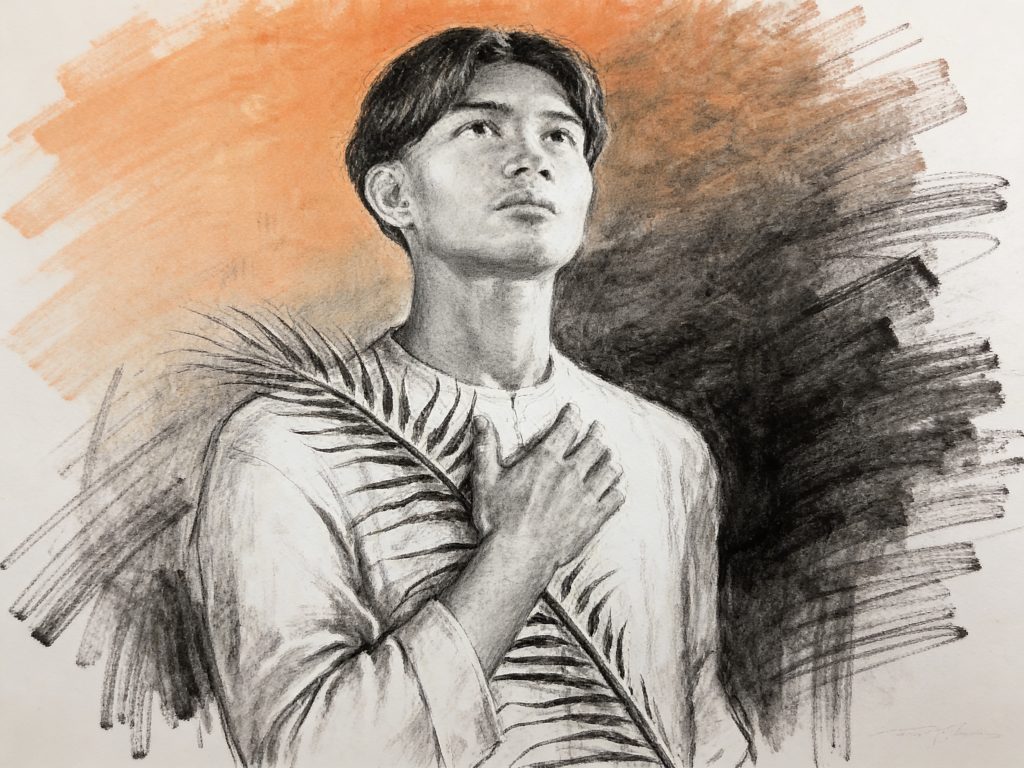
St Pedro Calungsod’s life serves as a beacon of clarity. Recognized as a young Filipino martyr catholic hero, he transitioned from a teenage volunteer in a distant mission to a saint whose name is invoked by millions worldwide. This article explores his profound journey, his sacrifice in the Pacific, and the enduring legacy that led to the historic Pedro Calungsod canonization 2012.
The Historical Landscape: Missions in the 17th Century
To understand Pedro Calungsod, one must understand the era of the Spanish “Galleon Trade” and the fervor of the Jesuit missions. In the mid-1600s, the Philippines served as the gateway for Christianity in Asia. The Spanish Empire, alongside the Society of Jesus (Jesuits), sought to expand their spiritual reach into the Marianas Islands (then known as the Ladrones).
This was a time of immense peril and adventure. Missions were not just religious endeavors but high-stakes cultural exchanges that often involved crossing treacherous waters in wooden vessels. It was within this context that a young boy from the Visayas answered a call that would change his life—and his country’s history—forever.
The Making of a Pedro Calungsod Catechist
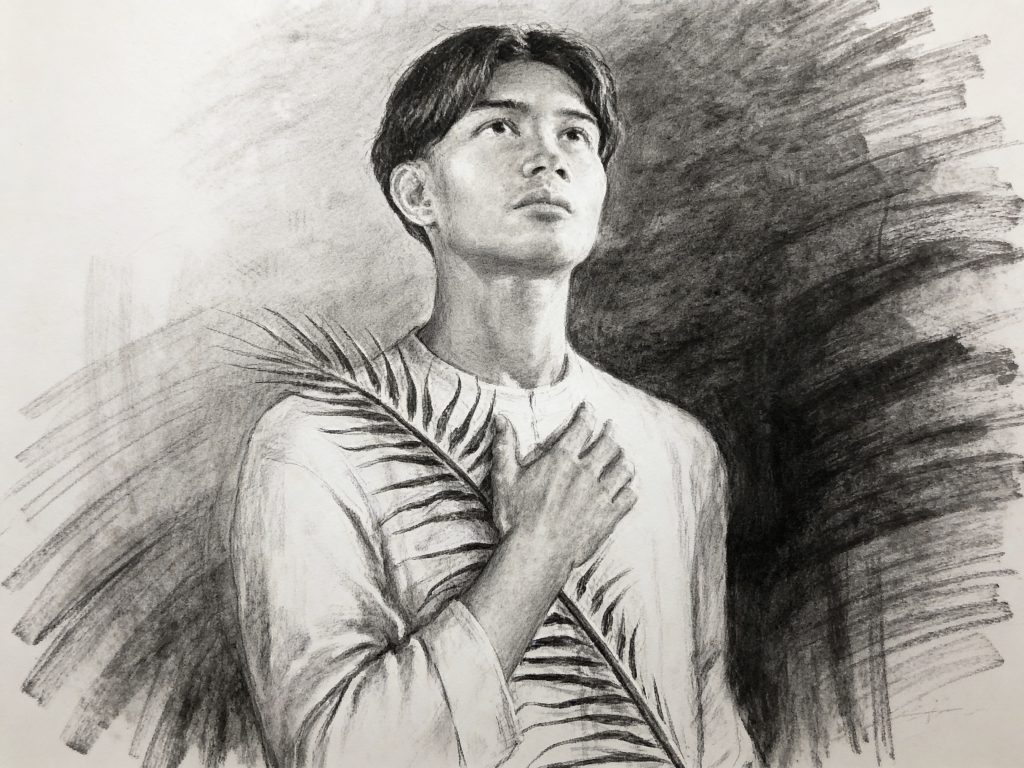
Historians believe Pedro was born around 1654. While his exact birthplace remains a subject of friendly debate between the provinces of Cebu, Bohol, and Iloilo, it is undisputed that he was a product of the Jesuit boarding schools in the Visayas. Here, he was trained as a Pedro Calungsod catechist.
But what did it mean to be a catechist in 1660? It was a role that required intellectual rigor and deep spiritual discipline. These young laymen were taught to read and write in both Spanish and Latin, to sing liturgical hymns, and, most importantly, to explain complex Christian doctrines in the native dialects of the Pacific. Pedro was not a mere servant to the priests; he was an active partner in the mission, an educator, and a bridge between cultures. His ability to communicate the faith to indigenous populations made him an invaluable asset to the mission led by Father Diego Luís de San Vitores.
Voyage of the San Diego: Mission in the Marianas
In 1668, at the approximate age of 14, Pedro joined the Jesuit mission to the Marianas on board the ship San Diego. Upon arriving in Guam, the mission initially flourished. The missionaries were welcomed by the local Chamorro people, and many, including the high-ranking nobility, accepted baptism.
However, the success of the mission was soon threatened. A Chinese criminal named Choco, who had been shipwrecked in the islands, began spreading malicious rumors. He claimed that the baptismal waters were poisonous, specifically targeting the missionaries’ practice of baptizing infants. Because some infants died of natural causes shortly after baptism, the rumors gained traction. This set the stage for the persecution of the young Filipino martyr catholic and his companions.
The Final Hours: Pedro Calungsod Martyr Guam
The climax of Pedro’s mission took place on the morning of April 2, 1672. Pedro and Father San Vitores arrived at the village of Tumon to find that the wife of the local chief, Matapang, had recently given birth. Despite the chief’s absence and known hostility, the mother consented to the baptism of her child.
When Chief Matapang returned and discovered the baptism, his rage was uncontrollable. He enlisted the help of another warrior, Hirao. What followed was a display of extraordinary bravery. As the warriors attacked with spears, Pedro had multiple opportunities to escape. Known for his agility, he could have easily outrun the attackers. However, his loyalty to Father San Vitores and his commitment to his role as a protector were absolute. He stayed by the priest’s side, dodging spears until he was finally struck down. He was killed by a spear to the chest and a machete blow to the head.
The Path to Rome: Pedro Calungsod Canonization 2012
For over 300 years, Pedro’s story was preserved largely through Jesuit records and oral tradition in the Philippines. It wasn’t until the late 20th century that the cause for his beatification gained momentum. In 2000, Pope John Paul II beatified him, but it was a miraculous event in 2002 that paved the way for his final elevation.
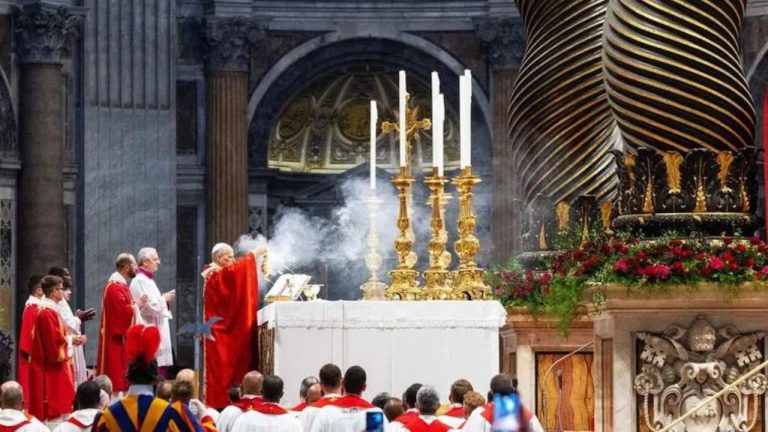
A 49-year-old woman in Cebu was declared clinically dead following a heart attack. After her doctor prayed for the intercession of the “Blessed Pedro,” the woman unexpectedly revived. This miracle was meticulously documented and approved by the Vatican’s medical and theological commissions. Finally, on October 21, 2012, Pope Benedict XVI presided over the Pedro Calungsod canonization 2012. The event was a watershed moment for the Philippines, drawing thousands of pilgrims to Rome and millions more to their television screens in Manila and Cebu.
Why He Is the Pedro Calungsod Patron Filipino Youth
In today’s digital age, the Church has designated Pedro as the Pedro Calungsod patron Filipinoyouth for very specific reasons. He represents the “lay mission.” He was not a priest or a monk, but a young person who used his skills—literacy, communication, and manual labor—to serve a higher purpose.
For the modern Filipino youth, Calungsod is a model of:
- Resilience: Navigating foreign cultures and hostile environments.
- Loyalty: Standing by one’s principles and companions even under threat.
- Active Faith: Moving beyond the walls of the church to be “missionaries” in their schools, workplaces, and digital spaces.
Observing the Feast Day Pedro Calungsod April 2
The feast day Pedro Calungsod April 2 is more than just a date on the liturgical calendar; it is a vibrant celebration of Filipino identity. In Cebu, the San Pedro Calungsod Chapel at the SM Seaside complex becomes a focal point for thousands of devotees. The day is typically marked by:
- Youth Festivals: Large gatherings where young people engage in music, drama, and workshops focused on social justice and faith.
- Processions: Carrying the image of the young saint through the streets to symbolize the “journey of faith.”
- Acts of Service: In honor of his role as a catechist, many groups organize community teaching and feeding programs on this day.
The Architecture of Faith: The Calungsod Shrines
The influence of the saint is also seen in modern Filipino architecture. The Chapel of San Pedro Calungsod in Cebu City is a masterpiece of contemporary design, featuring 100 walls of varying heights and widths, symbolizing the many paths to faith. This site has become a major pilgrimage destination, further boosting the visibility of the St. Pedro Calungsod name in search engines and travel blogs alike.
Frequently Asked Questions (FAQs)
What is St. Pedro Calungsod the patron saint of?
He is officially the patron saint of the Filipino youth, altar boys, and catechists. He is also often invoked by those traveling abroad for work or mission.
When was Pedro Calungsod canonized?
The Pedro Calungsod canonization 2012 took place on October 21, 2012, at St. Peter’s Basilica, Rome, led by Pope Benedict XVI.
How did St. Pedro Calungsod die?
He was martyred on April 2, 1672, in Guam. He was killed by a spear and a machete while protecting a Jesuit missionary during a violent confrontation with a local chief.
Where can I visit a shrine dedicated to him?
The most famous shrines are the San Pedro Calungsod Chapel in Cebu City, Philippines, and the San Vittoris and Calungsod Martyrdom Site in Tumon, Guam.
What was his occupation before he died?
He was a Pedro Calungsod catechist, a layperson trained to assist missionaries in teaching the Catholic faith and performing baptisms.
The Eternal Mission
The story of st Pedro Calungsod is a reminder that greatness is not reserved for the elderly or the powerful. Through his role as a young Filipino martyr catholic, he demonstrated that a life of purpose, even if cut short, can ripple through centuries. As we celebrate the feast day Pedro Calungsod April 2 every year, we are reminded to carry his spirit of mission into our daily lives. Whether through small acts of kindness or standing up for the truth, the mission that Pedro started in 1668 continues through the hearts of the Filipino people today
Will we answer his call to live with courage and faith in our own time? Let us pray for the strength to follow his example.